

Description
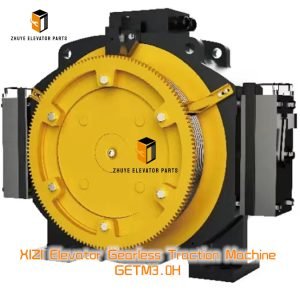
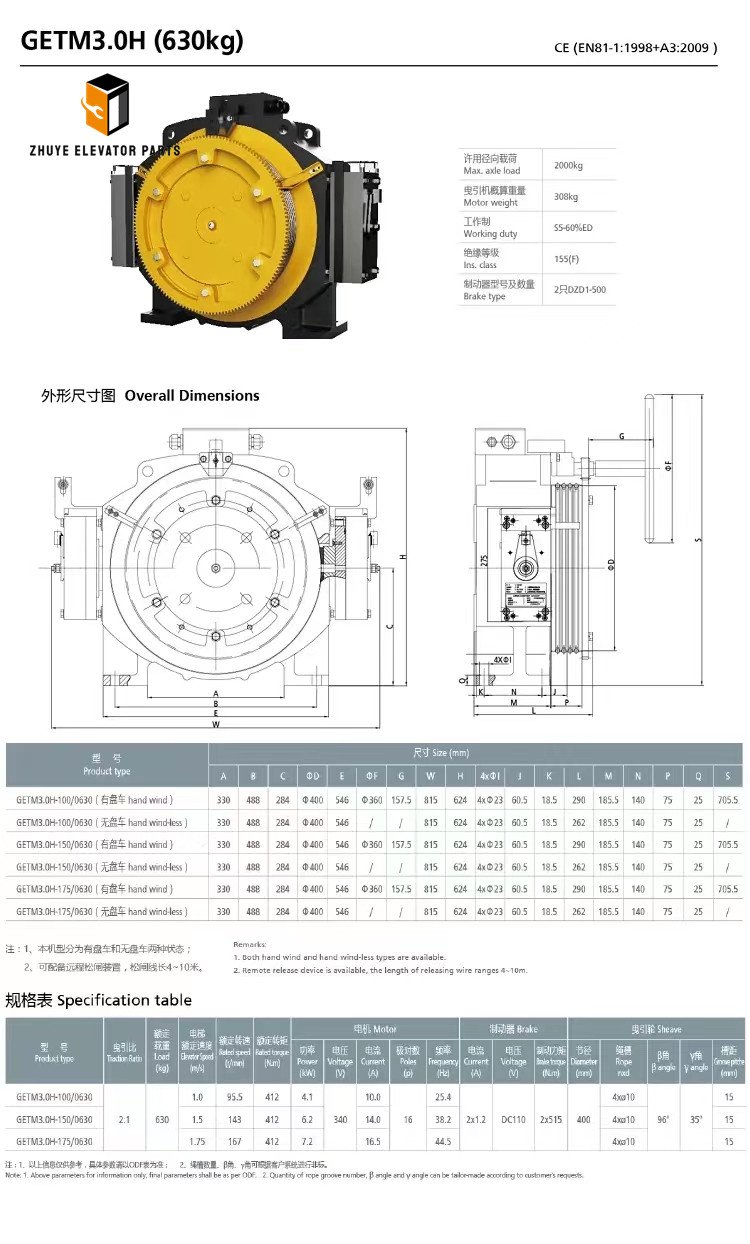
XIZI Elevator Gearless Traction Machine GETM3.0H Brief Introduction
|
Product Name |
XIZI Elevator Gearless Traction Machine |
| Model Number | GETM3.0H |
|
Quality
|
Original.Brand New
|
|
Payment
|
T/T. Paypal. Western Union
|
|
Delivery
|
3-5 Working Days
|
|
Packaging
|
Packed by carton
|
Nanjing Zhuye Elevator Parts – XIZI GETM3.0H Gearless Traction Machine: Installation, Calibration & Replacement Guide
When architects want an elevator that accelerates like silk and still sips energy at 2.5 m/s, they usually specify one component first: the traction machine. XIZI’s GETM3.0H—a 3 kW permanent-magnet synchronous gear-less unit rated 630-1 000 kg—was engineered for exactly that brief. Nanjing Zhuye Elevator Parts has imported, stocked and supported brand-new, factory-warrantied GETM3.0H machines since 2015, shipping over 3 600 units to 58 countries. Below we explain how to hoist, align and—crucially—when to renew this torque-dense heart before bearing rumble or magnet fade traps passengers on the top floor.
-
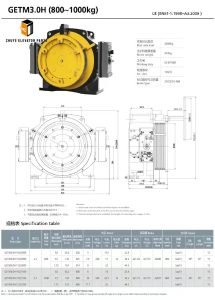
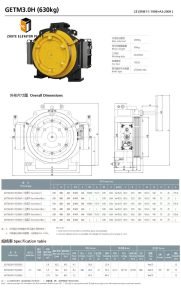
Construction snapshot Stator: concentrated winding, 48 slots, vacuum-pressure-impregnated class H insulation (180 °C), temperature rise limited to 105 K. Rotor: 28-pole sintered NdFeB magnets, stainless-steel band retention rated 25 000 rpm burst, flux density 1.23 T at 20 °C. Bearings: sealed SKF 6313-2RS1 deep-groove ball bearings, grease life 40 000 h at 75 °C. Encoder: 2 048-ppr sine-cosine differential, zero pulse aligned to magnetic pole #1, IP54 when mated. Brake: twin-disk, 110 VDC, 2 × 800 N holding torque, manual release lever and micro-switch confirmation. Frame: cast iron GG-25, torsion-proof foot pattern 320 × 150 mm, mass 185 kg. Protection: IP41 stator, IP20 brake; optional IP54 rain hood (NY-COV-GETM3) available from Nanjing Zhuye.
-
Pre-installation safety Isolate the main supply, lock-out the controller and verify the car is resting on rail clamps at the bottom landing. Use a certified 3 t beam clamp and 2 t polyester sling through the M20 lifting eye (torque 200 N·m). Rotate the hand-wheel so the brake faces downward—this keeps discs horizontal and prevents unintended slip while you position the machine. Keep magnetic rotor surfaces free of ferrous debris; even a 2 mm washer can become a 150 kg projectile at 200 rpm.
-
Foot-print & drop-in compatibility GETM3.0H replaces 450 mm and 480 mm geared machines without beam modification. Critical dimensions: Sheave centre height 130 mm above rail (use 10 mm shim plate supplied by Nanjing Zhuye). Groove pitch 10 / 12 / 13 mm; order correct count (5–7) to match existing ropes. Minimum 280 mm clearance from guide-rail face; < 250 mm will foul the governor rope.
-
Alignment in 20 minutes a) Lower machine onto beam, hand-tighten four M20 foundation bolts. b) String a line from car to counter-weight sheave; lateral offset must be < 0.3 mm. c) Insert 0.2 mm feeler between brake hub and string; adjust shim until parallel within 0.2 mm/m. d) Torque bolts to 300 N·m in cross-pattern; re-check—beam compression often shifts the unit 0.2 mm. e) Fit anti-vibration pads (NY-AVP-GETM3, 8 mm SBR) under feet; structure-borne noise drops 3 dB(A).
-
Encoder & auto-phasing Connect shielded pair to CN1; ground shield at controller end only. Run controller “PM learn” routine: Rotate machine 360° by hand-wheel at 20 rpm; controller records sine-cosine offset. If offset varies > ±1° between runs, coupling is loose—replace elastic insert (NY-COU-14-14). Polarity check: command 0.1 m/s up; if car moves down, swap any two motor phases and re-learn.
-
Brake set-up Air gap factory-set 0.20 mm; check at three points with feeler. Gap > 0.35 mm reduces holding torque 25 % and triggers “Brake Release” fault. Adjust hex nuts 1/8 turn clockwise = 0.05 mm reduction. Micro-switch must click 0.3 mm before pads contact disk; verify with ohmmeter. After adjustment run 30 full cycles; re-torque nuts—Belleville washers settle under vibration.
-
Lubrication & bearing life Bearings are sealed-for-life with SKF LGHP2 polyurea grease. Grease life equation: L10 = 40 000 h × (75 °C / T) ^3.3 At 1.6 m/s, 500 trips/day, bearing temperature stabilises 65 °C → L10 ≈ 80 000 h ≈ 11 years. Annual IR scan: housing should be < 65 °C; > 75 °C schedules bearing replacement.
-
Magnet degradation check NdFeB loses 0.9 % flux per 10 °C above 80 °C. Back-EMF test: Spin machine at 200 rpm with hand-wheel. Measure line-line voltage; compare to nameplate ±3 %.
3 % drop indicates partial demagnetisation—order replacement rotor (NY-ROT-GETM3) or full machine.
-
Replacement cycle summary Light traffic (residence, 200 trips/day) – bearings ≈ 15 years, rotor ≈ 25 years, full machine ≈ 30 years. Medium traffic (office, 500 trips/day) – bearings every 10 years, rotor every 18 years, full machine every 25 years. Heavy traffic (mall/metro, 1 000 trips/day) – bearings every 7 years, rotor every 12 years, full machine every 20 years. Always replace encoder coupling and brake discs when bearings are changed—labour overlap saves 1.5 h.
-
Rapid swap procedure (downtime < 4 h) a) Secure car on clamps, lock-out power. b) Sling old machine, cut ropes, lower 185 kg to pallet. c) Offer new Nanjing Zhuye GETM3.0H, align with existing shim. d) Re-rope, tension, run encoder learn and brake gap check. e) Full-load dynamic test: 125 % rated load, 1.5 m/s, vibration < 1.2 mm/s RMS (ISO 18738). f) Log serial number, cycle counter, brake gap; return old unit for core refund.
-
Sustainability & core return Nanjing Zhuye pays USD 180 core credit per GETM3.0H. Stator copper is remelted 99.95 % pure, rotor magnets re-sintered, frame shot-blasted and reused for counter-weight frames. One recycled machine saves 1.3 t CO₂—equal to the elevator’s standby consumption for 3 months.
By treating the GETM3.0H as the torque heart of the elevator—not just another “motor”—you eliminate gear-oil smells, cut energy 30 % and deliver the whisper-quiet ride modern tenants expect. Specify Nanjing Zhuye genuine stock, follow the temperature-based cycle table above, and the only thing the machine will ever whisper is smooth, efficient, reliable motion—trip after trip, decade after decade.