
Description
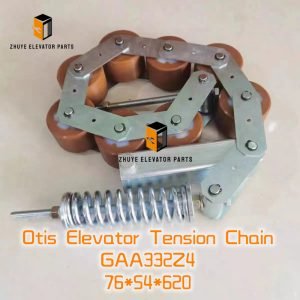
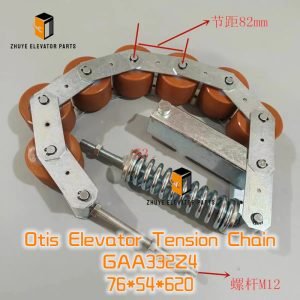
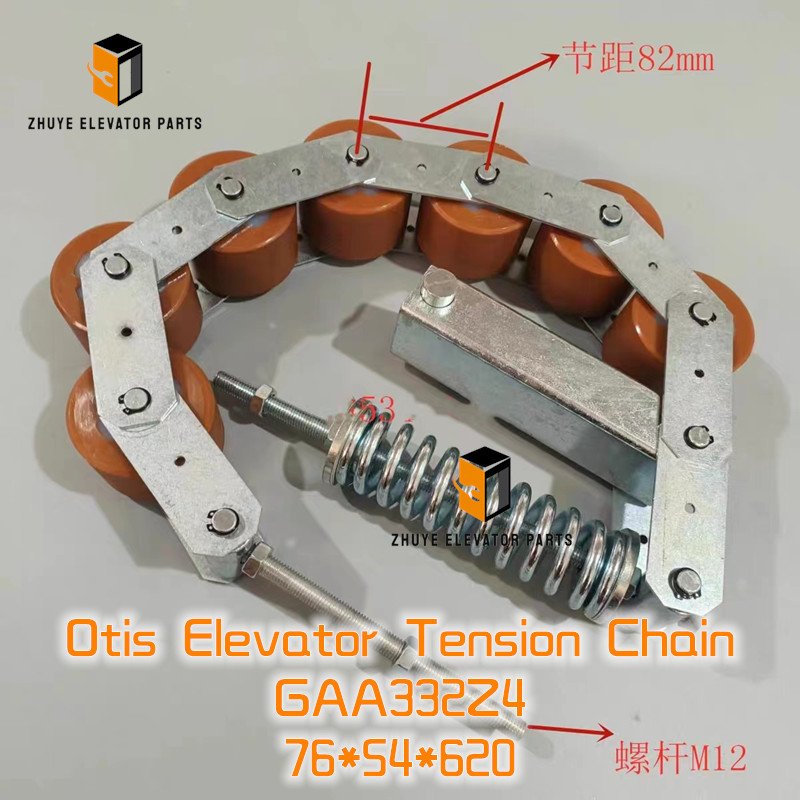
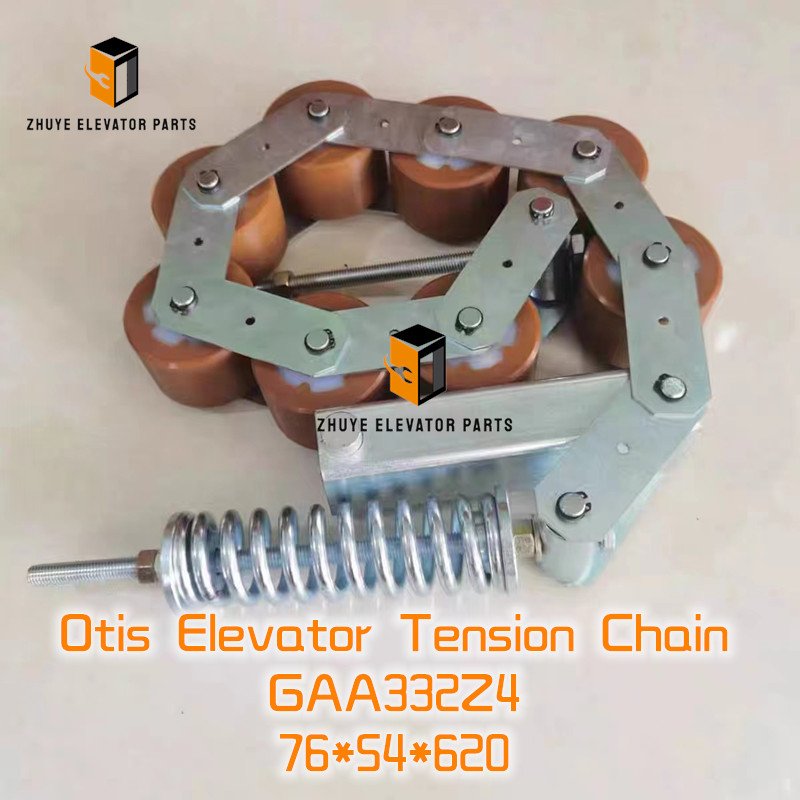
Otis Escalator GAA332Z4 Tension Chain 76*54*620 Brief Introduction
|
Product Name |
Otis Escalator Tension Chain |
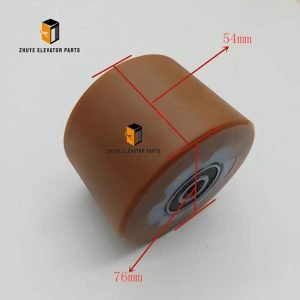
| Model Number | GAA332Z4
76*54*620 |
|
Quality
|
Original.Brand New
|
|
Payment
|
T/T. Paypal. Western Union
|
|
Delivery
|
3-5 Working Days
|
|
Packaging
|
Packed by carton
|
Nanjing Zhuye Elevator Parts – Otis Escalator Tension Chain 76 × 54 × 620 mm GAA332Z4: Installation, Tensioning & Replacement Guide
Every escalator looks invincible until the step chain begins to sag. At the heart of Otis machines model 506 NCE, 512 NCE and 520 NCE runs part number GAA332Z4—a calibrated tension chain 76 mm inside width, 54 mm pitch, 620 links long, factory code “620” stamped on the outer plate. Nanjing Zhuye Elevator Parts has manufactured this exact chain since 2009, shipping 45 000 metres annually to service companies in 71 countries. Below we explain how to fit, tension and—crucially—when to discard this safety-critical link before stretch, wear or fatigue can shut down a shopping centre on the busiest Saturday of the year.
-
Construction & metallurgy
Side plates are 40 Mn carbon steel, shot-peened to 0.18 mm depth for 25 % fatigue-life gain. Pins are 20 CrMnTi carburised to 0.8 mm case depth, surface hardness 82 HR15N. Factory pre-load is 0.35 % of ultimate tensile strength (UTS = 180 kN), eliminating initial elongation. Every 10th link carries a lubrication port (Ø 3 mm) sealed with a nitrile plug; removing the plug allows pressure-injection of Klüber NB 52 grease at 30 bar, forcing contaminants out of the bushing. Nanjing Zhuye laser-marks each link with date, batch and heat number—traceability for the life of the escalator. -
Tools you will need
• 19 mm socket for tension-carrier bolts
• 30 mm open-end wrench for lock nuts
• 0–300 N·m click-type torque wrench
• 0–150 mm vernier caliper
• Chain wear gauge (Nanjing Zhuye model NY-GAGE-76)
• Hydraulic riveting tool (35 kN) for emergency pin replacement
• Digital force gauge 0–500 N (for step-chain pull test) -
Pre-installation safety
Stop the escalator, engage the main disconnect and mechanical brake. Hang a “MACHINE UNDER REPAIR” banner across both combs. Allow 30 min for residual oil temperature to fall below 40 °C; hot oil can scald and will falsify wear readings. -
Removing the old chain
a) Measure existing sag: apply 100 N mid-span; deflection must be ≤ 2 % of centre distance (e.g. 16 mm on 8 000 mm span). Record value for insurance file.
b) Back off tension carriage until chain is slack.
c) Break chain at the factory connecting link using a 6 mm pin punch; never grind the plate—heat destroys hardness.
d) Attach the new Nanjing Zhuye chain to the old with a 12 mm grade-8 threaded rod; rotate hand-wheel to pull the new chain into place. This “piggy-back” method keeps steps aligned and saves 40 min. -
Setting initial tension
Otis specifies 1.0–1.2 % of centre distance as cold sag. Example: 8 000 mm truss ⇒ 80–96 mm at 100 N push. Over-tensioning overloads the main reducer bearing and doubles power consumption; under-tensioning causes step jump during emergency stop. Tighten the carriage bolts in 1/4-turn steps, alternating sides, until sag falls inside spec. Final torque: 190 N·m on M16 bolts, 300 N·m on M20. -
Run-in & lubrication
Run escalator at inspection speed (0.15 m/s) for 30 min. Stop, re-check sag; expect 2–3 mm additional settling as rollers seat. Inject 20 ml of Klüber NB 52 into every 10th link via the Nanjing Zhuye grease needle; excess grease flings onto the skirt and attracts grit. Wipe plates clean with lint-free cloth. -
Wear limits & replacement cycle
Pitch elongation is the dominant failure mode. Nanjing Zhuye bench data shows 0.5 % elongation at 12 000 h under 4 kN strand tension, 0.75 % at 18 000 h. Otis allows max 1.5 % (1.62 mm per 108 mm pitch). Translate hours to passenger load:
Light traffic (office, 6 h/day, 5 days/week) – 1 560 h/year → inspect every 2 years, replace ≈ 7 years.
Medium traffic (department store, 12 h/day, 7 days/week) – 4 380 h/year → inspect every 9 months, replace ≈ 3 years.
Heavy traffic (metro, 20 h/day) – 7 300 h/year → inspect every 6 months, replace ≈ 18 months.
Inspection protocol:
• every 3 months – measure 10-link span with NY-GAGE-76; record elongation.
• every 6 months – ultrasonic pin test; any crack > 2 mm replaces the entire strand.
• annually – pull test 3 kN on a sacrificial 5-link sample; if permanent set > 0.3 %, schedule change. -
Signs that demand immediate change (even inside cycle limit)
• Visible plate cracking or corrosion pit > 1 mm depth.
• Pin rotation > 5° relative to plate (indicates severe internal wear).
• Step jumping during emergency stop test.
• Excessive noise > 75 dB(A) at 0.5 m.
• Oil analysis shows > 500 ppm Fe—chain is self-milling. -
Replacement tips for minimum downtime
Order the Nanjing Zhuye pre-riveted strand; each link is counted and matched to ±0.05 mm length tolerance. Bring a spare connecting link (part NY-LINK-76-54) and two spare pins—dropping one into the truss can add two hours. Tag both ends with heat-proof labels showing install date; inspectors love traceability. -
Sustainability & recycling
Return worn chains to Nanjing Zhuye under the R2-certified take-back programme. Plates are re-forged into hoist-chain grade 80, pins are re-melted for bearing steel. One recycled tonne saves 1.1 t CO₂ versus virgin ore—enough to offset the electricity the escalator uses for a month.
By treating the GAA332Z4 tension chain as a safety-critical suspension component—not just another “moving part”—you eliminate step jump, prevent comb entrapment and keep the escalator humming smoothly for decades. Specify Nanjing Zhuye genuine chain, follow the cycle-based replacement table above, and the only thing passengers will notice is that the steps keep rolling—quietly, reliably, under perfect tension—every single ride.