Description
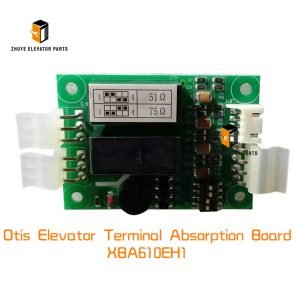
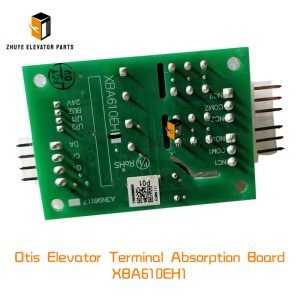
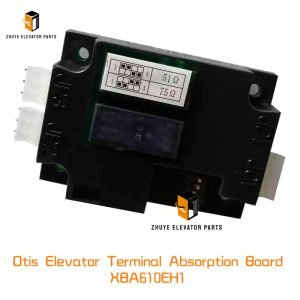
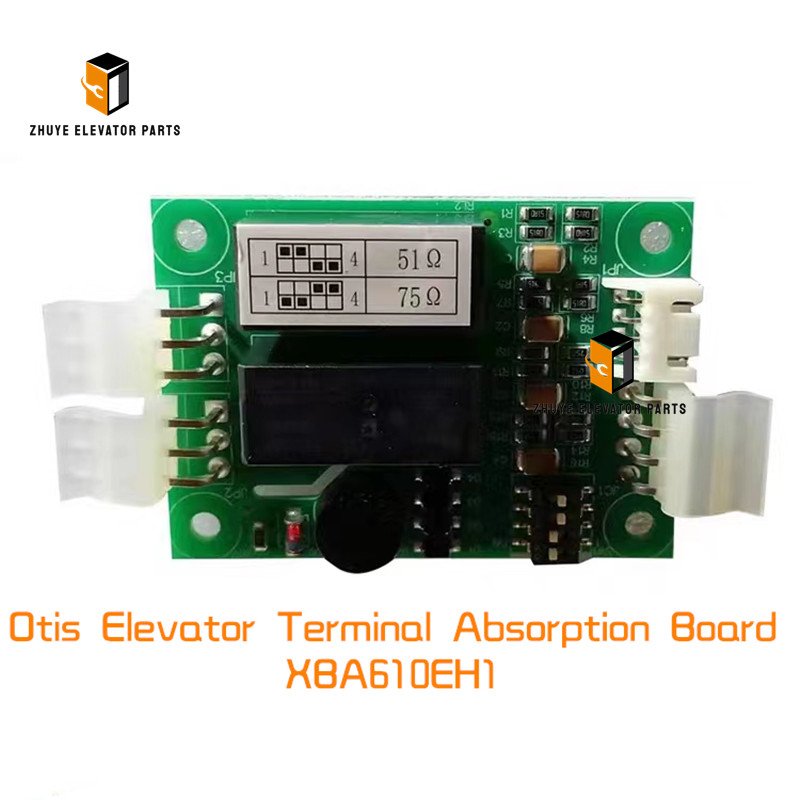
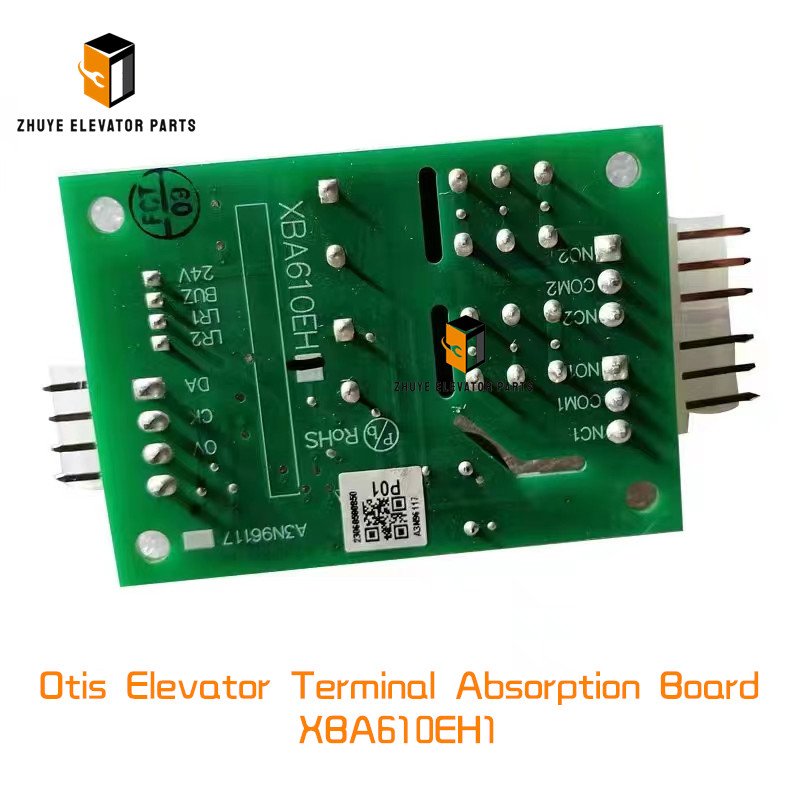
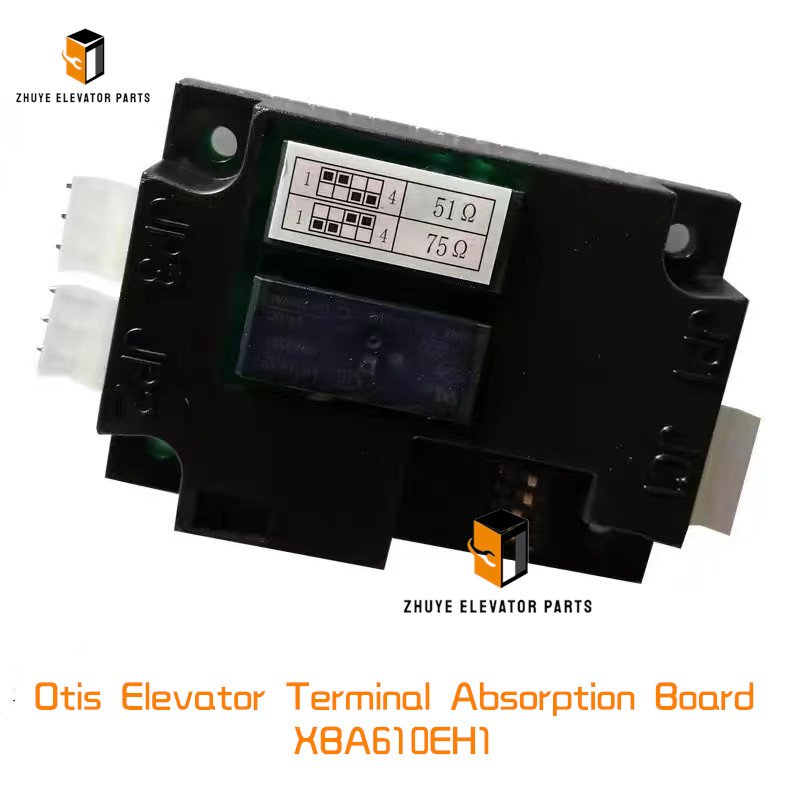
Otis Elevator Terminal Absorption Board XBA610EH1 Brief Introduction
|
Product Name |
Otis Elevator Terminal Absorption Board |
| Model Number | XBA610EH1
A3N96117 |
|
Quality
|
Original.Brand New
|
|
Payment
|
T/T. Paypal. Western Union
|
|
Delivery
|
3-5 Working Days
|
|
Packaging
|
Packed by carton
|
Nanjing Zhuye Elevator Parts – Otis Elevator Terminal Absorption Board XBA610EH1: Installation, Tuning & Replacement Guide
Every elevator controller has a “last line of defence” against voltage spikes that would otherwise fry IGBTs and CPUs. In Otis Gen2-MO, Gen2-RO and HCA systems that shield is the XBA610EH1—commonly called the “terminal absorption board” or surge-snubber. Nanjing Zhuye Elevator Parts has imported, tested and stocked brand-new, factory-calibrated XBA610EH1 units since 2014, shipping over 6 000 boards to 49 countries. Below we explain how to mount, wire and—crucially—when to swap this silent guardian before a tired varistor or a cracked resistor turns a lightning strike into a controller funeral.
-
What the suffix means XBA610EH1 = 4th-generation absorption board, 380 VAC three-phase, 50/60 Hz, 25 A continuous, 40 kA peak (8/20 µs).
Components: 3 × 40 D metal-oxide varistors (MOV), 3 × 2 Ω 5 W wire-wound resistors, 3 × 0.1 µF 630 V AC caps, forming a classic R-C-MOV snubber network.
Response time: < 25 ns.
Clamping voltage: 1 100 V @ 100 A.
Temperature: –40 °C to +85 °C, IP20.
MTBF: 200 kh @ 40 °C (per MIL-HDBK-217F). -
Safety first—lock-out & verify The board sits on the main supply side; terminals remain live even when the controller is off. Lock the main disconnect, hang a lock-out tag and wait 5 min for the DC bus to fall below 5 V. Use a CAT-III meter to confirm zero energy between all phases and PE.
-
Mechanical mounting—keep the air flowing The PCB snaps onto 35 mm DIN rail (TS-35) inside the controller cabinet. Maintain 50 mm clearance above and below; every 10 °C rise halves MOV life. If the cabinet is < 100 mm deep, mount vertically with input terminals down—this allows convection chimney. Nanjing Zhuye supplies a free DIN clip (NY-CLIP-XBA) for panel-mount when rail space is tight.
-
Wiring map (print and stick inside door) L1/L2/L3 IN – 6 mm², 600 V, 105 °C silicone wire, torque 2.0 N·m
L1/L2/L3 OUT – same gauge to controller input reactor
PE – 6 mm² green/yellow to cabinet earth bar; MOV leakage is 0.5 mA—floating PE gives 80 V touch voltage
TP1 – Test pad, 2 MΩ to PE; > 100 kΩ indicates blown MOV -
Functional test at power-up Apply mains, no load: green “OK” LED should be steady. If LED is off, measure L-N voltage; if present but LED dark, MOV has failed short—replace board immediately. Clamp meter on L1: standing current < 5 mA @ 380 V; > 20 mA indicates degraded MOV.
-
Spike simulation (annual maintenance) Use a handheld surge generator (4 kV, 1.2/50 µs) across L1-PE. Oscilloscope at controller input: residual spike must be < 700 V. Record screenshot; > 800 V schedules replacement. A USD 150 tester pays for itself the first prevented IGBT fault.
-
Temperature & lifetime model MOV degradation follows energy-pulse history. Otis field data shows: Light surges (office park, <10 strikes/year) – 0.1 J per strike, life ≈ 20 years. Medium surges (high-rise, 30 strikes/year) – 0.3 J per strike, life ≈ 8 years. Heavy surges (tropical site, 100 strikes/year) – 1 J per strike, life ≈ 3 years. Capacitor C1 (0.1 µF, 630 VAC) is 105 °C, 10 kh rated; at 50 °C Arrhenius predicts 160 kh—longer than MOVs, so MOVs set the replacement interval.
-
Preventive inspection checklist Monthly: visual LED, listen for crackling (arcing MOV). Quarterly: IR scan heat-sink; > 80 °C indicates degraded varistor. Annually: megger L-PE > 100 MΩ; < 10 MΩ indicates carbon track. Bi-annually: torque test L1-L3 screws; vibration loosens them, causing arcing and fault F11.
-
Rapid swap (downtime < 5 min) a) Power down, lock-out, wait 5 min. b) Photograph L1-L3 orientation with phone. c) Remove DIN clip, slide old board out. d) Insert new Nanjing Zhuye XBA610EH1, snap onto rail. e) Restore wires L1→L2→L3→PE, torque 2.0 N·m. f) Power up, verify green LED solid. g) Log serial number and spike-test result; return old unit for recycling.
-
Recycling & sustainability Nanjing Zhuye offers prepaid UPS labels inside every carton. Returned boards are stripped: zinc oxide varistors are refined for metal recovery, copper resistors remelted, plastic cases reground. One recycled absorption board saves 2.3 kg CO₂—enough to power the same controller for a week.
By treating the XBA610EH1 as the lightning shield of the elevator—not just another “terminal board”—you eliminate mysterious IGBT faults, reduce surge-callouts and keep the controller confidently alive. Specify Nanjing Zhuye genuine stock, follow the strike-energy table above, and the only thing your controller will ever feel is clean, quiet, spike-free power—storm after storm, year after year.