
Description
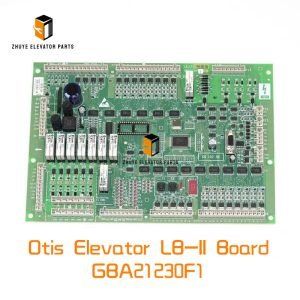
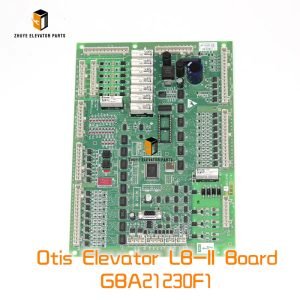
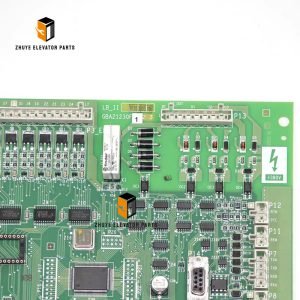
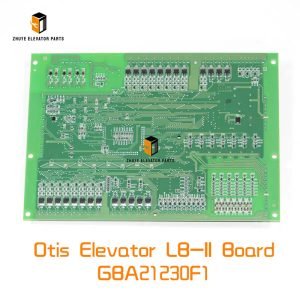
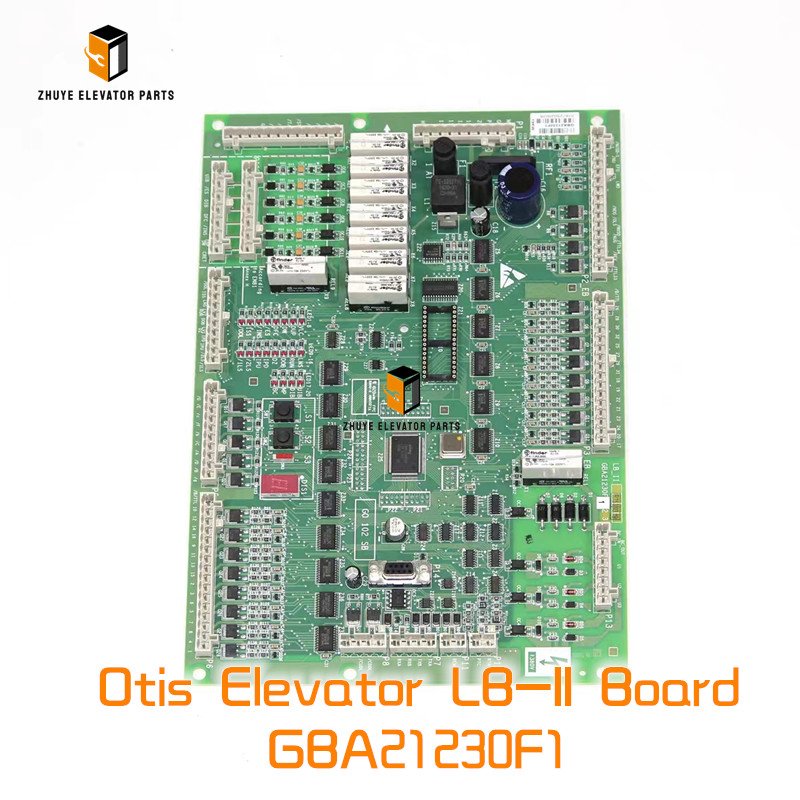
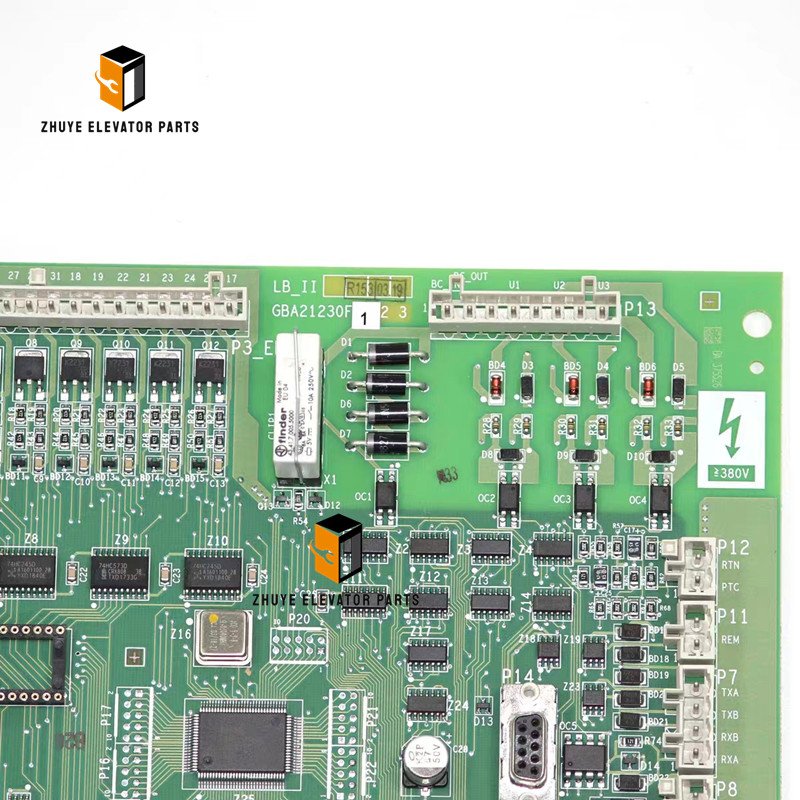
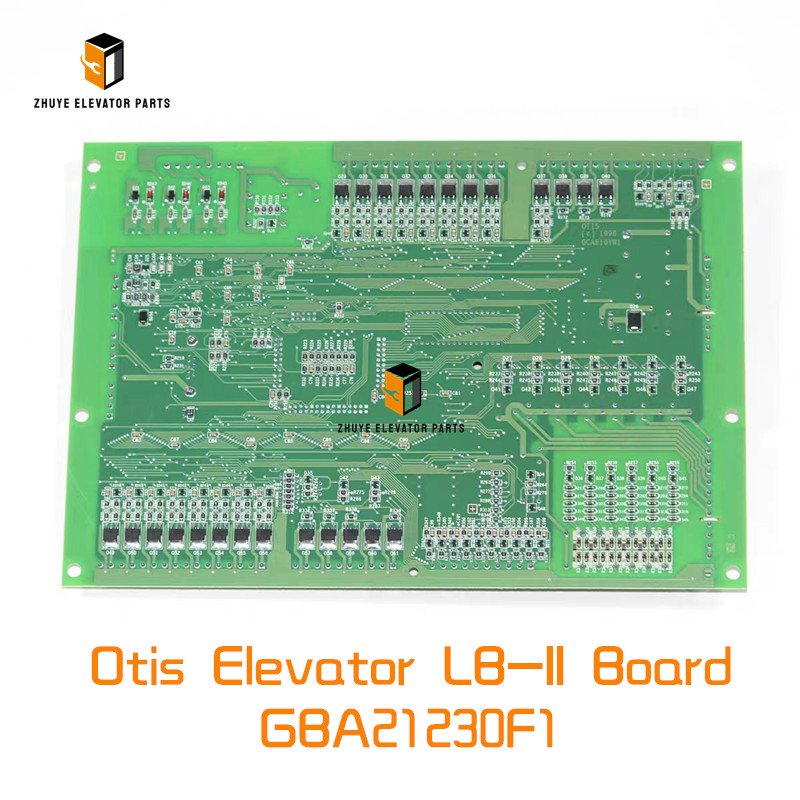
Otis Elevator LB-II Board GBA21230F1 Brief Introduction
|
Product Name |
Otis Elevator LB-II Board |
| Model Number | GBA21230F1 |
|
Quality
|
Original.Brand New
|
|
Payment
|
T/T. Paypal. Western Union
|
|
Delivery
|
3-5 Working Days
|
|
Packaging
|
Packed by carton
|
Otis Elevator LB-II Board GBA21230F1 – Installation, Programming & Replacement Guide
Provided by Nanjing Zhuye Elevator Parts
Provided by Nanjing Zhuye Elevator Parts
Summary
The GBA21230F1 is the “language bridge” of the Otis LB-II landing-bus system. This 24 VDC PCB aggregates 32 hall-call buttons, drives 16 LED outputs, manages voice announcements and communicates to the group controller via isolated RS-485. Nanjing Zhuye Elevator Parts (NYE) has imported, burned-in and stocked genuine GBA21230F1 units since 2015, shipping over 4 200 boards to 41 countries. Below we explain how to install, address and—crucially—when to replace this “silent concierge” before aged relays or a cracked opto-isolator turns a smooth call into a dark landing.
The GBA21230F1 is the “language bridge” of the Otis LB-II landing-bus system. This 24 VDC PCB aggregates 32 hall-call buttons, drives 16 LED outputs, manages voice announcements and communicates to the group controller via isolated RS-485. Nanjing Zhuye Elevator Parts (NYE) has imported, burned-in and stocked genuine GBA21230F1 units since 2015, shipping over 4 200 boards to 41 countries. Below we explain how to install, address and—crucially—when to replace this “silent concierge” before aged relays or a cracked opto-isolator turns a smooth call into a dark landing.
-
Part-number breakdown GBA21230F1 = LB-II landing bus board, 24 VDC, 32 inputs, 16 LED outputs, 4 voice channels, 2 × RS-485, IP20, –10 °C…+60 °C
Replaces legacy GBA21230E1 without parameter change; footprint 180 × 120 mm, mass 0.28 kg -
Safety first—lock-out & verify Board sits on the 24 VDC logic rail but switches 110 V call contacts. Lock the controller breaker, hang a lock-out tag and wait 60 s for the rail to fall below 5 V. Keep the new NYE board in its anti-static bag until mounting—CMOS logic can latch at 15 V static.
-
Mechanical mounting—keep it cool Snap onto 35 mm DIN rail inside the landing box. Maintain 50 mm clearance above and below; every 10 °C rise halves relay life. If the box is <100 mm deep, mount vertically with terminals down—this allows convection chimney. NYE supplies a free DIN clip (NY-DIN-LBII) and 10 mm thermal pad (NY-PAD-LBII) for shallow enclosures.
-
Wiring map (print and stick inside landing box) 24 V & 0 V: 1.5 mm², 105 °C silicone, torque 0.8 N·m
Inputs: 32 × dry contact, 1 mm², torque 0.5 N·m
LED outputs: 16 × 24 V, 100 mA max, 1 mm²
RS-485-A/B: twisted pair, 120 Ω termination at last board (DIP-1 ON)
Voice: 4 × 0 dBV audio, shielded pair, <10 m to speaker
Earth: 4 mm² green/yellow to box PE; logic leakage <1 mA -
Addressing & auto-scan LB-II auto-scans boards at power-up. Set rotary switch SW1 to floor number (01–FE). Duplicate addresses trigger “E-LBII” on the COP LCD and lock the group. Green “COMM” LED should blink 2 Hz during scan, then stay solid; flashing 8 Hz means bus-off—check 120 Ω termination.
-
LED & voice test Press each hall button; corresponding LED must illuminate within 100 ms and voice file must play. If LED is dim (<40 cd/m²) or audio THD >5 %, board is aged—replace immediately.
-
Temperature & lifetime model Relay contacts: 1 million cycles; at 300 calls/day = 3 years.
Opto-isolators: 50 kh @ 70 °C, double every 10 °C drop.
Capacitor C1 (47 µF, 35 V): 2 000 h @ 105 °C, 64 kh @ 45 °C.
Translate to building traffic: Light traffic (office, 300 calls/day) – relays ≈ 3 years, optos ≈ 10 years, full board ≈ 8 years; inspect every 2 years. Medium traffic (mall, 600 calls/day) – relays ≈ 1.5 years, optos ≈ 5 years, full board ≈ 4 years; inspect every 12 months. Heavy traffic (metro, 1 200 calls/day) – relays ≈ 1 year, optos ≈ 3 years, full board ≈ 2 years; inspect every 6 months. -
Remote monitoring (optional) RS-485 registers:
0x00 = input status (32-bit)
0x01 = LED status (16-bit)
0x02 = temperature (°C)
0x03 = cycle counter
Poll every 30 s; cycle counter >1 million or temperature >70 °C schedules replacement. -
Preventive inspection checklist Monthly: visual LED for all floors, listen for voice clarity. Quarterly: measure 24 VDC ripple; >200 mV pp indicates supply fatigue. Annually: megger inputs to PE >100 MΩ; <10 MΩ indicates moisture ingress. Bi-annually: torque test 24 V screws; vibration loosens them, causing intermittent “E-LBII”.
-
Rapid swap (downtime < 3 min) a) Power down, lock-out, wait 60 s.
b) Photograph wire numbers with phone.
c) Remove DIN clip, slide old board out.
d) Insert new NYE GBA21230F1, snap onto rail.
e) Restore wires in exact order, set SW1 as photo.
f) Power up, run LED & voice test.
g) Log serial number and cycle counter; return old unit for recycling. -
Recycling & sustainability Nanjing Zhuye offers prepaid DHL labels inside every carton.
Returned boards are stripped: gold fingers go to certified refinery, plastic housing re-granulated, relay silver recovered.
One recycled GBA21230F1 saves 1.1 kg CO₂—enough to power the same landing for a week.
By treating the GBA21230F1 as the communication heart of the landing—not just another “board”—you eliminate dark buttons, reduce call-backs and keep passengers confidently informed.
Specify Nanjing Zhuye genuine stock, follow the cycle-life table above, and the only thing your landing will ever say is “Your car is arriving”—bright, clear and always on time.
Specify Nanjing Zhuye genuine stock, follow the cycle-life table above, and the only thing your landing will ever say is “Your car is arriving”—bright, clear and always on time.