

Description
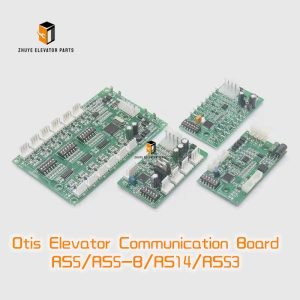
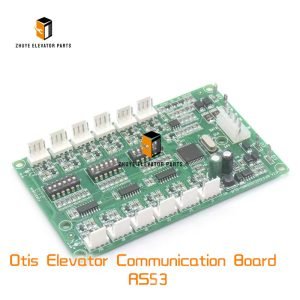
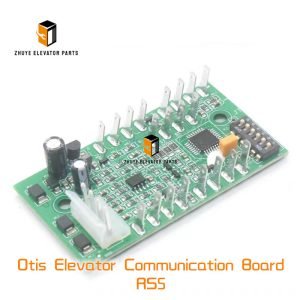
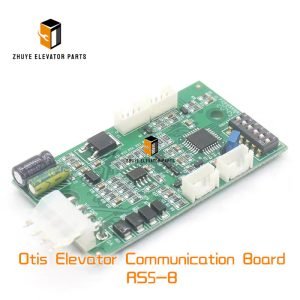
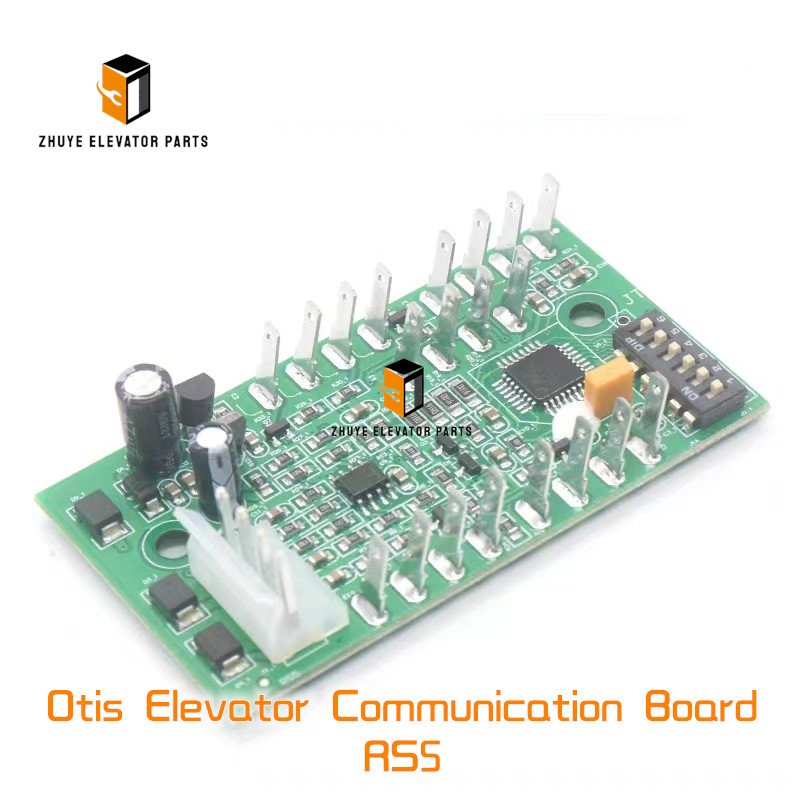
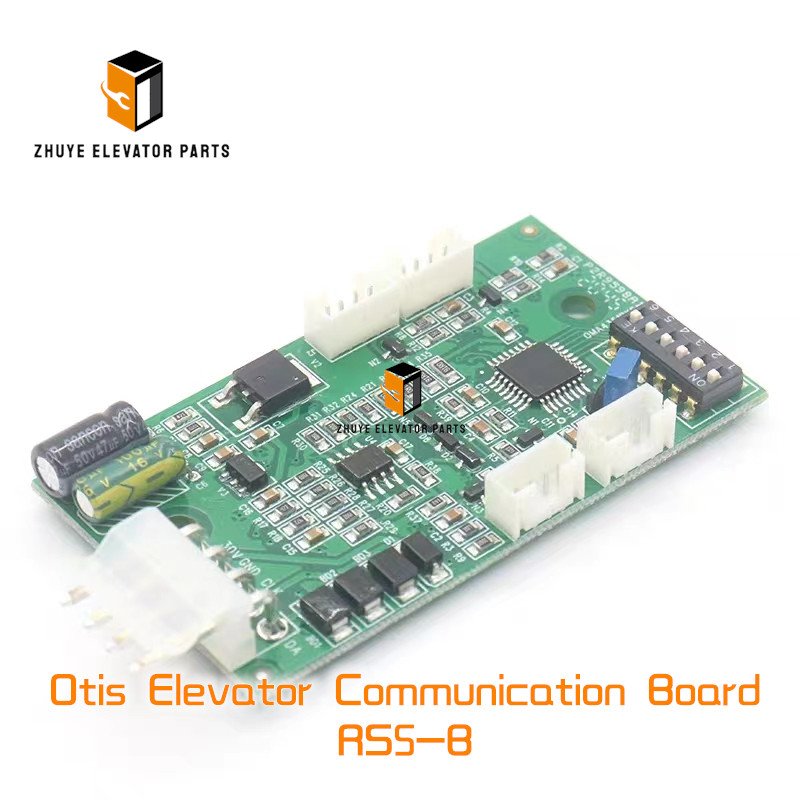
Otis Elevator Communication Board RS5/RS5-B/RS14/RS53 Brief Introduction
|
Product Name |
Otis Elevator Communication Board |
| Model Number | RS5/RS5-B/RS14/RS53 |
|
Quality
|
Original.Brand New
|
|
Payment
|
T/T. Paypal. Western Union
|
|
Delivery
|
3-5 Working Days
|
|
Packaging
|
Packed by carton
|
Nanjing Zhuye Elevator Parts – Otis Elevator Communication Board RS5/RS5-B/RS14/RS53: Setup, Tuning & Replacement Guide
Long before an elevator door opens, a silent conversation is taking place between the car, the landing fixtures and the group controller. Otis part numbers RS5, RS5-B, RS14 and RS53 are the four core members of the “RS” serial-communication family that make this dialogue possible. Nanjing Zhuye Elevator Parts has imported, updated and stocked brand-new, factory-flashed RS boards since 2011, shipping over 8 000 sets to 52 countries. Below we explain how to select the correct board, wire the bus and—crucially—when to replace these data bridges before aged opto-couplers or cracked terminators turn smooth group dispatch into mysterious no-shows.
-
Decoding the suffix RS5 = basic 2-wire RS-485 repeater, 32 nodes, 19.2 kbit/s, 24 VDC
RS5-B = RS5 + built-in 120 Ω termination and bias resistors (plug-and-play for end-of-line)
RS14 = 4-wire full-duplex, 64 nodes, 38.4 kbit/s, isolated 2 kV
RS53 = high-speed 187.5 kbit/s, 128 nodes, fibre-optic TX/RX option, for Gen2 group controllers
All boards share the same 100 × 72 mm footprint, 11-way plug-in header and –25 °C to +70 °C rating. -
Safety first—lock-out & verify Communication boards sit on the 24 VDC logic rail but are optically isolated from the 110 VDC drive bus. Still, lock the controller breaker, hang a tag and wait 60 s for the rail to fall below 5 V. Keep the new Nanjing Zhuye board in its anti-static bag until mounting—CMOS opto-couplers can latch at 25 V static.
-
Mechanical mounting—keep the noise out Snap the PCB onto 35 mm DIN rail inside the controller. Maintain 50 mm clearance above and below; every 10 °C rise halves opto-coupler life. If the cabinet is < 80 mm deep, mount vertically with terminals down—this allows convection chimney. Nanjing Zhuye supplies a free DIN clip (NY-DIN-RS) for panel-mount when rail space is tight.
-
Wiring map (print and stick inside door) 24 V & 0 V – 1.5 mm², 105 °C silicone, torque 0.8 N·m
A/B (RS5/5B) or TX+/TX–, RX+/RX– (RS14) – 0.5 mm² twisted pair, 120 Ω termination at extreme ends only
Shield – ground at one end (usually the group cabinet) to avoid ground loops
Fibre (RS53) – HFBR-1521/2521 pair, 1 mm plastic, 5 MBd, 20 m max length -
Baud-rate & termination cheat-sheet RS5/5B: 19.2 kbit/s, 120 Ω on last node (DIP-1 ON on RS5-B)
RS14: 38.4 kbit/s, 120 Ω on TX+/- and RX+/- (DIP-2 ON)
RS53: 187.5 kbit/s, no resistor on copper, DIP-3 selects fibre medium
Wrong termination = reflections, E-COM faults and cars that ignore hall calls. -
Power-up & functional test Apply 24 VDC, green “PWR” LED steady; red “FLT” off. Measure differential A-B voltage: idle = 1 V, active = 2 V minimum. If idle < 0.2 V, bias resistors are missing (use RS5-B or add 560 Ω to A and B). Fibre version: TX LED must flash 1 Hz during scan; no flash = broken fibre or dead TX.
-
Temperature & lifetime model Opto-couplers are the wear item: 50 kh @ 70 °C, doubling every 10 °C drop. Capacitors: 2 000 h @ 105 °C, 64 kh @ 45 °C. Translate to elevator duty: Light traffic (office, 8 h/day, 5 days/week) – 2 080 h/year → replace ≈ 25 years; inspect every 5 years. Medium traffic (mall, 12 h/day, 7 days/week) – 4 380 h/year → inspect every 2 years, replace ≈ 12 years. Heavy traffic (metro, 20 h/day) – 7 300 h/year → inspect every 12 months, replace ≈ 6 years.
-
Preventive inspection checklist Monthly: visual LED, listen for relay chattering (bad termination). Quarterly: scope A-B differential; > 5 V overshoot indicates missing terminator. Annually: IR scan opto-coupler; hot spot > 20 °C above ambient predicts failure. Bi-annually: torque test 24 V screws; vibration loosens them, causing E-COM resets.
-
Rapid swap (downtime < 5 min) a) Power down, lock-out, wait 60 s. b) Photograph A-B and fibre orientation with phone. c) Remove DIN clip, slide old board out. d) Insert new Nanjing Zhuye RS board, snap onto rail. e) Restore 24 V, A/B or fibre, set DIP switches as photo. f) Power up, verify green LED solid. g) Run group test—every car must answer every call. h) Log serial number and date; return old unit for recycling.
-
Recycling & sustainability Nanjing Zhuye offers prepaid DHL labels inside every carton. Returned boards are stripped: gold fingers go to certified refinery, plastic housing re-granulated, opto-couplers recovered for gallium. One recycled communication board saves 1.5 kg CO₂—enough to power the same controller for a week.
By treating the RS5/RS14/RS53 family as the nervous system of the elevator group—not just another “communication board”—you eliminate mysterious no-shows, reduce surge-callouts and keep cars moving in perfect harmony. Specify Nanjing Zhuye genuine stock, follow the opto-life table above, and the only thing your group controller will ever hear is clean, quiet, reliable data—call after call, year after year.