
Description
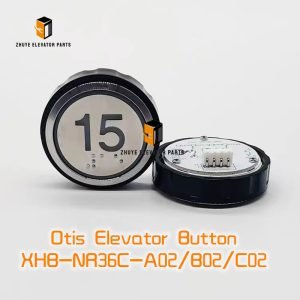
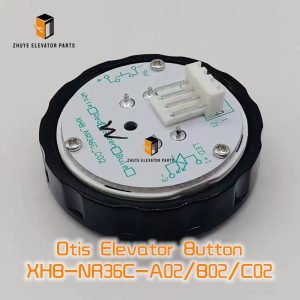
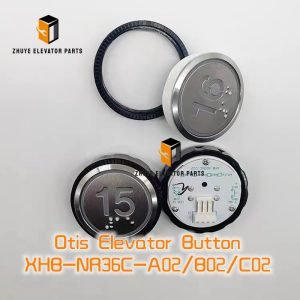
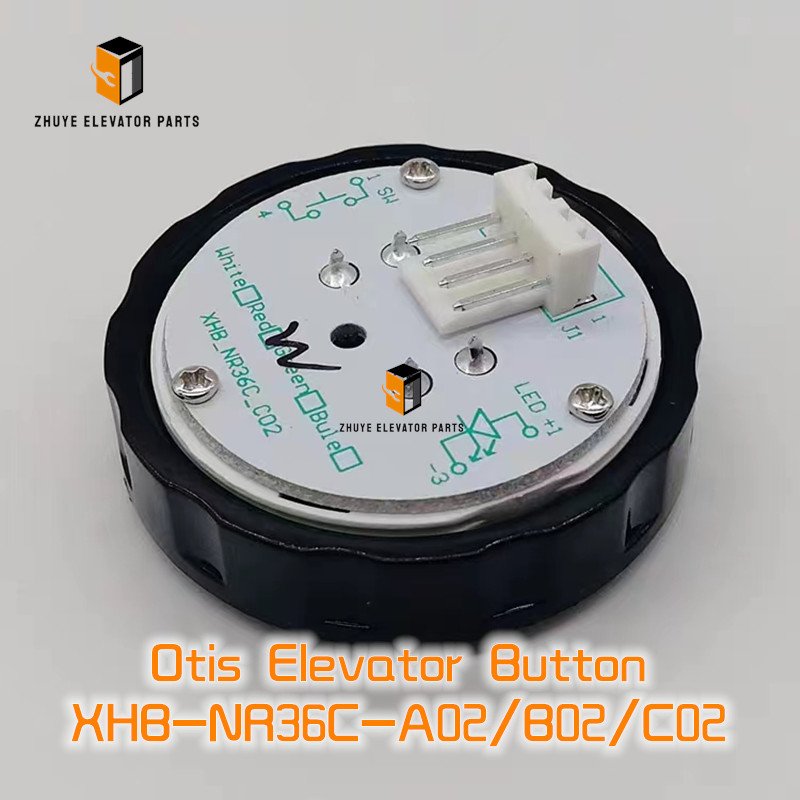
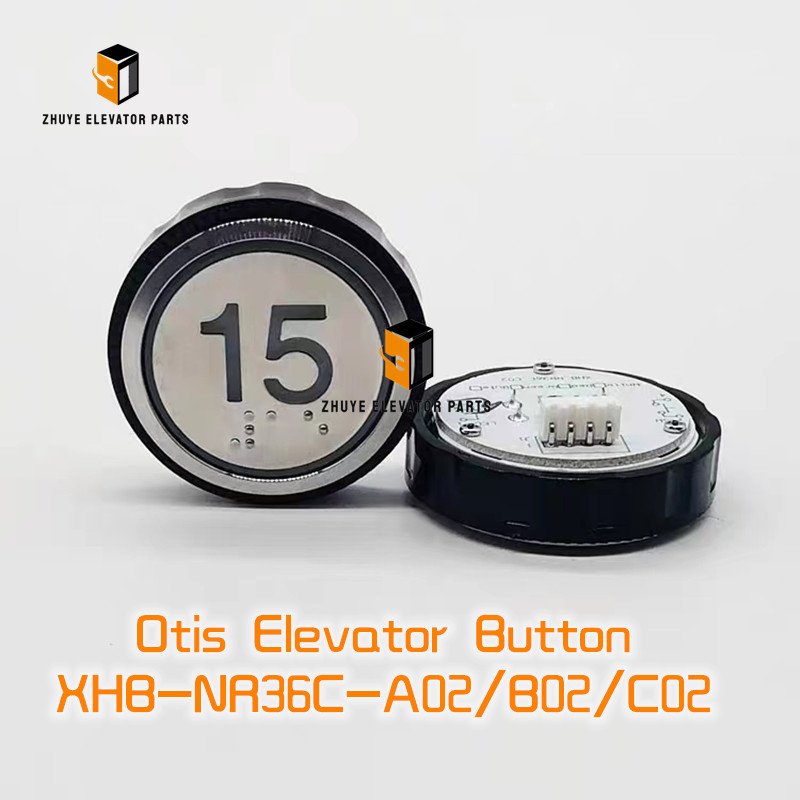
Otis Elevator Button XHB-NR36C-A02/B02/C02 Brief Introduction
|
Product Name |
Otis Elevator Button |
| Model Number | XHB-NR36C-A02/B02/C02 |
|
Quality
|
Original.Brand New
|
|
Payment
|
T/T. Paypal. Western Union
|
|
Delivery
|
3-5 Working Days
|
|
Packaging
|
Packed by carton
|
Otis Elevator Button XHB-NR36C-A02/B02/C02 – Installation, Operation & Replacement Guide
Provided by Nanjing Zhuye Elevator Parts
Provided by Nanjing Zhuye Elevator Parts
Every passenger command begins with a press. Otis part numbers XHB-NR36C-A02, B02 and C02 are the 36 mm diameter, illuminated resin buttons that fill COP and LOP faceplates around the world. Though small, each switch is safety-critical: it must survive millions of actuations, resist vandalism and still “click” like new. Nanjing Zhuye Elevator Parts has imported, laser-marked and stocked genuine XHB-NR36C buttons since 2013, shipping over 80 000 pieces to 52 countries. Below we explain how to choose the correct suffix, install and—crucially—when to replace this “passenger interface” before faded legends or a cracked diaphragm turn a smooth ride into a frustrating no-response.
-
Part-number breakdown XHB-NR36C = 36 mm round button, nickel-plated brass bezel, IP41 front, IK08 impact, –25 °C…+70 °C
A02 = red LED, 24 VDC, N/O contact, 1 mA…2 A, 30 VDC max
B02 = green LED, 24 VDC, same electrical spec
C02 = blue LED, 24 VDC, same electrical spec
Illumination: 1.2 mA per LED, 40 cd/m², 120° viewing angle
Mechanical life: 5 million actuations, 45 N operating force ±5 N -
Safety first—lock-out & verify Button contacts sit on 24 VDC logic but share the cabinet with 110 VDC brake circuits. Lock the controller breaker, hang a lock-out tag and wait 60 s for the rail to fall below 5 V. Keep the new Nanjing Zhuye button in its anti-static bag until mounting—ESD can damage the on-board constant-current LED IC.
-
Mechanical mounting—keep the face flat Bezel outside diameter 36 mm; panel hole 30 +0.2 mm. Insert from front, slide anti-rotation washer, thread M30 plastic nut by hand, final torque 1.5 N·m. Over-tightening bows the faceplate and causes binding; <1 N·m allows the button to spin under finger torque. NYE supplies a free nylon wrench (NY-WRENCH-36) to avoid scratching the nickel bezel.
-
Wiring map (print and stick inside COP) +24 V (brown) → LED anode (pin 1)
0 V (blue) → LED cathode (pin 2)
N/O contact (black) → logic input (pin 3)
Common (white) → 0 V logic (pin 4)
Shield drain → PE at controller end only
Wire size: 0.5 mm² flexible, 105 °C silicone; torque 0.3 N·m on plug-in connector -
Illumination & brightness test Apply 24 VDC; LED must light immediately.
Measure current: 1.2 mA ±0.1 mA.
Luminance: 40 cd/m² @ 20 mA total (16 buttons).
If brightness <30 cd/m², LED is aged—replace button even if contact still works. -
Contact functional test With DMM on logic input, press button; contact resistance must be <50 mΩ.
Release button; leakage <1 µA.
If contact bounces >1 ms or resistance >100 mΩ, silver layer is worn—replace immediately. -
Operating-force curve Fuji factory spec: 45 N ±5 N at 1 mm travel.
Feel gauge: 2 mm pre-travel, 0.3 mm over-travel.
If force <35 N, diaphragm is fatigued; >55 N indicates lubrication dry-out—both schedule replacement. -
Temperature & lifetime model LED: 50 kh @ 25 °C, doubles every 10 °C drop.
Contact silver: 5 million cycles mechanical, 100 k electrical @ 2 A.
Translate to building traffic: Light traffic (residence, 60 presses/day) – LED ≈ 30 years, contact ≈ 30 years, full button ≈ 20 years; inspect every 5 years. Medium traffic (office, 300 presses/day) – LED ≈ 10 years, contact ≈ 5 years, full button ≈ 6 years; inspect every 2 years. Heavy traffic (mall/metro, 800 presses/day) – LED ≈ 5 years, contact ≈ 2 years, full button ≈ 2 years; inspect every 6 months. -
Preventive inspection checklist Monthly: visual LED colour, listen for crisp click. Quarterly: measure contact resistance; >100 mΩ schedules replacement. Annually: lux-meter check; <30 cd/m² schedules replacement. Bi-annually: torque check M30 nut; vibration loosens it, causing flush misalignment.
-
Rapid swap (downtime < 1 min) a) Place car at landing, lock-out, tag out. b) Photograph wire colours with phone. c) Remove M30 nut, slide old button out. d) Insert new Nanjing Zhuye XHB-NR36C-A02/B02/C02, torque 1.5 N·m. e) Restore plug, power up, run click and LED test. f) Log serial number and date; return old unit for recycling.
-
Recycling & sustainability Nanjing Zhuye offers prepaid UPS labels inside every carton.
Returned buttons are stripped: nickel bezel remelted, ABS housing re-granulated, silver contacts refined.
One recycled button saves 0.2 kg CO₂—enough to power the same COP for a week.
By treating the XHB-NR36C-A02/B02/C02 as the passenger interface of the elevator—not just another “button”—you eliminate dark legends, reduce call-backs and keep riders confidently in control.
Specify Nanjing Zhuye genuine stock, follow the press-cycle table above, and the only thing your passengers will ever feel is a crisp, bright, reliable click—press after press, year after year.
Specify Nanjing Zhuye genuine stock, follow the press-cycle table above, and the only thing your passengers will ever feel is a crisp, bright, reliable click—press after press, year after year.