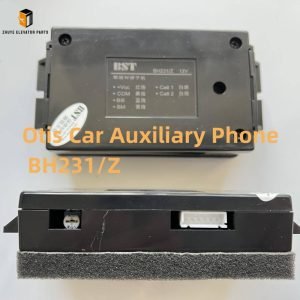


Description
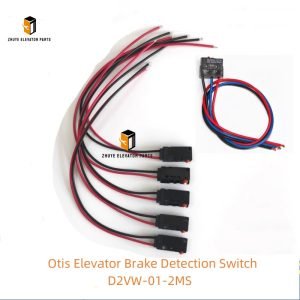
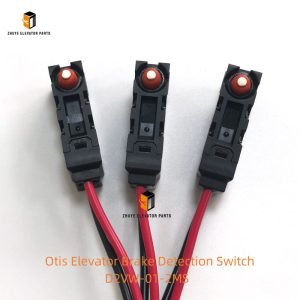
Otis Elevator Brake Detection Switch D2VW-01-2MS
|
Product Name |
Otis Elevator Brake Detection Switch |
| Model Number | D2VW-01-2MS |
|
Quality
|
Original.Brand New
|
|
Payment
|
T/T. Paypal. Western Union
|
|
Delivery
|
3-5 Working Days
|
|
Packaging
|
Packed by carton
|
Otis Elevator Brake Detection Switch D2VW-01-2MS: Usage Guide, Replacement Cycle & Trusted Supply from Nanjing Zhuye
The Otis Elevator Brake Detection Switch D2VW-01-2MS is a safety-critical electrical component exclusively engineered for Otis elevator brake systems—widely deployed in commercial buildings, residential towers, and public transit facilities. As a core brake status verification device, this limit switch monitors whether the elevator’s brake is fully engaged (holding the car) or disengaged (allowing movement), transmitting real-time signals to the main controller to prevent unsafe operation. Compliant with global safety and electrical standards (EN 81, ASME A17.1, IEC 60947, ISO 9001), it features a robust design: corrosion-resistant metal housing, precision snap-action contacts, and a durable actuator lever to ensure reliable performance after millions of brake cycles. For elevator maintenance teams, property managers, and facility operators, mastering the correct installation, testing, and replacement timelines of the D2VW-01-2MS is non-negotiable to prevent brake-related accidents, avoid regulatory violations, and protect passengers from unintended car movement. Nanjing Zhuye Elevator Parts, a trusted supplier of authentic Otis components, delivers the D2VW-01-2MS that meets Otis’s original manufacturing specifications, guaranteeing seamless compatibility, fail-safe signal transmission, and long-term durability.
Proper Usage Methods of Otis Elevator Brake Detection Switch D2VW-01-2MS
1. Pre-Installation Preparation
Before installing the D2VW-01-2MS, prioritize safety by shutting off the elevator’s main power supply, locking the machine room access doors, and securing the control panel with a lockout tag. Inspect the detection switch for physical damage—such as broken actuator levers, cracked housing, corroded contact terminals, or frayed wires—defects that can cause false status signals (e.g., indicating the brake is engaged when it is not) or complete failure. Nanjing Zhuye Elevator Parts conducts rigorous quality control checks, so each D2VW-01-2MS unit arrives in optimal condition, with intact contacts, smooth-acting actuators, and pre-tested electrical continuity. Additionally, verify compatibility with your Otis elevator model by cross-referencing the technical manual or consulting Nanjing Zhuye’s technical support team—ensure the switch’s voltage rating (typically 24V DC/AC), contact rating (≤10A), and mounting dimensions match your brake assembly requirements.
2. Installation & Adjustment Steps
- Removal of Old Switch:
- Access the elevator brake assembly (located in the machine room, near the traction sheave). Disconnect the electrical wires from the old switch (mark wires to ensure correct reconnection—typically “NO” for normally open, “NC” for normally closed, and “COM” for common).
- Use a screwdriver to remove the mounting screws securing the old switch to the brake bracket. Remove the old switch and clean the mounting surface with a wire brush to eliminate dust, debris, or rust—contaminants that can affect switch alignment.
- Installation of New Switch:
- Align the D2VW-01-2MS with the brake bracket’s mounting holes, ensuring the actuator lever is positioned to make contact with the brake’s moving component (e.g., brake arm or release plate). The lever should be slightly depressed (1–2mm) when the brake is engaged and fully released when the brake is disengaged.
- Secure the switch with the provided screws (torque to 2–3 Nm) to prevent vibration-induced loosening. Reconnect the electrical wires to the corresponding terminals, matching the marked connections to avoid polarity errors.
- Functional Adjustment & Testing:
- Manually operate the brake to fine-tune the switch’s position:
- When the brake is engaged (car held stationary), the actuator lever should be depressed, and the switch’s contacts should toggle to the “closed” position (per system requirements).
- When the brake is disengaged (car ready to move), the lever should spring back, and the contacts should toggle to the “open” position.
- Conduct mandatory safety tests (by certified technicians only):
- Continuity Test: Use a multimeter to verify electrical continuity when the switch is activated (brake engaged) and no continuity when deactivated (brake disengaged).
- Operational Test: Energize the brake release coil to confirm the switch sends a “brake disengaged” signal to the main controller, allowing the elevator to operate. De-energize the coil to verify the switch cuts the signal, preventing the elevator from starting.
- Fault Simulation Test: Disconnect the switch to confirm the elevator enters a safe mode (e.g., displays an error code, refuses to move) as required by safety standards.
- Document test results in the elevator’s maintenance records to demonstrate compliance.
- Manually operate the brake to fine-tune the switch’s position:
3. Routine Usage Maintenance
To preserve the D2VW-01-2MS’s fail-safe performance, implement these strict routine practices:
- Conduct weekly visual inspections: Check for loose mounting screws, damaged actuator levers, or debris blocking the lever’s movement. Remove dust or oil from the switch housing with a dry cloth—avoid lubricants, as they can attract dust and impair functionality.
- Test electrical continuity monthly: Use a multimeter to verify the switch’s contacts toggle crisply between open and closed positions—replace the switch if continuity is intermittent or non-existent.
- Inspect contact terminals semi-annually: Check for corrosion or wear on the terminal connections—clean with a contact cleaner if needed, or replace the switch if damage is severe.
- Lubricate the actuator lever’s pivot point annually with Otis-approved lubricant to ensure smooth movement—avoid over-lubrication, as excess grease can interfere with contact toggling.
Recommended Replacement Cycle
The service life of the Otis Elevator Brake Detection Switch D2VW-01-2MS depends on operating conditions (brake cycle frequency, machine room humidity, dust), usage intensity, and maintenance quality. Based on industry standards and Nanjing Zhuye’s technical expertise, the following replacement guidelines are recommended:
1. Standard Replacement Cycle
Under normal operating conditions (12–18 hours of daily use, regular maintenance, dry machine room environment), the D2VW-01-2MS should be replaced every 3–5 years. This timeframe accounts for gradual wear of the actuator lever, contact fatigue, and minor corrosion—ensuring the switch maintains reliable status verification and failsafe operation. Proactive replacement is critical, as a faulty switch can lead to catastrophic safety incidents (e.g., elevator moving with the brake partially engaged) or costly downtime due to false fault signals.
2. Signs That Require Immediate Replacement
Replace the brake detection switch immediately if you encounter any of the following issues:
- Intermittent or no electrical continuity, even after cleaning or adjustment.
- False status signals: Elevator fails to start when the brake is disengaged (switch not toggling) or operates with the brake engaged (switch stuck in the “disengaged” position).
- Physical damage: Broken actuator lever, cracked housing, or corroded terminals that cannot be repaired.
- Abnormal resistance readings: Multimeter tests show inconsistent or excessively high resistance in the switch contacts (≥5Ω).
- Brake system faults: Unresolvable error codes related to brake status verification, traced to the detection switch via diagnostic software.
3. Maintenance to Extend Service Life
To maximize the D2VW-01-2MS’s lifespan:
- Maintain the machine room at a stable temperature (10–35°C) and low humidity (≤60%) to prevent corrosion of contacts and housing.
- Keep the brake assembly clean and free from dust, oil, or debris that can jam the actuator lever or damage contacts.
- Avoid subjecting the switch to excessive force (e.g., over-depressing the actuator lever), as this accelerates lever and contact wear.
- Use only genuine replacement parts and accessories from Nanjing Zhuye for repairs, as counterfeit switches may have inferior contact materials, incorrect wiring, or compatibility issues with Otis brake systems.
Why Choose Nanjing Zhuye Elevator Parts?
When sourcing the Otis Elevator Brake Detection Switch D2VW-01-2MS, Nanjing Zhuye Elevator Parts offers unmatched advantages for safety-focused professionals:
- Authenticity & Compatibility: All D2VW-01-2MS switches are manufactured to Otis’s original specifications, ensuring seamless integration with Otis brake systems and adherence to global safety standards.
- Strict Quality Assurance: Each unit undergoes rigorous testing—including contact continuity verification, actuator durability, corrosion resistance, and electrical performance—to guarantee reliable fail-safe operation.
- Expert Technical Support: Nanjing Zhuye’s certified engineers provide 24/7 assistance, from installation alignment and continuity testing to troubleshooting brake system faults specific to Otis elevators.
- Global Efficient Delivery: With a robust supply chain and logistics network, Nanjing Zhuye delivers safety-critical components promptly worldwide, minimizing elevator downtime during replacement while ensuring compliance.
- Competitive Pricing: By eliminating middlemen, Nanjing Zhuye offers cost-effective solutions without compromising quality, helping you maintain safety standards while controlling maintenance costs for Otis elevators.
Conclusion
The Otis Elevator Brake Detection Switch D2VW-01-2MS is a non-negotiable safety component that acts as the “eyes” of the elevator’s brake system, verifying critical status to prevent unsafe operation. By following proper installation, adjustment, and maintenance methods, adhering to recommended replacement cycles, and partnering with a trusted supplier like Nanjing Zhuye Elevator Parts, you can ensure your Otis elevators remain compliant, safe, and reliable. Whether you need a replacement switch, technical support for installation, or bulk orders for a building fleet, Nanjing Zhuye is committed to delivering premium safety components and tailored professional services. Invest in passenger safety—choose Nanjing Zhuye Elevator Parts for your Otis D2VW-01-2MS brake detection switch requirements.