

Description
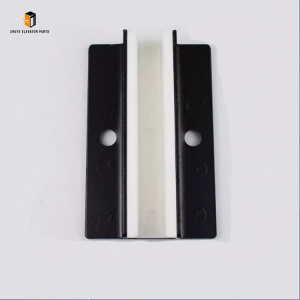
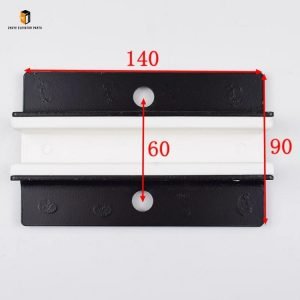
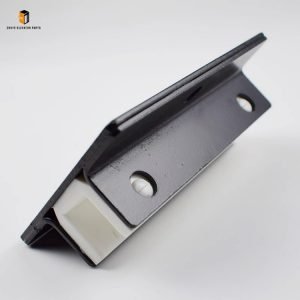
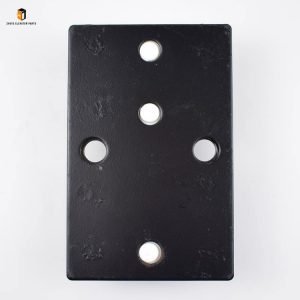
KONE Elevator Counterweight Sliding Guide Shoe 140*16 DX-4D Brief Introduction
|
Product Name |
KONE Elevator Counterweight Sliding Guide Shoe |
| Model Number | 140*16
DX-4D |
|
Quality
|
Original.Brand New
|
|
Payment
|
T/T. Paypal. Western Union
|
|
Delivery
|
3-5 Working Days
|
|
Packaging
|
Packed by carton
|
KONE Elevator Counterweight Sliding Guide Shoe 140*16 DX-4D: Reliable Guidance for Counterweight Operation
In the elevator system, the counterweight sliding guide shoe is a crucial component that ensures the stable and smooth movement of the counterweight along the guide rails, which is closely related to the overall operational efficiency, safety, and ride comfort of the elevator. The KONE Elevator Counterweight Sliding Guide Shoe 140*16 DX-4D, exclusively supplied by Nanjing Zhuye Elevatorparts—a professional and trusted distributor of high-quality elevator components— is engineered in strict accordance with KONE’s original technical standards. With its precise structural design and durable material selection, this guide shoe is perfectly compatible with KONE elevator models matching the 140*16 guide rail specification, widely applied in residential buildings, commercial complexes, and public facilities, providing solid support for the stable operation of KONE elevators worldwide.
Nanjing Zhuye Elevatorparts has established long-term strategic cooperation with KONE, adhering to the core principle of “authenticity, quality, and reliability”. Each unit of the 140*16 DX-4D counterweight sliding guide shoe undergoes rigorous pre-delivery inspections, including material performance testing, dimensional precision calibration, and wear resistance endurance tests. The product adopts a high-strength cast iron frame and a high-performance wear-resistant rubber liner: the cast iron frame ensures excellent load-bearing capacity, capable of stably withstanding the weight of the counterweight; the wear-resistant rubber liner features superior self-lubricating and shock-absorbing properties, effectively reducing friction between the guide shoe and the guide rail, lowering operational noise, and extending the service life of both the guide shoe and the guide rail.
Proper Usage Methods of KONE Elevator Counterweight Sliding Guide Shoe 140*16 DX-4D
Correct installation, daily inspection, and regular maintenance are essential to maximize the performance and service life of the 140*16 DX-4D counterweight sliding guide shoe. Follow these key guidelines:
1. Installation & Calibration
Prior to installation, confirm that the 140*16 DX-4D guide shoe is compatible with the specific KONE elevator model and guide rail specification (140*16) by referring to Nanjing Zhuye Elevatorparts’ detailed compatibility manual. Professional technicians are required for the installation process, which includes the following steps:
-
First, thoroughly clean the guide rail surface and the guide shoe installation position on the counterweight frame to remove dust, oil stains, and debris, ensuring a smooth and tight fit between components.
-
Align the counterweight sliding guide shoe with the preset mounting holes on the counterweight frame, and fasten it firmly using original matching bolts and nuts. The tightening torque must comply with KONE’s technical requirements (typically 28–38 N·m) to prevent loosening during high-frequency operation.
-
Adjust the gap between the rubber liner and the guide rail: the standard gap is 0.5–1.0 mm. Use a professional feeler gauge to adjust the adjusting screws on the guide shoe, ensuring uniform gaps on both sides. Excessive gaps will cause the counterweight to shake during movement, affecting elevator stability; overly small gaps will increase friction, accelerate liner wear, and increase energy consumption.
-
After installation, conduct a test run: operate the elevator at a low speed up and down for 3–4 cycles, check for abnormal noises (such as squeaking, rubbing, or collision sounds) in the guide shoe area, verify that the counterweight moves smoothly without jitter, and confirm that the guide shoe has no abnormal heating.
2. Daily Operation & Routine Inspection
Regular daily inspections are crucial to detect potential faults early. Maintenance personnel should perform the following checks:
-
During elevator operation, monitor the sound from the counterweight guide shoe area. Abnormal noises usually indicate issues such as excessive liner wear, uneven gaps, loose fasteners, or foreign objects stuck between the guide shoe and the guide rail.
-
Carry out weekly visual inspections: check the appearance of the 140*16 DX-4D guide shoe for damage, such as cracks or deformation of the cast iron frame, peeling, wear, or aging of the rubber liner, and looseness of bolts. Retighten loose fasteners in a timely manner, remove foreign objects around the guide shoe, and record any abnormal conditions.
-
Inspect the lubrication status of the liner regularly. Although the rubber liner has self-lubricating properties, if the liner surface is found to be dry or the friction increases, apply a small amount of KONE-specified guide rail lubricant to maintain smooth operation and reduce wear.
3. Regular Maintenance
In addition to daily inspections, systematic regular maintenance is required for the 140*16 DX-4D counterweight sliding guide shoe:
-
Every 3 months, thoroughly clean the guide shoe and the guide rail surface. Use a dry, lint-free cloth to wipe off dust and debris; avoid using water, alcohol, or corrosive cleaners that may damage the rubber liner and guide rail coating.
-
Every 6 months, recheck the gap between the liner and the guide rail. If the gap exceeds the standard range due to wear, adjust it promptly. For liners with wear exceeding 50% of the original thickness, or with obvious cracks and aging, replace them with Nanjing Zhuye Elevatorparts’ original matching liners to ensure consistent performance.
-
Annually, conduct a comprehensive inspection of the cast iron frame structure, including checking for corrosion, deformation, and weld integrity. Take timely maintenance or replacement measures if any defects are found. At the same time, check the wear of the guide rail surface caused by the guide shoe, and perform grinding and maintenance if necessary.
Recommended Replacement Cycle of KONE Elevator Counterweight Sliding Guide Shoe 140*16 DX-4D
As a key wearing component, the 140*16 DX-4D counterweight sliding guide shoe has a specified service life. Timely replacement is vital to avoid safety risks caused by component failure.
1. Standard Replacement Cycle
Under normal operating conditions (10,000–15,000 elevator operations per month, medium load), the recommended replacement cycle for the 140*16 DX-4D counterweight sliding guide shoe is3–5 years. This cycle is determined based on the wear resistance test data of the product and long-term field operation feedback from Nanjing Zhuye Elevatorparts and KONE.
2. Scenario-Based Cycle Adjustment
-
Harsh Operating Environments: For elevators operating in high-dust areas (e.g., construction sites nearby), high-humidity coastal regions, or with frequent overload (e.g., busy shopping malls, transportation hubs), the replacement cycle should be shortened to 2–3 years. Harsh conditions accelerate the wear and aging of the rubber liner and the corrosion of the cast iron frame, reducing component reliability.
-
Low-Frequency Use Scenarios: For elevators with low usage frequency (e.g., villa elevators, small office buildings with less than 3,000 monthly operations), the replacement cycle can be appropriately extended to 5–6 years after a professional inspection by Nanjing Zhuye Elevatorparts confirms that the liner wear is within the allowable range and the cast iron frame structure is intact.
3. Immediate Replacement Conditions
Regardless of the service life, the 140*16 DX-4D counterweight sliding guide shoe must be replaced immediately if any of the following problems are detected during inspection:
-
The cast iron frame is severely deformed, cracked, or corroded, resulting in reduced load-bearing capacity and inability to ensure stable guidance of the counterweight.
-
The rubber liner is severely worn, peeled off, or aged and hardened, leading to direct contact between the cast iron frame of the guide shoe and the guide rail.
-
Abnormal shaking or jitter of the counterweight persists after adjusting the guide shoe gap, which is confirmed to be caused by guide shoe failure and may affect elevator operation safety.
-
Fastener holes are worn or deformed, and bolts cannot be tightened firmly, posing potential safety hazards during the counterweight movement.
In conclusion, the KONE Elevator Counterweight Sliding Guide Shoe 140*16 DX-4D supplied by Nanjing Zhuye Elevatorparts is a high-quality, compatible component for KONE elevator systems. By following the correct usage methods, conducting regular maintenance, and adhering to the recommended replacement cycle, elevator maintenance teams can effectively enhance the operational stability and safety of elevators, reduce failure risks, and extend the overall service life of the elevator. Choosing Nanjing Zhuye Elevatorparts and the 140*16 DX-4D counterweight sliding guide shoe means selecting authenticity, reliability, and professional technical support.