



Description
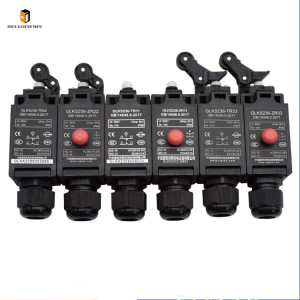
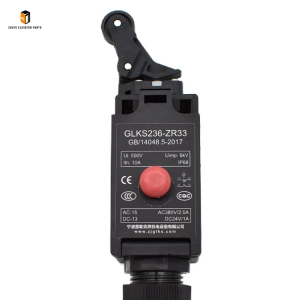
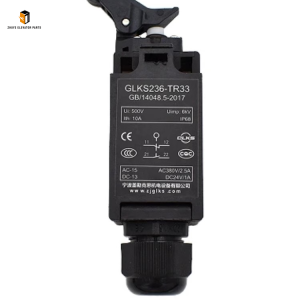
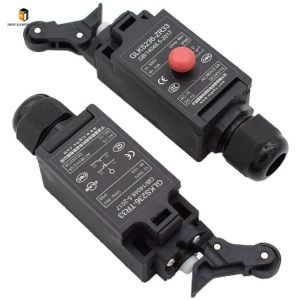
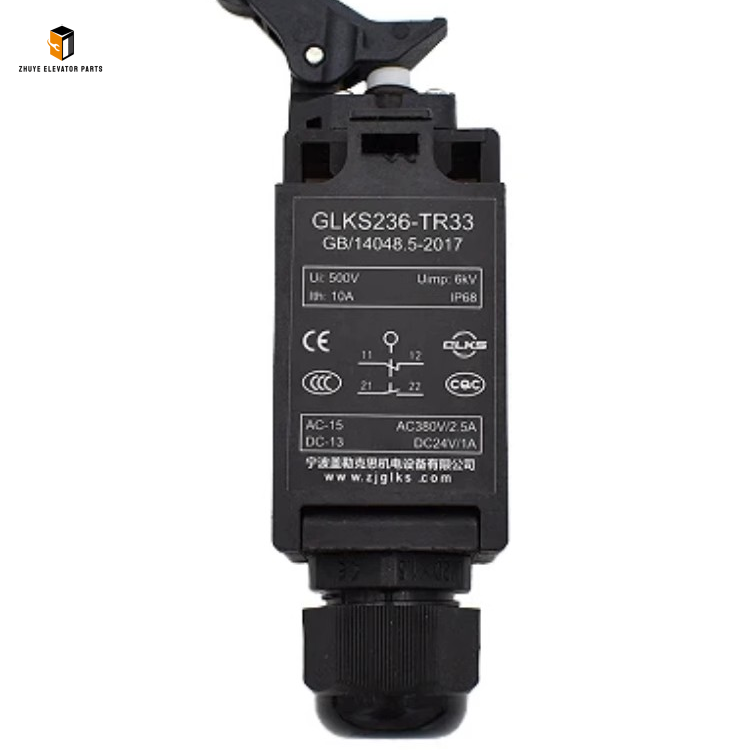
Elevator tensioner speed limiter switch GLKS236-ZR33/TR33 Brief Introduction
|
Product Name |
Elevator tensioner speed limiter switch |
| Model Number | GLKS236-ZR33
GLKS236-TR33 |
|
Quality
|
Original.Brand New
|
|
Payment
|
T/T. Paypal. Western Union
|
|
Delivery
|
3-5 Working Days
|
|
Packaging
|
Packed by carton
|
Elevator Tensioner Speed Limiter Switch GLKS236-ZR33/TR33: Critical Safety Component for Elevator Operation
In the elevator safety protection system, the tensioner speed limiter switch is a vital component that monitors the tension state of the speed limiter rope, acting as a first-line defense to prevent elevator overspeed and rope slack-related accidents. The Elevator Tensioner Speed Limiter Switch GLKS236-ZR33/TR33, exclusively supplied by Nanjing Zhuye Elevatorparts—a professional and trusted distributor of high-quality elevator safety components— is engineered in strict accordance with international elevator safety standards (EN 81-20, GB 7588). With its reliable contact performance and robust structural design, this dual-model switch (GLKS236-ZR33 and GLKS236-TR33) is widely compatible with various elevator models, providing essential safety guarantees for residential buildings, commercial complexes, and public facilities worldwide.
Nanjing Zhuye Elevatorparts has long-term cooperation with well-known elevator component manufacturers, adhering to the core principle of “safety first, quality paramount”. Each unit of GLKS236-ZR33/TR33 undergoes rigorous pre-delivery inspections, including contact resistance testing, mechanical durability testing, and environmental adaptability testing. The product adopts high-quality flame-retardant insulating materials and corrosion-resistant metal contacts: the insulating shell effectively isolates electrical hazards, while the silver-plated contacts ensure stable electrical signal transmission and excellent wear resistance. The differentiated design of GLKS236-ZR33 and GLKS236-TR33 caters to different installation orientations and tension trigger requirements, ensuring perfect compatibility with diverse elevator speed limiter systems.
Proper Usage Methods of Elevator Tensioner Speed Limiter Switch GLKS236-ZR33/TR33
The GLKS236-ZR33 and GLKS236-TR33 share consistent core usage protocols, with minor adjustments based on model-specific installation requirements. Correct installation, daily inspection, and regular maintenance are crucial to ensuring the switch’s reliable safety performance. Follow these key guidelines:
1. Installation & Calibration
Prior to installation, confirm the correct model matching (GLKS236-ZR33 or GLKS236-TR33) with the specific elevator speed limiter system by referring to Nanjing Zhuye Elevatorparts’ detailed compatibility manual. Professional technicians are required for the installation process, which includes the following steps:
-
First, thoroughly clean the installation position on the elevator tensioner assembly to remove dust, oil stains, and debris, ensuring a stable mounting base for the switch.
-
Align the switch with the preset mounting holes on the tensioner, and fasten it firmly using original matching bolts and nuts. The tightening torque must comply with the elevator manufacturer’s technical requirements (typically 15–25 N·m) to prevent loosening during elevator operation.
-
Adjust the trigger gap between the switch lever and the tensioner roller: the standard gap is 2–5 mm. Use a professional feeler gauge to adjust the switch’s position, ensuring that the switch is triggered accurately when the tensioner rope is slack or the tension exceeds the safe range. For GLKS236-ZR33 (normally closed type) and GLKS236-TR33 (normally open type), confirm the contact state matches the elevator control system’s requirements.
-
After installation, conduct a functional test: manually adjust the tensioner to simulate rope slack and over-tension states, check if the switch triggers accurately and sends corresponding electrical signals to the elevator control system. Verify that the elevator enters the protective stop state as required when the switch is triggered.
2. Daily Operation & Routine Inspection
Regular daily inspections are essential to detect potential faults early and ensure the switch’s safety performance. Maintenance personnel should perform the following checks:
-
During elevator operation, monitor the switch’s working state through the elevator control system’s fault code display. Abnormal codes related to the tensioner speed limiter switch usually indicate issues such as poor contact, incorrect trigger gap, or mechanical jamming.
-
Carry out weekly visual inspections: check the appearance of GLKS236-ZR33/TR33 for damage, such as cracks or deformation of the insulating shell, looseness of bolts, and oxidation or ablation of the wiring terminals. Retighten loose fasteners in a timely manner and clean the wiring terminals with a dry cloth if oxidation is found.
-
Inspect the switch lever’s flexibility regularly. Manually toggle the lever to ensure it resets smoothly without jamming. If the lever is stuck, check for foreign objects or mechanical wear and resolve the issue promptly.
3. Regular Maintenance
In addition to daily inspections, systematic regular maintenance is required for GLKS236-ZR33/TR33 to extend its service life and ensure reliable performance:
-
Every 3 months, thoroughly clean the switch and its surrounding area. Use a dry, lint-free cloth to wipe off dust and debris; avoid using water, alcohol, or corrosive cleaners that may damage the insulating shell and contacts.
-
Every 6 months, recheck the trigger gap between the switch lever and the tensioner roller. If the gap deviates from the standard range due to vibration or wear, adjust it promptly. At the same time, check the wiring connections to ensure they are tight and reliable.
-
Annually, conduct a comprehensive performance test: use professional instruments to detect the switch’s contact resistance (should be ≤50mΩ) and mechanical durability. Replace the switch or its components if the performance indicators do not meet the requirements. Nanjing Zhuye Elevatorparts provides original matching components for GLKS236-ZR33/TR33 to ensure consistent safety performance.
Recommended Replacement Cycle of Elevator Tensioner Speed Limiter Switch GLKS236-ZR33/TR33
As a critical safety component, GLKS236-ZR33/TR33 has a specified service life. Timely replacement is vital to avoid safety risks caused by component aging or failure.
1. Standard Replacement Cycle
Under normal operating conditions (8,000–12,000 elevator operations per month, normal environmental conditions), the recommended replacement cycle for both GLKS236-ZR33 and GLKS236-TR33 is 4–6 years. This cycle is determined based on the product’s mechanical durability test data and long-term field operation feedback from Nanjing Zhuye Elevatorparts.
2. Scenario-Based Cycle Adjustment
-
Harsh Operating Environments: For elevators operating in high-humidity coastal regions, high-dust construction sites, or high-temperature unventilated machine rooms, the replacement cycle should be shortened to3–4 years. Harsh conditions accelerate the aging of insulating materials, corrosion of contacts, and mechanical wear, reducing the switch’s reliability.
-
Low-Frequency Use Scenarios: For elevators with low usage frequency (e.g., villa elevators, small office buildings with less than 2,500 monthly operations), the replacement cycle can be appropriately extended to 6–8 years after a professional inspection by Nanjing Zhuye Elevatorparts confirms that the switch’s contact performance, mechanical flexibility, and insulating properties are intact.
3. Immediate Replacement Conditions
Regardless of the service life, GLKS236-ZR33/TR33 must be replaced immediately if any of the following problems are detected during inspection:
-
The insulating shell is severely cracked, deformed, or burned, losing its insulating and protective functions.
-
Contacts are severely oxidized, ablated, or stuck, resulting in poor contact or failure to trigger electrical signals.
-
The switch lever is stuck and cannot reset smoothly, or the mechanical structure is damaged, affecting normal trigger performance.
-
The switch fails the performance test (e.g., contact resistance exceeds the standard, failure to trigger accurately), and the fault cannot be eliminated after maintenance.
In conclusion, the Elevator Tensioner Speed Limiter Switch GLKS236-ZR33/TR33 supplied by Nanjing Zhuye Elevatorparts is a reliable core safety component for elevator systems. By following the correct usage methods, conducting regular maintenance, and adhering to the recommended replacement cycle, elevator maintenance teams can effectively enhance the safety protection level of elevators, prevent potential accidents, and ensure the safety of passengers. Choosing Nanjing Zhuye Elevatorparts and GLKS236-ZR33/TR33 means selecting authenticity, reliability, and professional technical support.