



Description
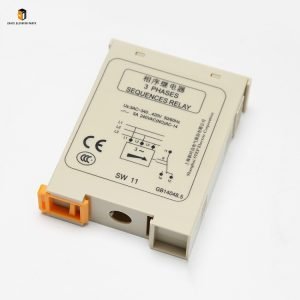
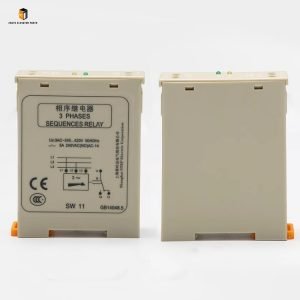
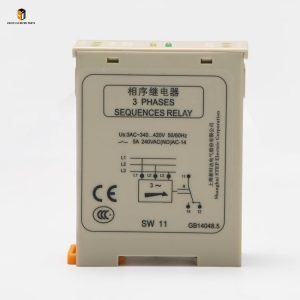
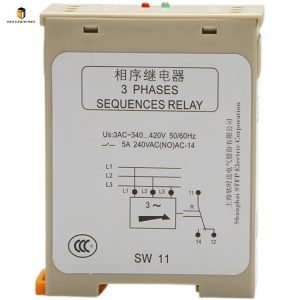
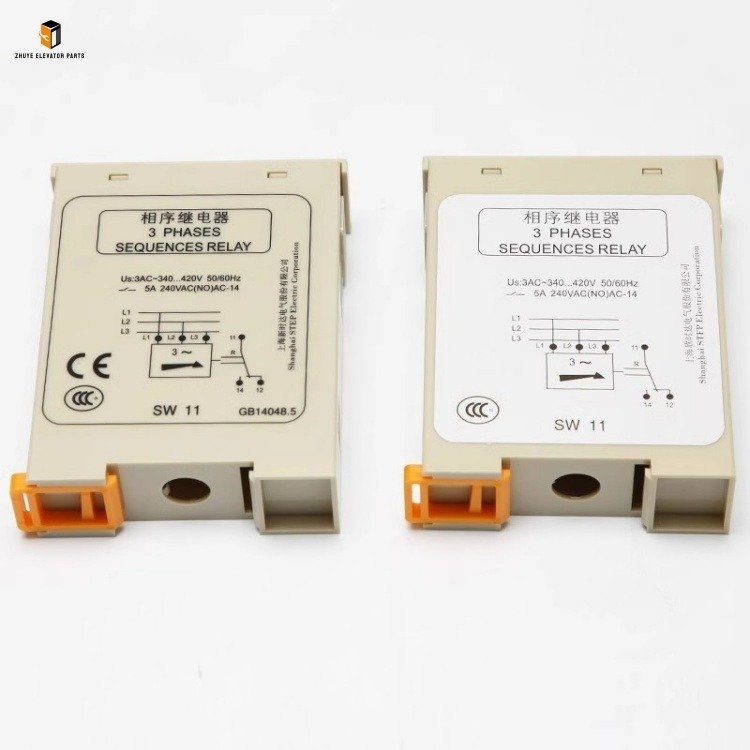
Elevator STEP phase sequence relay SW11 Brief Introduction
|
Product Name |
Elevator STEP phase sequence relay |
| Model Number | SW11 |
|
Quality
|
Original.Brand New
|
|
Payment
|
T/T. Paypal. Western Union
|
|
Delivery
|
3-5 Working Days
|
|
Packaging
|
Packed by carton
|
Elevator STEP Phase Sequence Relay SW11 – Nanjing Zhuye Elevatorparts
The elevator’s three-phase power supply system is the foundation of its stable operation, and the STEP phase sequence relay serves as a “core power protection barrier” to prevent faults caused by phase loss, phase sequence reversal, or voltage anomalies. The Elevator STEP Phase Sequence Relay SW11 provided by Nanjing Zhuye Elevatorparts is a high-reliability protection component tailored for elevator power systems. It is widely compatible with mainstream elevator brands such as Schindler, OTIS, and KONE, suitable for both passenger and freight elevators. This relay accurately monitors the phase sequence, phase presence, and voltage stability of the three-phase power supply, cutting off the elevator control circuit immediately when an anomaly occurs to avoid damage to the elevator motor, inverter, and other key components. Crafted with high-precision detection chips, flame-retardant insulation materials, and a robust shell, it meets international electrical safety standards (IEC 61810, GB/T 14048.10) and has become a trusted choice for global elevator maintenance teams and manufacturers.
Nanjing Zhuye Elevatorparts adheres to the core philosophy of “Precision Monitoring, Reliable Protection” and implements strict quality control throughout the production process of the SW11 elevator STEP phase sequence relay. Each unit undergoes rigorous testing, including phase sequence detection accuracy verification, voltage range adaptability testing, overload protection performance assessment, and high-temperature resistance detection. The relay supports a wide three-phase voltage input range (AC 380V ±10%), with high phase sequence detection accuracy (response time ≤ 0.1s) to quickly identify power supply anomalies. The flame-retardant ABS shell can withstand high temperatures up to 120℃, with excellent flame-retardant and anti-shock properties. The built-in anti-interference circuit ensures stable operation even in complex electrical environments of elevator machine rooms, and the clear indicator lights (normal, phase loss, phase reversal) facilitate technicians to quickly diagnose faults.
Usage Guide for Elevator STEP Phase Sequence Relay SW11
Correct installation, debugging, and maintenance are crucial to ensuring the reliable performance of the SW11 elevator STEP phase sequence relay. Nanjing Zhuye Elevatorparts emphasizes that only certified elevator electrical technicians are allowed to perform related operations, as improper use may lead to failure of the power protection function and serious elevator safety hazards.
1. Pre-Installation Preparation
1. Pre-Installation Preparation
First, confirm that the elevator’s MAC car lighting controller model matches the POWCV24181MH power supply (check parameters such as input voltage, output voltage, output current, and installation dimensions). Consult Nanjing Zhuye Elevatorparts’ technical team if there is any uncertainty about compatibility. Then, cut off the elevator’s main power supply and the secondary power supply for the car lighting system, lock the switch, and place a “Maintenance in Progress” warning sign at the elevator landing doors and machine room entrance. Locate the power supply installation position (usually on the car top or in the car control cabinet) and clean the area to remove dust, debris, and oil stains. Finally, prepare professional tools such as a screwdriver, wire stripper, multimeter, and insulation tester, and check that the new POWCV24181MH power supply from Nanjing Zhuye Elevatorparts is intact (no damage to the shell, no loose pins).
First, confirm that the elevator power system parameters match the SW11 phase sequence relay (check input voltage, phase sequence type, and installation dimensions). Consult Nanjing Zhuye Elevatorparts’ technical team if there is any uncertainty about compatibility. Then, cut off the elevator’s main power supply and the secondary power supply for the control system, lock the switch, and place a “Maintenance in Progress” warning sign at the machine room entrance and landing doors. Use a multimeter to check the three-phase power supply to ensure no residual voltage exists. Finally, prepare professional tools such as a screwdriver, wire stripper, multimeter, and insulated gloves, and clean the relay installation position in the control cabinet to remove dust, oil stains, and debris.
2. Installation & Wiring
If replacing the old phase sequence relay, first take photos to record the wiring positions (three-phase power input terminals, control signal output terminals) and terminal labels for later reference. Disconnect the wires from the old relay according to the labels and remove the old relay. Take the new SW11 phase sequence relay from Nanjing Zhuye Elevatorparts, fix it on the installation rail in the control cabinet (ensure good ventilation around), and connect the wires strictly following the photos and the wiring diagram provided by Nanjing Zhuye: Connect the three-phase power lines (L1, L2, L3) to the corresponding input terminals, and the control signal lines to the output terminals. Ensure tight connections, correct phase sequence, and use insulated terminals for wire connections to avoid short circuits. After wiring, use a multimeter to check the wiring continuity and insulation performance between terminals.
Debugg3. Operation & Daily Maintenance
Restore the power supply and switch the elevator to inspection mode. First, check the relay’s indicator light: The green light indicates normal phase sequence and voltage; the yellow light indicates phase loss; the red light indicates phase reversal. Then, perform anomaly simulation tests: Swap two phase power lines to confirm the relay triggers phase reversal protection (red light on, control circuit cut off); disconnect one phase power line to confirm the relay triggers phase loss protection (yellow light on, elevator cannot start). Restore the normal power supply and operate the elevator to run up and down multiple times to check the relay’s working stability. For daily maintenance, inspect the relay during monthly machine room patrols: Check if the shell is hot, discolored, or has abnormal odors; confirm wiring terminals are tight and free of oxidation; clean the relay surface with a dry cloth. Every 3 months, use a multimeter to test the input voltage and relay’s contact resistance; every 6 months, inspect the indicator lights and internal wiring (if accessible) for signs of aging.
Replacement Cycle of Elevator STEP Phase Sequence Relay SW11
The replacement cycle of the SW11 STEP phase sequence relay is closely related to operating frequency and environmental conditions. Under normal circumstances (elevator daily operation 12-24 hours, machine room temperature 0℃-40℃, stable power supply, no frequent voltage fluctuations), Nanjing Zhuye Elevatorparts recommends a replacement cycle of 3-4 years. This cycle is determined based on long-term field operation data, component aging tests, and circuit performance assessments, fully considering the aging of internal detection chips and the attenuation of contact performance.
largedaily operation ≥ 20 hours) or4, frequent power fluctuations.5-2operation and unstable power supply componentcause of terminalstime <4-5lay’s detection accuracy and protection functions meet safetyFor elevators in high-traffic areas (e.g., large shopping malls, freight elevators with frequent full-load operation) or harsh environments (e.g., high humidity, heavy dust, frequent vibration), the replacement cycle should be shortened to 1.5-2.5 years. High-frequency load changes accelerate sensor wear, while harsh environments cause corrosion of the shell and terminals and affect circuit performance. For low-usage elevators (e.g., villa elevators, small office buildings with daily operation time < 8 hours) in stable environments, the cycle can be extended to 4-5 years, but only after inspection and confirmation by Nanjing Zhuye’s technicians that the switch’s weighing accuracy and signal stability meet safety standards.
Replace the relay immediately if any of the following issues occur, regardless of its service life: The relay fails to trigger protection when phase loss or phase reversal occurs; the indicator light is dim, flickering, or fails to work; the relay shell is severely hot, discolored, or has a burning smell during operation; internal components are aging, swollen, or leaking (visible via the inspection window); the relay causes frequent power protection faults that cannot be eliminated by debugging; the wiring terminals are severely oxidized or burned.
The Elevator STEP Phase Sequence Relay SW11 from Nanjing Zhuye Elevatorparts integrates precision monitoring, reliable protection, and strong compatibility, providing a solid power safety guarantee for elevator systems. By following the correct usage, maintenance, and replacement guidelines, you can effectively prevent elevator faults caused by power supply anomalies, protect key components such as the motor and inverter, and improve the overall safety and stability of the elevator. Choosing Nanjing Zhuye Elevatorparts means you get 100% authentic SW11 phase sequence relays, as well as professional services including model matching, on-site installation guidance, and timely after-sales support. Trust Nanjing Zhuye Elevatorparts for the safety of your elevator power system.