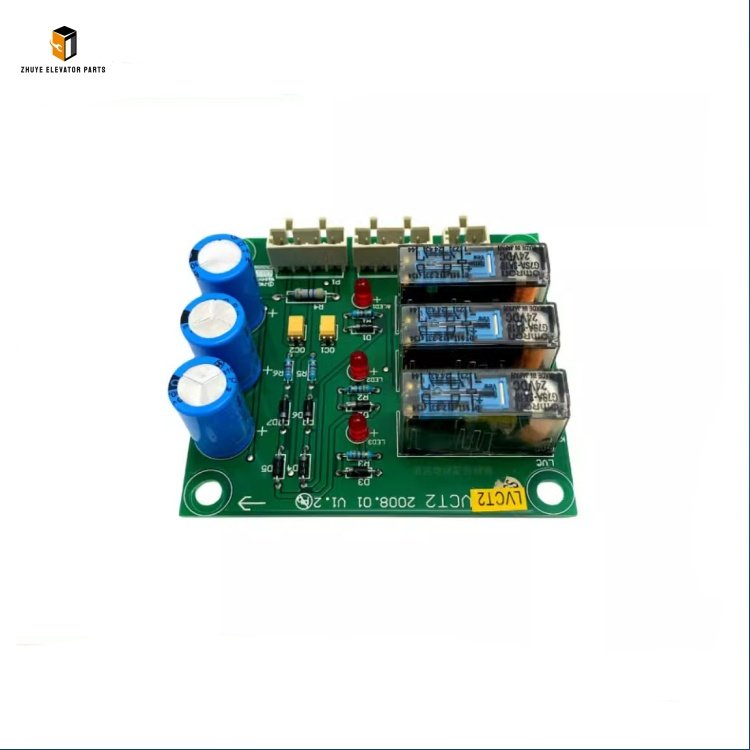
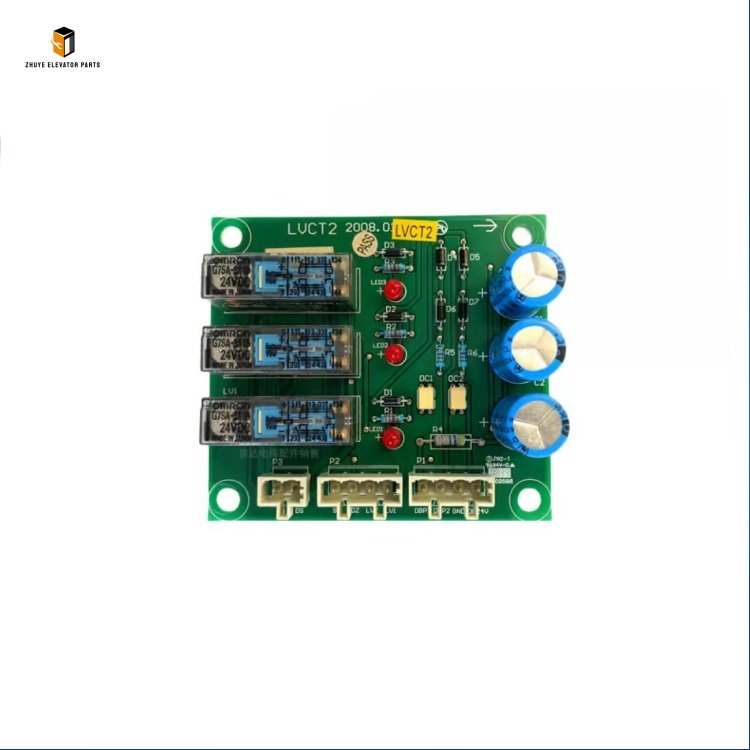
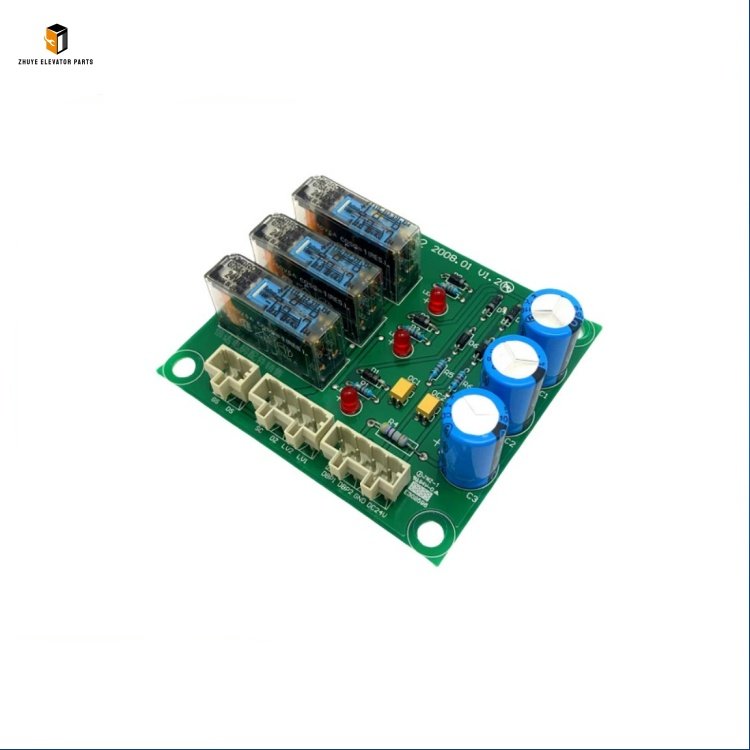
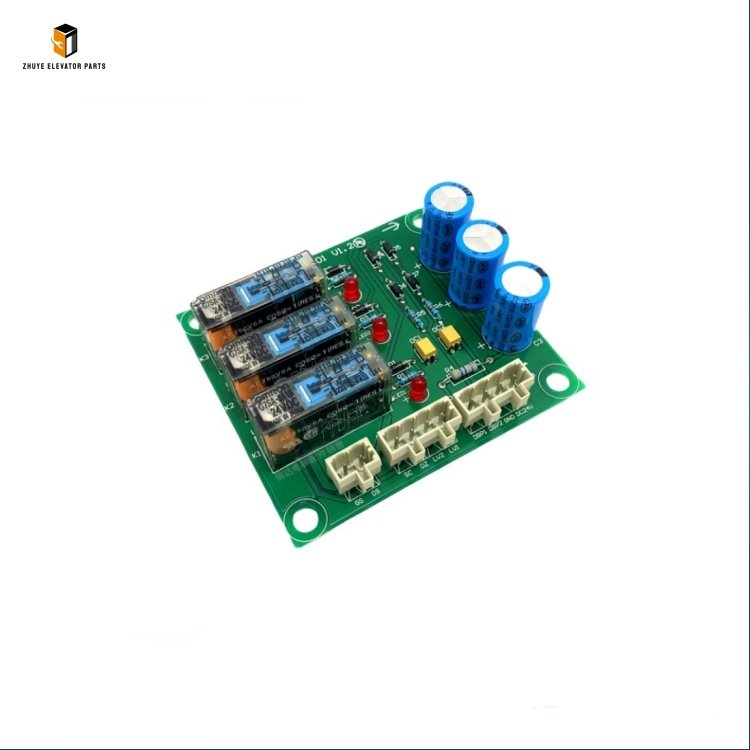
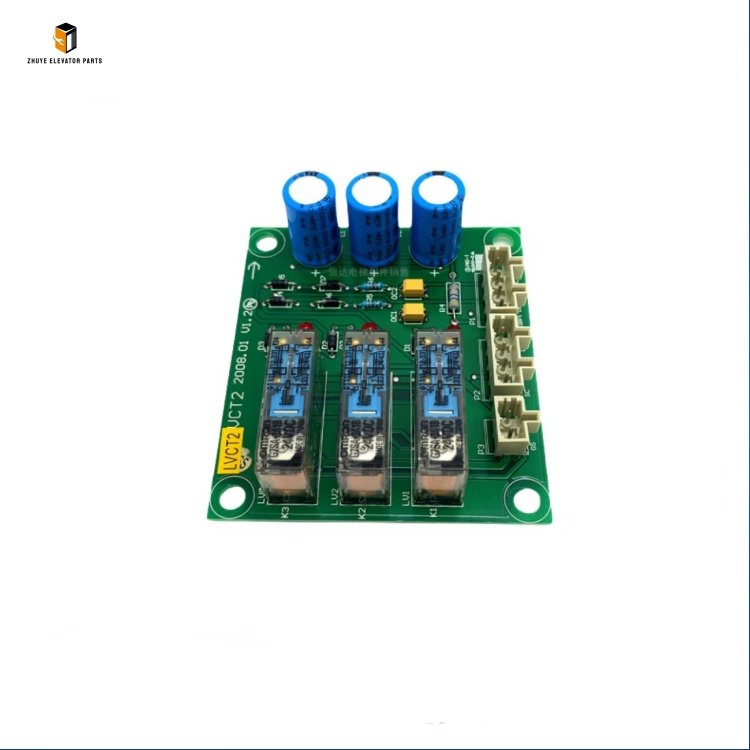
Description
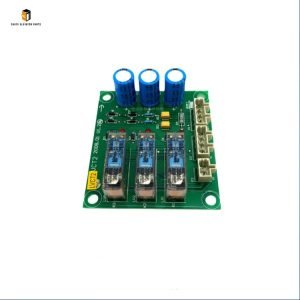
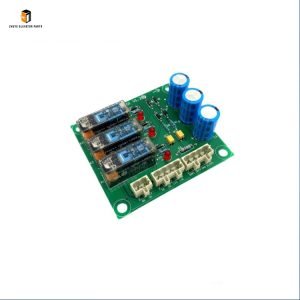
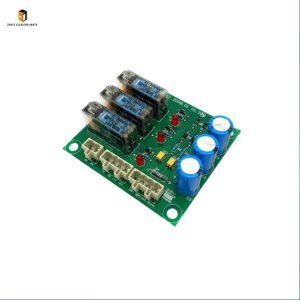
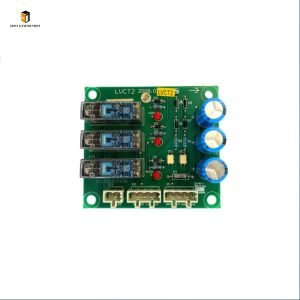
Elevator PCB Re-Leveling Plate LVCT1 LVCT2 Circuit Board XAA610BR1 Brief Introduction
|
Product Name |
Elevator PCB Re-Leveling Plate LVCT1 LVCT2 Circuit Board |
| Model Number | XAA610BR1
LVCT1 LVCT2 |
|
Quality
|
Original.Brand New
|
|
Payment
|
T/T. Paypal. Western Union
|
|
Delivery
|
3-5 Working Days
|
|
Packaging
|
Packed by carton
|
Nanjing Zhuye Elevator Parts: Elevator PCB Re-Leveling Plate LVCT1/LVCT2 XAA610BR1 – Precision Leveling for Safe Entry
Elevator floor leveling accuracy and passenger safety depend on specialized control components, and the Elevator PCB Re-Leveling Plate LVCT1/LVCT2 Circuit Board XAA610BR1 stands as a critical precision module designed exclusively for Otis elevator systems. This dedicated re-leveling board processes position signals from elevator encoders and sensors, enabling micro-adjustments to ensure the car floor aligns perfectly with landing floors (within ±1mm) – eliminating tripping hazards and enhancing passenger comfort. Nanjing Zhuye Elevator Parts, a globally trusted supplier of premium elevator components, proudly offers Otis-compatible XAA610BR1 re-leveling plates (supporting both LVCT1 and LVCT2 variants), engineered to match Otis’ original technical specifications and safety standards (compliant with EN 81-20 and ASME A17.1). This article provides a comprehensive guide to the product’s features, proper usage methods, replacement cycles, and why Nanjing Zhuye Elevator Parts is the preferred choice for Otis elevator professionals worldwide.
Product Overview: Elevator PCB Re-Leveling Plate LVCT1/LVCT2 XAA610BR1 by Nanjing Zhuye Elevator Parts
The Elevator PCB Re-Leveling Plate LVCT1/LVCT2 XAA610BR1 is a precision positioning control board tailored for Otis elevator systems, compatible with popular Otis models (including Gen2, NCE, and SkyRise series). It supports two functional variants: LVCT1 (for standard-speed elevators up to 2.5m/s) and LVCT2 (for high-speed elevators up to 4m/s), both featuring a 16-bit microcontroller for real-time signal processing and multi-sensor input compatibility (encoder pulses, proximity sensors, and floor markers). The board integrates analog-to-digital conversion (ADC) modules for accurate position detection and PWM output for smooth re-leveling actuation, ensuring consistent alignment even under varying loads. Operating on a 24V DC power supply (±10%), it features a compact, plug-and-play design that fits seamlessly into Otis elevator control cabinets, with IP40 protection against dust and minor moisture.
At Nanjing Zhuye Elevator Parts, precision and reliability are non-negotiable. The XAA610BR1 re-leveling plate incorporates industrial-grade signal processing components with anti-interference circuitry, minimizing signal distortion from elevator drive systems. It includes built-in self-diagnostic functions that trigger fault codes for easy troubleshooting, and a rugged PCB with gold-plated connectors for corrosion resistance and long-term signal stability. Each unit undergoes rigorous quality control, including leveling accuracy testing (±0.5mm tolerance), sensor signal validation, and environmental endurance trials (operating range: -10°C to 60°C), complying with ISO 9001, CE, and RoHS standards. This commitment to excellence ensures the board delivers consistent re-leveling performance, reducing passenger complaints and maintenance costs associated with misalignment issues.
How to Use the Elevator PCB Re-Leveling Plate LVCT1/LVCT2 XAA610BR1
Proper installation, sensor calibration, and parameter configuration are critical to maximizing the board’s leveling accuracy and ensuring elevator safety. Follow these professional guidelines:
Installation Steps
- Safety Preparation: Before installation, shut off the elevator’s main power supply and disconnect the control cabinet power. Implement LOTO (Lockout/Tagout) procedures to prevent electrical hazards. Access the control cabinet (typically in the machine room) using a stable platform, wearing insulating gloves, safety glasses, and an anti-static wristband to protect sensitive electronic components.
- Remove the Old Board: Locate the existing XAA610BR1 re-leveling plate in the Otis control cabinet (mounted on the backplane with locking clips or small fixing screws). Disconnect all wiring harnesses—take detailed photos of terminal connections (note labels like ENCODER IN, SENSOR IN, POWER, and CONTROLLER COMM) to ensure correct reconnection. Release the locking clips or remove the screws, then carefully lift the old board out of the backplane, avoiding damage to connectors or traces.
- Prepare the Mounting Area: Clean the backplane connectors with a dry, lint-free cloth to remove dust or debris. Inspect the connectors for bent pins or corrosion (straighten minor bends with a precision tool or replace the backplane if damaged) to ensure reliable electrical contact. Verify all sensor and encoder wiring harnesses are in good condition (no fraying or insulation damage) – faulty wiring is a common cause of leveling inaccuracies.
- Install the New Board: Align the Nanjing Zhuye Elevator Parts XAA610BR1 (match the original variant: LVCT1 or LVCT2) with the backplane guides, ensuring the edge connector fully seats into the backplane socket. Secure the board with locking clips or original screws (torque: 0.8-1.2 N·m) to prevent vibration-induced loosening. Reconnect all wiring harnesses according to the photos, ensuring each connector clicks into place to avoid loose connections. Double-check encoder and sensor signal wiring to prevent signal loss.
- Configure and Calibrate: Restore power to the control cabinet. Access Otis’ service software (e.g., Otis Service Tool) via the communication port to verify the board is recognized. Upload the original re-leveling parameters (saved from the old board) to the new board—this includes leveling threshold values, sensor sensitivity, and re-leveling speed settings. Conduct a calibration test: run the elevator to each floor, initiate re-leveling (via service mode), and adjust parameters if necessary to achieve ±1mm alignment. Test under varying loads (empty, half-load, full-load) to validate consistent leveling performance across all conditions.
Usage Precautions
- Parameter Backup & Calibration: Always back up the old board’s parameters before replacement. Incorrect leveling parameters can cause over-adjustment (car bouncing) or under-adjustment (misalignment), creating safety hazards.
- Anti-Static Handling: Store the board in an anti-static bag when not in use. Never touch exposed circuits or connectors with bare hands—static electricity can damage the microcontroller or signal processing modules.
- Sensor Maintenance: Clean floor proximity sensors and encoder wheels monthly. Dirty or misaligned sensors provide inaccurate signals to the re-leveling board, leading to leveling errors.
- Voltage Compatibility: Ensure the control cabinet’s power supply matches the board’s requirements (24V DC ±10%)—voltage fluctuations can cause erratic leveling or board failure.
- Environmental Protection: Keep the control cabinet free of dust and moisture. Avoid direct exposure to extreme temperatures, as this degrades signal processing components over time.
Replacement Cycle of Elevator PCB Re-Leveling Plate LVCT1/LVCT2 XAA610BR1
The replacement cycle depends on usage intensity, environmental conditions, and sensor maintenance. Follow these Otis-specific guidelines:
General Timeline
- High-Traffic Areas: Shopping malls, airports, or high-rise buildings (Otis elevators operating 12+ hours daily, 1,000+ cycles per day) – replace every 6-8 years. Frequent re-leveling cycles accelerate component wear.
- Medium-Traffic Areas: Residential buildings, hotels, or offices (8-10 hours daily, 500-1,000 cycles per day) – replace every 8-10 years.
- Low-Traffic Areas: Villas, industrial facilities, or low-occupancy buildings (4-6 hours daily, day) – replace every 10-12 years, with semi-annual leveling accuracy checks.
Signs of Replacement Need
Replace the re-leveling plate immediately if:
- Leveling Inaccuracies: Consistent misalignment (error >5mm) even after calibration, or erratic leveling (car overshooting/undershooting) – indicating signal processing module degradation.
- Persistent Fault Codes: Recurring “re-leveling error,” “sensor communication failure,” or “position signal loss” codes that persist after wiring checks and sensor cleaning.
- Physical Damage: Burnt components, swollen capacitors, or corrosion on the PCB – common in cabinets exposed to humidity or power surges.
- No Re-Leveling Response: The board fails to initiate re-leveling when triggered, or does not adjust the car position despite sensor signals.
- Performance Degradation: Gradual increase in leveling time or inconsistent alignment across different floors – indicating microcontroller or ADC module wear.
Importance of Timely Replacement
A faulty XAA610BR1 re-leveling plate compromises passenger safety and comfort, leading to tripping hazards, passenger complaints, or non-compliance with safety regulations (EN 81-20, ASME A17.1). Timely replacement ensures precise floor alignment, maintains Otis’ safety standards, and prevents secondary damage to elevator door systems (misalignment causes excessive door wear).
Why Choose Nanjing Zhuye Elevator Parts’ XAA610BR1?
Nanjing Zhuye Elevator Parts stands out as a trusted partner for Otis elevator maintenance:
- 1:1 Otis Compatibility: Engineered to match Otis’ original LVCT1/LVCT2 hardware and software specifications, ensuring seamless integration with Otis elevator systems—no modifications required.
- Precision Performance: Manufactured with high-accuracy signal processing components and calibrated to Otis’ strict leveling standards (±0.5mm tolerance), delivering the same alignment precision as Otis’ OEM boards.
- Rigorous Quality Assurance: 100% pre-delivery testing, including leveling accuracy validation, sensor signal processing trials, and environmental stress testing.
- Expert Otis Support: Our team of certified engineers specializes in Otis leveling systems, providing professional guidance on installation, calibration, and troubleshooting.
- Fast Emergency Delivery: We maintain a large inventory of both LVCT1 and LVCT2 variants to fulfill urgent replacement orders within 24-48 hours, minimizing downtime associated with leveling issues.
Whether you’re an elevator maintenance firm specializing in Otis, a building manager with Otis elevators, or a service engineer, the Elevator PCB Re-Leveling Plate LVCT1/LVCT2 XAA610BR1 from Nanjing Zhuye Elevator Parts delivers the precision, reliability, and compatibility you need. Invest in a product that prioritizes passenger safety, comfort, and Otis elevator performance – choose Nanjing Zhuye Elevator Parts for your Otis re-leveling components.