
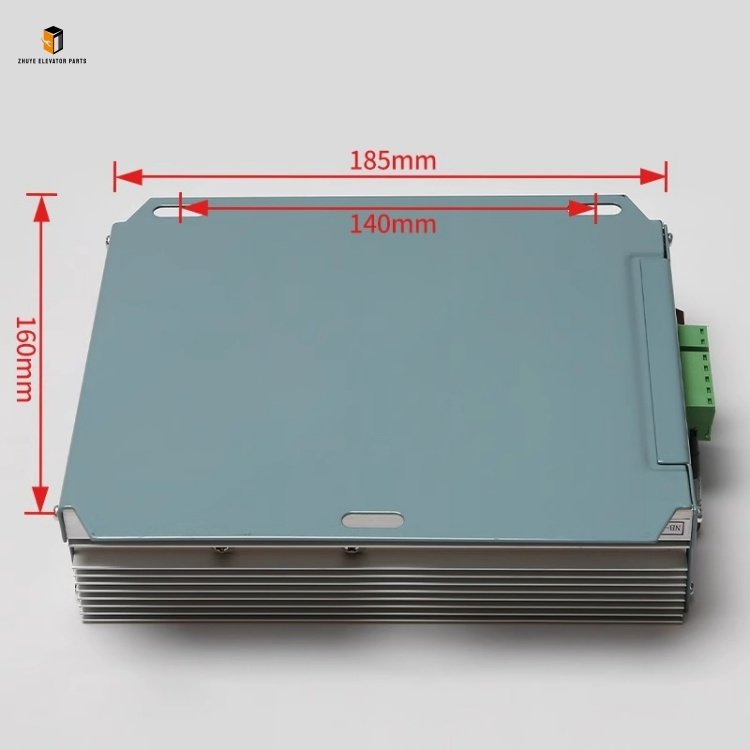
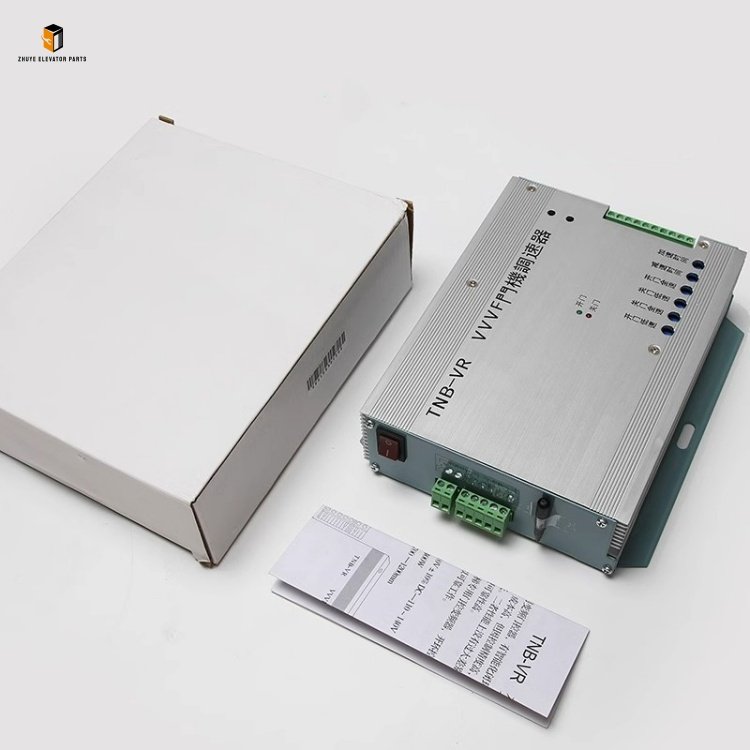
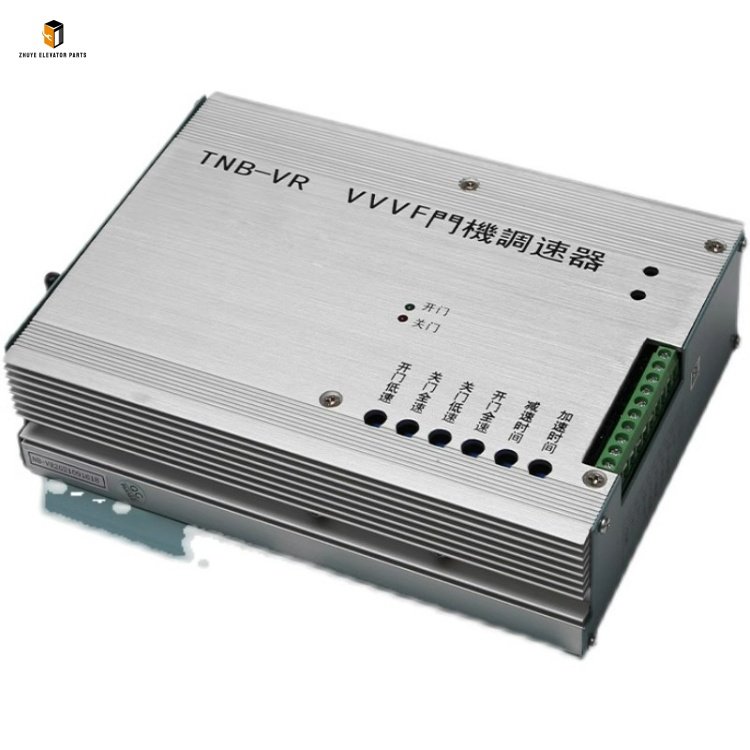
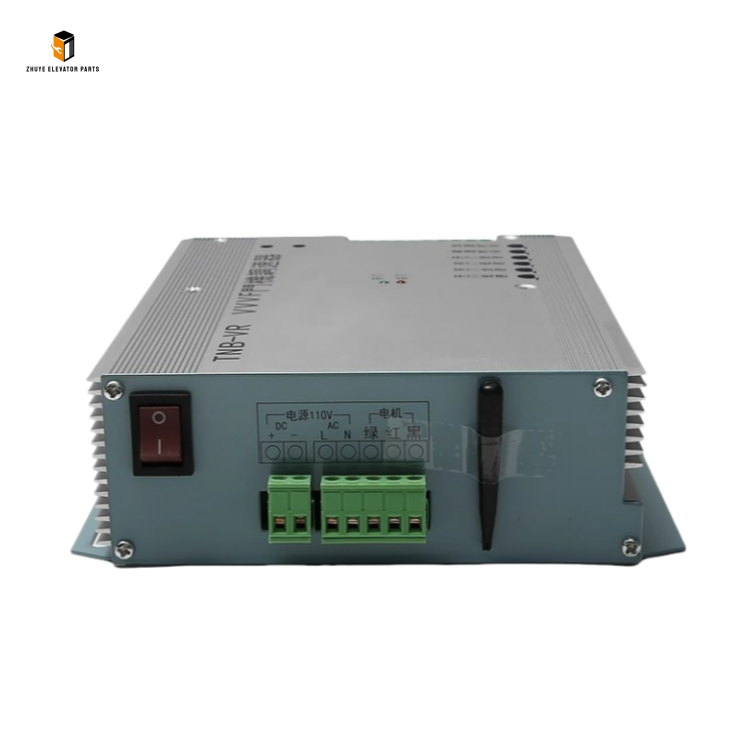
Description
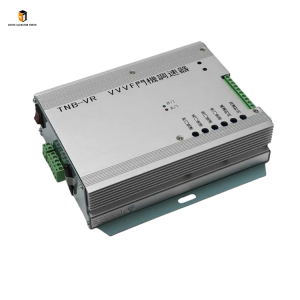
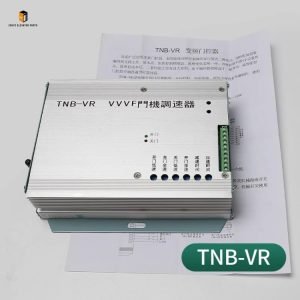
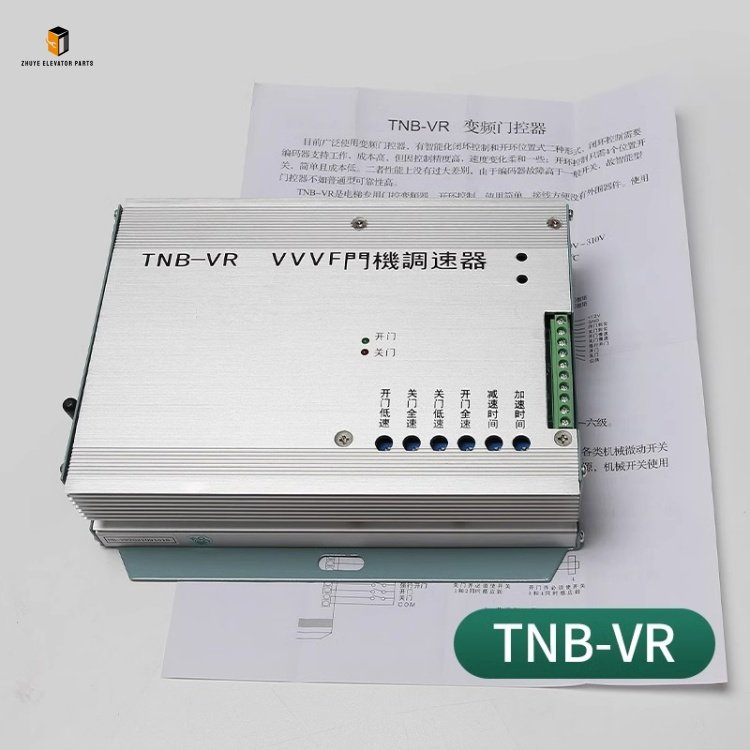
Elevator parts door controller VVVF TNB-V1 TNB-VR Brief Introduction
|
Product Name |
Elevator parts door controller |
| Model Number | VVVF
TNB-V1 TNB-VR |
|
Quality
|
Original.Brand New
|
|
Payment
|
T/T. Paypal. Western Union
|
|
Delivery
|
3-5 Working Days
|
|
Packaging
|
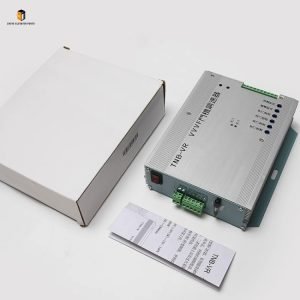
Packed by carton
|
Elevator Door Controller VVVF TNB-V1 & TNB-VR: Precision Control Core from Nanjing Zhuye Elevatorparts
Elevator Door Controllers VVVF TNB-V1 and TNB-VR are advanced variable frequency (VVVF) control components exclusively designed for elevator door systems, engineered to regulate the speed, acceleration, and deceleration of elevator car doors and landing doors with high precision. As the “brain” of the elevator door system, these controllers adopt VVVF technology to achieve smooth, quiet, and energy-efficient door operation—reducing mechanical wear and enhancing passenger ride comfort. Exclusively supplied by Nanjing Zhuye Elevatorparts (a professional and trusted distributor of high-quality elevator electrical components), the Elevator Door Controller VVVF TNB-V1 & TNB-VR fully comply with international elevator safety standards (EN 81-20, GB 7588) and electromagnetic compatibility (EMC) regulations. With wide compatibility, stable performance, and intelligent protection functions, they are widely applied in residential, commercial, high-speed, and industrial elevators worldwide, adapting to diverse door system configurations.
Nanjing Zhuye Elevatorparts adheres to the core philosophy of “precision control, reliable quality” and implements strict quality control over the TNB-V1 and TNB-VR VVVF door controllers. Each unit undergoes multi-stage pre-delivery inspections, including VVVF control performance testing, signal response verification, load capacity detection, and high-temperature durability trials. The products adopt advanced microprocessor chips, high-efficiency inverter modules, and a rugged metal shell: the VVVF technology enables stepless speed regulation, ensuring the door opens/closes smoothly with minimal impact (reducing noise to ≤ 50dB); the built-in intelligent protection functions (overcurrent, overvoltage, overload, and door obstruction protection) prevent device damage and ensure passenger safety; the metal shell (IP54 dustproof and waterproof rating) and optimized heat dissipation design adapt to the humid, vibrating environment in elevator shafts and control cabinets. Their standardized wiring interfaces and programmable parameters are tailored to most mainstream elevator door systems, enabling flexible configuration and quick installation.
Step-by-Step Usage Guide for Elevator Door Controller VVVF TNB-V1 & TNB-VR
To ensure the reliable operation of the elevator door system and extend the service life of TNB-V1 and TNB-VR controllers, follow the professional guidelines provided by Nanjing Zhuye Elevatorparts for installation, parameter configuration, and maintenance:
1. Professional Installation & Wiring
Installation must be performed by certified elevator technicians familiar with VVVF control systems. Prior to installation, confirm the compatibility of TNB-V1/TNB-VR with the target elevator’s door motor type, rated power, and main control system using the detailed compatibility manual provided by Nanjing Zhuye Elevatorparts. The steps are as follows:
-
Safety Preparation: Cut off the elevator’s main power supply and the dedicated power supply of the door system. Remove the original controller (if replacing) and clean the mounting area (usually in the car top control box or landing door control cabinet) to remove dust, oil stains, and debris that may affect heat dissipation and electrical insulation.
-
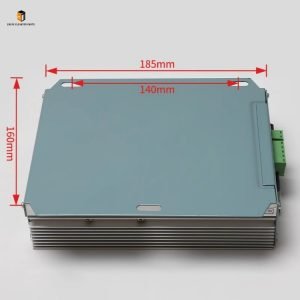
Controller Installation: Fix the TNB-V1/TNB-VR controller to the dedicated mounting bracket using high-strength screws provided by Nanjing Zhuye Elevatorparts. Ensure the controller is installed vertically (tilt angle ≤ 3°) and maintain a 20–30mm heat dissipation gap between adjacent components. Avoid installing it near high-voltage components or strong electromagnetic interference sources.
-
Wiring Operation: According to the elevator door system wiring diagram, connect the controller’s power terminal (rated voltage: 220VAC/380VAC, consistent with the door motor), motor terminal (connected to the door motor’s U/V/W terminals), control signal terminal (connected to the elevator main control system), and safety device terminal (connected to the door safety edge, light curtain). Ensure correct polarity, tight wiring, and reliable insulation—use heat-shrinkable tubes for wiring joints to avoid short circuits. Clearly mark each wire as guided by Nanjing Zhuye’s manual for future maintenance.
-
Post-Installation Testing: Restore the power supply and switch the elevator to inspection mode. Test the door opening/closing function: confirm the door operates smoothly with stable acceleration/deceleration (no jamming or sudden speed changes). Verify the safety protection function: trigger the door safety edge or light curtain during door closing to ensure the door reverses immediately. Use a multimeter to detect the controller’s output voltage and current, ensuring they are within the rated range. If there is abnormal speed, noise, or unresponsive safety devices, recheck the installation and wiring immediately.
2. Parameter Configuration & Routine Inspection
Scientific parameter configuration and regular inspections are key to ensuring optimal performance of TNB-V1 and TNB-VR controllers:
-
Parameter Configuration: The TNB-V1 and TNB-VR support parameter adjustment via a digital display or external programming tool. Configure core parameters (door opening/closing speed, acceleration/deceleration time, door holding time) according to the elevator’s actual needs and Nanjing Zhuye’s recommended values. Save the parameters after configuration and back up the data to avoid loss due to power failure.
-
Daily Visual Inspection: During shaft and control cabinet patrols, check the external condition of the controller. Ensure the shell is free of cracks, deformation, or discoloration (a sign of overheating); the digital display (if equipped) is clear and error-free; the wiring terminals are tight without looseness, oxidation, or burning marks; the cooling fan (if equipped) operates normally.
-
Weekly Functional Check: Operate the elevator in normal mode to test the door system’s stability during peak hours. Check the consistency of door opening/closing speed between different floors. Verify the controller’s fault self-diagnosis function—clear any fault codes and troubleshoot if errors occur frequently.
3. Regular Maintenance Schedule
Systematic maintenance can effectively extend the service life of TNB-V1 and TNB-VR VVVF door controllers. Follow Nanjing Zhuye Elevatorparts’ recommended maintenance plan:
-
Quarterly Maintenance: Disconnect the power supply and remove the controller’s shell (if necessary). Clean the circuit board, terminals, and cooling fan with a professional electrical cleaner to remove dust and oxide. Inspect the wiring for aging or cracking (replace with genuine cables if necessary) and recheck all connections for tightness. Reapply thermal grease to the inverter module (if applicable) to enhance heat dissipation.
-
Semi-Annual Performance Test: Conduct a comprehensive performance test, including VVVF control precision, speed regulation range, and safety protection response time. Simulate extreme operating conditions (e.g., voltage fluctuation, low-temperature environment) to verify the controller’s stable operation. For high-traffic elevators (e.g., shopping malls, airports), increase the test frequency to once every 3 months.
-
Annual Professional Overhaul: Arrange a professional inspection with Nanjing Zhuye Elevatorparts’ certified technical team. Update the controller’s firmware (if applicable) to optimize performance and compatibility. Replace aging components (e.g., capacitors, cooling fans) with genuine parts. Recalibrate the door system parameters to meet the original factory standards and the elevator’s actual operating needs.
Recommended Replacement Cycle for Elevator Door Controller VVVF TNB-V1 & TNB-VR
As core control components bearing long-term electrical loads, frequent frequency conversion operations, and environmental erosion, the TNB-V1 and TNB-VR VVVF door controllers have a specified service life. Timely replacement is critical to avoiding faults such as unstable speed regulation, frequent fault alarms, or complete controller failure—issues that may lead to door jamming, passenger trapping, or even elevator operation shutdown.
1. Standard Replacement Cycle
Under normal operating conditions (elevator daily operation time 12–24 hours, daily door opening/closing times ≥ 1200, environment temperature -10–60℃, humidity 10%–95%), the recommended replacement cycle for both TNB-V1 and TNB-VR door controllers is 4–5 years. This cycle is determined based on Nanjing Zhuye Elevatorparts’ long-term field data, component aging tests, and global user feedback.
2. Adjustments for Special Scenarios
-
Harsh Environments: For elevators in high-humidity coastal areas (salt spray corrosion), high-dust construction sites, or locations with frequent voltage fluctuations (e.g., industrial zones), the replacement cycle should be shortened to 2–3 years. Harsh conditions accelerate circuit board aging, inverter module damage, and terminal corrosion, significantly reducing the controller’s reliability.
-
Low-Frequency Use Scenarios: For elevators with low usage frequency (e.g., villa elevators, small office buildings with daily operation time < 8 hours) and stable electrical environments, the replacement cycle can be extended to 5–6 years—only if Nanjing Zhuye’s professional inspection confirms the controller’s control precision, safety protection functions, and component integrity are intact.
3. Immediate Replacement Conditions
Replace the TNB-V1/TNB-VR door controller immediately if any of the following issues occur, regardless of service life:
-
The controller fails to regulate door speed stably—doors open/close too fast/slow, or there is obvious jitter or impact during operation, affecting passenger safety and comfort.
-
Frequent fault alarms occur (e.g., overcurrent, overvoltage errors) that cannot be eliminated through debugging, leading to intermittent door system failures.
-
The safety protection function fails—doors do not reverse when obstructed, posing serious risks to passengers.
-
The controller’s internal components are severely damaged (e.g., burning marks, odor) due to short circuits or overheating, and it cannot work normally even after maintenance.
In conclusion, the Elevator Door Controller VVVF TNB-V1 and TNB-VR supplied by Nanjing Zhuye Elevatorparts are high-quality, reliable control components tailored for elevator door systems. By following the correct usage methods, maintenance schedules, and replacement cycles, elevator maintenance teams can effectively ensure the stable and safe operation of the elevator door system, enhance passenger ride comfort and safety, and minimize failure risks. Choosing Nanjing Zhuye Elevatorparts means you get not only authentic TNB-V1 and TNB-VR controllers but also professional technical support, including model matching guidance, on-site installation advice, and prompt after-sales service.