Description
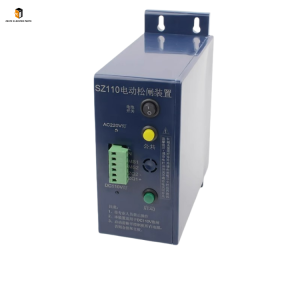
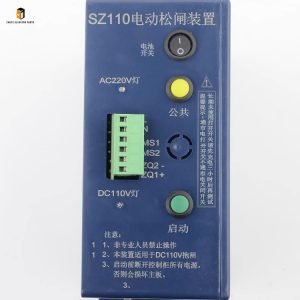
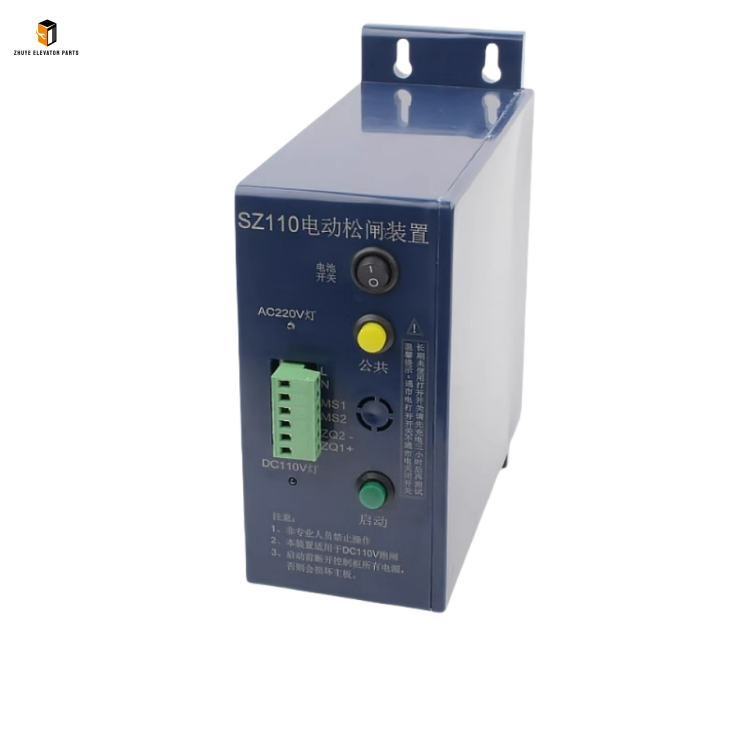
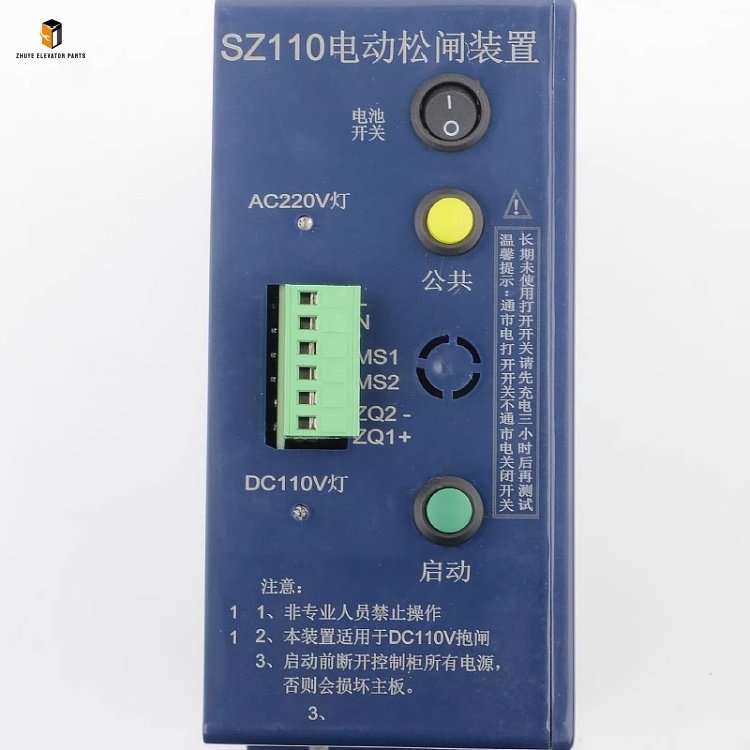
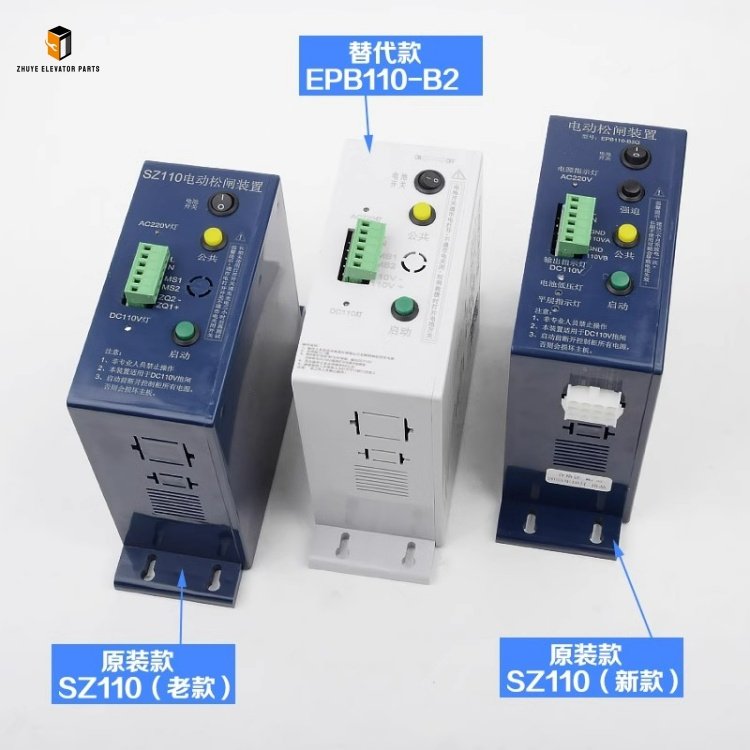
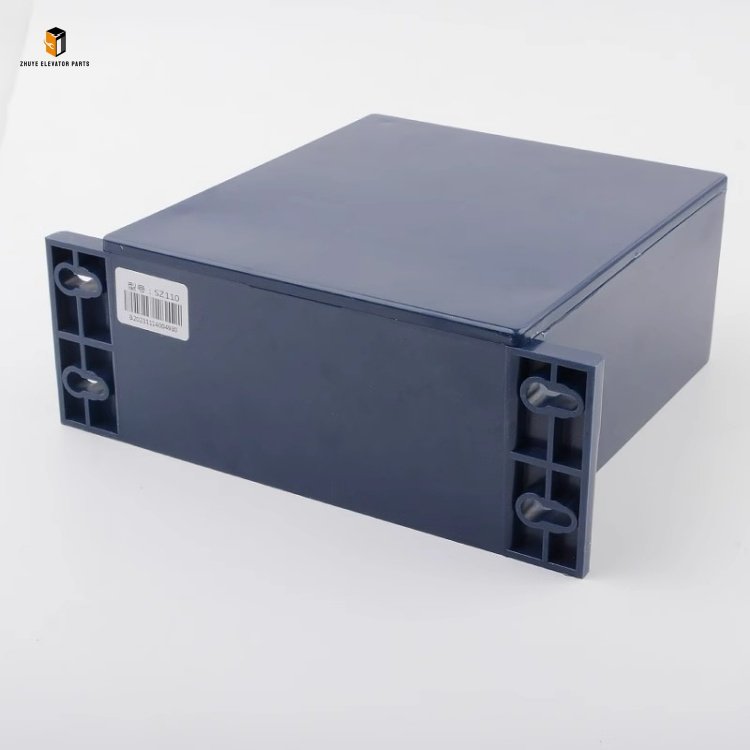
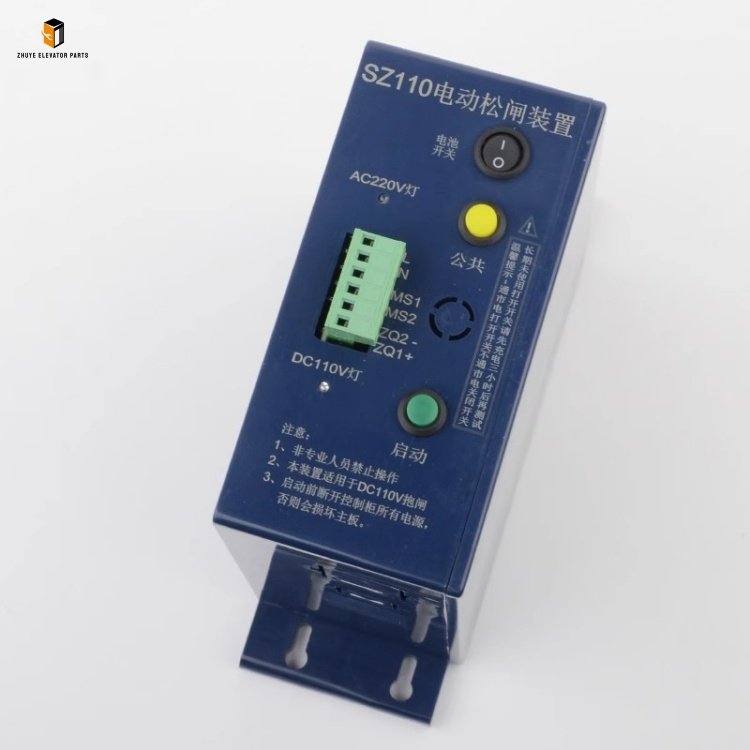
Elevator electric brake power supply SZ110 EPB110-B2 Brief Introduction
|
Product Name |
Elevator electric brake power supply |
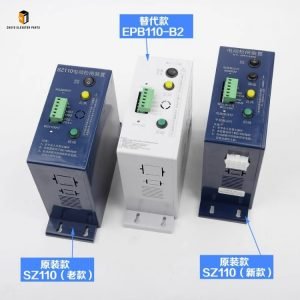
| Model Number | SZ110
EPB110-B2 |
|
Quality
|
Original.Brand New
|
|
Payment
|
T/T. Paypal. Western Union
|
|
Delivery
|
3-5 Working Days
|
|
Packaging
|
Packed by carton
|
Elevator Electric Brake Power Supply SZ110 & EPB110-B2: Brake Power Core from Nanjing Zhuye Elevatorparts
Elevator Electric Brake Power Supplies SZ110 and EPB110-B2 are critical power supply components for elevator traction system brakes, specifically designed to provide stable DC power for elevator electric brakes. As the “power source of safety braking,” they ensure the brake engages reliably when the elevator stops (preventing sliding) and releases smoothly when the elevator starts (ensuring normal operation). SZ110 is a standard-type brake power supply with stable output performance, while EPB110-B2 features enhanced protection functions (overvoltage, overcurrent, short-circuit protection) for harsh operating environments. Exclusively supplied by Nanjing Zhuye Elevatorparts (a professional and trusted distributor of high-quality elevator components), the Elevator Electric Brake Power Supply SZ110 & EPB110-B2 fully comply with international electrical safety standards (IEC 61558, GB 1094.1) and are compatible with mainstream elevator brands and brake system models. Featuring high power supply stability, strong anti-interference ability, and durable structure, this power supply series provides reliable operational guarantees for elevators in residential buildings, commercial complexes, office towers, hospitals, and other scenarios worldwide.
Nanjing Zhuye Elevatorparts adheres to the core philosophy of “safety first, quality-oriented” and implements strict quality control over SZ110 and EPB110-B2 electric brake power supplies. Each power supply undergoes multi-stage pre-delivery inspections, including output voltage stability testing, protection function verification, insulation performance detection, and temperature rise trials. The products adopt advanced switching power supply technology, a high-strength flame-retardant shell, and a precision voltage regulation module: the switching power supply design ensures high conversion efficiency (≥ 90%) and low energy consumption; the flame-retardant shell (UL94 V0 rating) effectively prevents fire risks in the control cabinet; the precision voltage regulation module maintains output voltage stability (110VDC ± 2%) even under fluctuating input voltage. Their standardized input/output interfaces and mounting dimensions are tailored to match the dedicated positions of compatible elevator control cabinets, eliminating the need for complex modifications and ensuring quick installation.
Step-by-Step Usage Guide for Elevator Electric Brake Power Supply SZ110 & EPB110-B2
To ensure the reliable operation of the elevator’s brake system and extend the service life of SZ110 and EPB110-B2 power supplies, follow the professional guidelines provided by Nanjing Zhuye Elevatorparts for installation, wiring, and maintenance:
1. Professional Installation & Wiring
Installation must be performed by certified electrical technicians familiar with elevator control systems. Prior to installation, confirm the compatibility of the power supply model (SZ110/EPB110-B2) with the target elevator’s brake power requirements and control cabinet space using the detailed compatibility manual provided by Nanjing Zhuye Elevatorparts. The steps are as follows:
-
Safety Preparation: Cut off the elevator’s main power supply and control cabinet power supply, and hang a “Maintenance in Progress—Do Not Power On” sign. Open the control cabinet door and clean the power supply mounting area to remove dust, oil stains, and debris that may affect insulation and heat dissipation.
-
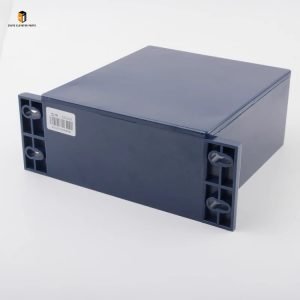
Power Supply Installation: Fix SZ110/EPB110-B2 to the DIN rail in the control cabinet using the built-in clamping mechanism. Ensure the power supply is installed vertically (tilt angle ≤ 3°) and there is a 15–20mm heat dissipation gap between adjacent components. For EPB110-B2 (with enhanced protection), confirm that the grounding terminal is reliably connected to the control cabinet’s ground wire to ensure protection functions work normally.
-
Wiring Operation: According to the elevator control circuit diagram, connect the AC input wire (usually AC 220V/380V) to the input terminal of the power supply, and the DC output wire (110VDC) to the elevator electric brake’s power terminal. Ensure the wiring is tight (use a torque wrench to confirm the tightening torque) and the positive/negative poles are correctly connected (reverse connection will damage the brake and power supply). Connect the signal feedback wire (for EPB110-B2) to the elevator main control system to monitor the power supply’s operating status in real time.
-
Post-Installation Testing: Restore the power supply and conduct comprehensive functional tests. Use a multimeter to detect the input voltage and output voltage (ensure the output is 110VDC ± 2%). Operate the elevator in inspection mode to check if the brake engages and releases smoothly when the power supply is on/off; for EPB110-B2, simulate overvoltage, overcurrent, and short-circuit scenarios to verify the protection functions trigger reliably. If there is unstable output voltage, abnormal brake operation, or protection function failure, recheck the installation and wiring immediately.
2. Daily Operation & Routine Inspection
Regular inspections are crucial to early detection of power supply faults and ensuring the safety of the elevator brake system. Maintenance personnel should incorporate the following checks into their daily patrols:
-
Daily Visual Inspection: During control cabinet inspections, check the external state of SZ110/EPB110-B2. Ensure the shell is free of cracks, deformation, or discoloration (indicating overheating); the wiring terminals are tight with no looseness, oxidation, or burning marks; the indicator lights (power, fault) work normally (green for normal operation, red for fault).
-
Weekly Functional Check: Operate the elevator to run through start, stop, and emergency stop conditions, and listen for abnormal noise from the power supply area. Use an infrared thermometer to detect the surface temperature of the power supply (should be ≤ 65℃ under normal operation). For EPB110-B2, check the fault feedback signal on the elevator main control panel to ensure no hidden faults.
-
Monthly Parameter Monitoring: Turn off the power supply and clean the power supply’s surface and vents with a dry, lint-free cloth to remove dust (dust accumulation affects heat dissipation). Use a multimeter to recheck the output voltage stability and the insulation resistance between the output terminal and the shell (should be ≥ 10MΩ). For elevators in harsh environments (high humidity, high dust), check the power supply for moisture or corrosion.
3. Regular Maintenance Schedule
Systematic maintenance can effectively extend the service life of SZ110 and EPB110-B2 electric brake power supplies. Follow Nanjing Zhuye Elevatorparts’ recommended maintenance plan:
-
Quarterly Maintenance: Disconnect the power supply and remove it from the DIN rail. Thoroughly clean the shell, terminals, and internal vents with a professional electrical cleaner (avoid spraying directly on the circuit board). Inspect the input/output wires for aging or cracking (replace if necessary) and recheck the grounding connection (for EPB110-B2). Reinstall the power supply and verify the output voltage and wiring tightness.
-
Semi-Annual Performance Test: Conduct a comprehensive performance test, including output voltage regulation accuracy, load capacity, and protection function reliability. Use a professional power supply tester to simulate different input voltage fluctuations and load changes, verifying the power supply’s stable operation. For elevators in high-traffic areas (e.g., shopping malls, airports) or harsh environments (high temperature, strong electromagnetic interference), increase the test frequency.
-
Annual Professional Overhaul: Arrange a professional inspection with Nanjing Zhuye Elevatorparts’ certified technical team. Open the power supply shell (by professionals) to inspect internal components (capacitors, resistors, voltage regulation modules) for aging or damage. Replace worn components with genuine parts. Recalibrate the output voltage and protection function parameters to meet the original factory performance standards.
Recommended Replacement Cycle for Elevator Electric Brake Power Supply SZ110 & EPB110-B2
As core power supply components bearing long-term voltage load, heat generation, and environmental erosion, SZ110 and EPB110-B2 electric brake power supplies have specified service lives. Timely replacement is critical to avoiding power supply failure (such as unstable output, protection function failure, or no output), which may lead to elevator brake jamming (inability to start) or failure to engage (elevator sliding), resulting in serious safety accidents.
1. Standard Replacement Cycle
Under normal operating conditions (elevator daily operation time 12–24 hours, input voltage stable, control cabinet temperature 0–45℃, humidity 10%–85%), the recommended replacement cycle for SZ110 (standard type) is 3–4 years, and for EPB110-B2 (enhanced protection type) is 4–5 years. This cycle is determined based on Nanjing Zhuye Elevatorparts’ long-term field data, including component aging tests, output stability analysis, and actual operation feedback.
2. Adjustments for Special Scenarios
-
Harsh Environments: For elevators in high-humidity coastal areas (moisture erosion), high-temperature control cabinets (temperature > 45℃ for a long time), or areas with frequent voltage fluctuations (unstable power grid), the replacement cycle should be shortened to 2–3 years (SZ110) and 3–4 years (EPB110-B2). Harsh conditions accelerate the aging of internal capacitors, damage to voltage regulation modules, and reduction of insulation performance.
-
Low-Frequency Use Scenarios: For elevators with low usage frequency (e.g., villa elevators, small office buildings with daily operation time < 8 hours) and stable power supply environments, the replacement cycle can be extended to 4–5 years (SZ110) and 5–6 years (EPB110-B2)—only if Nanjing Zhuye’s professional inspection confirms that the power supply’s output stability, protection functions, and internal component integrity are all intact.
3. Immediate Replacement Conditions
Replace SZ110/EPB110-B2 immediately if any of the following issues occur, regardless of service life:
-
The output voltage fluctuates excessively (exceeding ±5% of 110VDC) and cannot be calibrated, leading to unstable brake operation (e.g., abnormal noise, incomplete release).
-
The power supply has frequent fault alarms, or the protection functions (overvoltage, overcurrent) fail to trigger when faults occur, posing safety hazards to the brake system.
-
The power supply has no output (confirmed by multimeter testing), and the fault cannot be eliminated by checking the input power and wiring, resulting in the elevator being unable to start or stop safely.
-
The shell is severely cracked, deformed, or the internal components are burned (with obvious burning marks or odor), making maintenance ineffective.
In conclusion, the Elevator Electric Brake Power Supply SZ110 & EPB110-B2 supplied by Nanjing Zhuye Elevatorparts are high-quality, high-reliability power supply components tailored for elevator brake systems. By following the correct usage methods, maintenance schedules, and replacement cycles, elevator maintenance teams can effectively ensure the stable and safe operation of the elevator’s brake system, maximize passenger safety, and minimize failure risks. Choosing Nanjing Zhuye Elevatorparts means you get not only authentic SZ110 and EPB110-B2 power supplies but also professional technical support, including model matching guidance, installation advice, and prompt after-sales service.