

Description
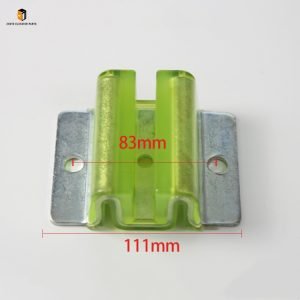
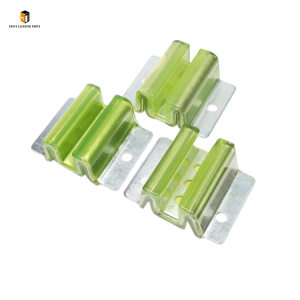
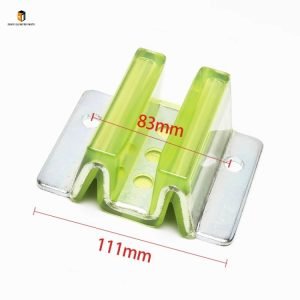
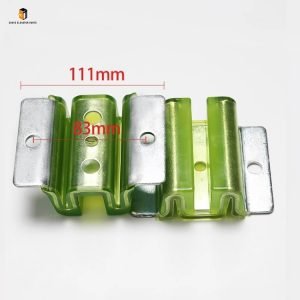
Elevator counterweight guide shoes W boot toe M boot toe Brief Introduction
|
Product Name |
Elevator counterweight guide shoes |
| Model Number | W boot toe
.M boot toe |
|
Quality
|
Original.Brand New
|
|
Payment
|
T/T. Paypal. Western Union
|
|
Delivery
|
3-5 Working Days
|
|
Packaging
|
Packed by carton
|
Elevator Counterweight Guide Shoes (W Boot Toe/M Boot Toe): Stable Guidance Core from Nanjing Zhuye Elevatorparts
Elevator Counterweight Guide Shoes with W Boot Toe and M Boot Toe are critical guiding components for elevator counterweight systems, serving as the “stable fulcrum” for the counterweight’s vertical movement. They clamp tightly on the guide rails, providing precise linear guidance to ensure the counterweight moves smoothly, quietly, and stably in sync with the elevator car. The W-type and M-type boot toes are tailored for different guide rail profiles—W boot toes fit T-shaped guide rails for enhanced clamping stability, while M boot toes adapt to I-shaped guide rails for optimized load distribution. These guide shoes directly determine the operational stability, noise level, and safety of the entire elevator system; poor guidance may lead to counterweight jitter, guide rail wear, or even serious faults like derailment. Exclusively supplied by Nanjing Zhuye Elevatorparts, a professional and trusted provider of high-quality elevator components, the Elevator Counterweight Guide Shoes (W Boot Toe/M Boot Toe) fully comply with international elevator safety standards (EN 81-20, GB 7588) and mechanical guiding component technical specifications. With excellent wear resistance, strong load-bearing capacity, and superior shock absorption, they are widely applied in residential buildings, commercial complexes, office towers, airports, and other public facility elevators worldwide.
Nanjing Zhuye Elevatorparts adheres to the core philosophy of “Precise Guidance, Safe Operation” and implements strict quality control throughout the production and inspection process of the counterweight guide shoes (W/M boot toe). Each unit undergoes a multi-stage pre-delivery inspection, including dimensional accuracy testing, wear resistance trials, load-bearing capacity detection, and shock absorption performance verification. The guide shoes adopt premium materials and advanced manufacturing technology: the W/M boot toes are made of high-strength wear-resistant rubber or polyurethane (Shore hardness 60–80A), ensuring low friction coefficient (≤ 0.12) and long service life (≥ 5 million cycles); the base is made of high-carbon steel with quenching treatment, enhancing structural rigidity and load-bearing capacity (adapting to counterweight weights of 500–3000kg); the built-in adjustable pressure plate allows for precise adjustment of the clamping force between the boot toe and guide rail, ensuring stable guidance without excessive friction; standardized mounting holes and connecting structures enable seamless matching with mainstream elevator counterweight frames, reducing installation and maintenance costs.
Step-by-Step Usage Guide for Elevator Counterweight Guide Shoes (W Boot Toe/M Boot Toe)
To maximize the guiding precision and service life of the Elevator Counterweight Guide Shoes (W Boot Toe/M Boot Toe), and to ensure the safe and stable operation of the elevator system, strictly follow the professional guidelines provided by Nanjing Zhuye Elevatorparts for installation, adjustment, and maintenance:
1. Professional Selection & Installation
Installation must be conducted by certified elevator technicians proficient in counterweight systems. Prior to installation, refer to the compatibility manual provided by Nanjing Zhuye Elevatorparts to select the appropriate boot toe type (W/M) based on the elevator guide rail profile, and confirm that the guide shoe’s specifications (load-bearing capacity, dimensional parameters) match the counterweight weight and model. The installation steps are as follows:
-
Safety Preparation: Cut off the elevator’s main power supply and lock the power switch to prevent accidental power-on. Use a hoisting device to stably lift the counterweight and fix it with mechanical supports to avoid falling during installation. Clean the guide rail surface and the counterweight’s guide shoe mounting position to remove dust, oil stains, and rust.
-
Guide Shoe Installation: Fix the counterweight guide shoe base to the designated position on the counterweight frame using high-strength bolts provided by Nanjing Zhuye Elevatorparts. Ensure the base is installed horizontally and vertically, with the boot toe opening aligned with the guide rail (alignment deviation ≤ 0.5mm). Install the W/M boot toe onto the base, and tighten the fixing screws to ensure firm connection without looseness.
-
Clamping Force Adjustment: Use a torque wrench to adjust the pressure plate screws on the guide shoe, adjusting the clamping force between the boot toe and guide rail to the standard range (2–5N). The adjustment principle is: the counterweight can move freely along the guide rail without jitter, and there is no obvious gap between the boot toe and guide rail (gap ≤ 0.3mm). Record the adjustment parameters for future maintenance reference.
2. Debugging & Function Test
Debugging and function testing are crucial to ensure the guide shoes operate reliably. Follow these steps with reference to Nanjing Zhuye Elevatorparts’ technical guidelines:
-
Smoothness Test: Remove the mechanical supports of the counterweight, restore the elevator’s power supply, and switch to inspection mode. Operate the elevator car to move up and down slowly, observing the counterweight’s movement status. Ensure the counterweight moves smoothly without jitter, tilting, or abnormal noise; the guide rail surface should have no obvious friction marks.
-
Load-Bearing Test: Conduct a no-load and full-load operation test of the elevator. In both states, check the guide shoe’s deformation (deformation ≤ 0.2mm under full load) and the boot toe’s wear status. Confirm that the clamping force remains stable, and the counterweight does not deviate from the guide rail during acceleration and deceleration.
-
Safety Test: Simulate abnormal operating conditions (e.g., slight guide rail deviation) to check if the guide shoes can effectively limit the counterweight’s lateral movement, preventing derailment. Confirm the elevator controller displays no error codes related to counterweight guidance.
3. Daily Operation & Routine Maintenance
Regular inspection and maintenance are essential to early fault detection and ensuring the long-term stable operation of the counterweight guide shoes. Maintenance personnel should integrate the following checks into their daily patrol routines:
-
Daily Visual Inspection: During elevator patrols, check the external condition of the guide shoes. Ensure the W/M boot toes are intact without cracks, deformation, or excessive wear (wear depth ≤ 2mm); the base and fixing bolts are tight without looseness or corrosion; the guide rail surface is clean without scratches or uneven wear.
-
Weekly Clamping Force Check: Use a feeler gauge to detect the gap between the boot toe and guide rail. If the gap exceeds 0.5mm, adjust the pressure plate screws in time to restore the standard clamping force. Check the boot toe’s elasticity by pressing it manually—replace the boot toe if it loses elasticity or becomes hard and brittle.
-
Monthly Cleaning & Maintenance: Cut off the power supply and clean the guide shoe surface, boot toe, and guide rail with a soft, dry cloth to remove dust and debris. Apply a thin layer of special lubricating grease (recommended by Nanjing Zhuye Elevatorparts) to the contact surface between the boot toe and guide rail to reduce friction and wear. Inspect the base for deformation and the bolts for oxidation, tightening or replacing them if necessary.
Recommended Replacement Cycle for Elevator Counterweight Guide Shoes (W Boot Toe/M Boot Toe)
As core guiding components enduring long-term friction with guide rails, heavy load-bearing, and environmental erosion (humidity, dust, vibration), the Elevator Counterweight Guide Shoes (W Boot Toe/M Boot Toe) have a specified service life. Timely replacement is critical to avoiding faults such as excessive boot toe wear, reduced clamping force, or base deformation—issues that may lead to counterweight jitter, guide rail damage, or even derailment accidents, endangering the entire elevator system’s safety.
1. Standard Replacement Cycle
Under normal operating conditions (elevator daily operation time 12–24 hours, daily counterweight movement cycles ≥ 2000, environment temperature -10–60℃, humidity 10%–95%), the recommended replacement cycle for the entire guide shoe (including W/M boot toe) is 5–7 years, and the independent replacement cycle for W/M boot toes is 2–3 years. This cycle is determined based on Nanjing Zhuye Elevatorparts’ long-term field operation data, wear tests, and global user feedback on elevator counterweight systems.
2. Adjustments for Special Scenarios
-
Harsh Environments & High-Traffic Scenarios: For elevators in high-humidity coastal areas (salt spray corrosion), high-dust industrial sites, or ultra-high-traffic locations (e.g., large airports, central shopping malls) with daily counterweight cycles ≥ 3500, the replacement cycle for the entire guide shoe is shortened to 3–4 years, and the boot toe replacement cycle is shortened to 1–1.5 years. Harsh conditions and frequent use accelerate boot toe wear and base corrosion, significantly reducing the guide shoe’s reliability.
-
Low-Frequency Use Scenarios: For elevators with low usage frequency (e.g., villa elevators, small office buildings with daily operation time < 8 hours) and stable environments (constant temperature and humidity), the replacement cycle for the entire guide shoe can be extended to 7–8 years, and the boot toe replacement cycle to 3–4 years—only if Nanjing Zhuye Elevatorparts’ professional technicians conduct an inspection and confirm that the guide shoe’s clamping force, dimensional accuracy, and boot toe elasticity meet the original factory standards.
3. Immediate Replacement Conditions
Replace the guide shoe or its boot toe immediately if any of the following issues occur, regardless of its service life:
-
The W/M boot toe has obvious cracks, deformation, or wear depth exceeding 3mm, leading to unstable counterweight movement or abnormal noise.
-
The clamping force cannot be adjusted to the standard range due to base deformation or thread damage, resulting in counterweight jitter or deviation.
-
The guide shoe base is severely corroded (rust coverage > 30%), threatening structural strength and load-bearing capacity.
-
Professional testing confirms that the guide shoe’s guiding deviation exceeds 1mm, and the problem cannot be resolved by adjustment, affecting the safe operation of the counterweight.
In conclusion, the Elevator Counterweight Guide Shoes (W Boot Toe/M Boot Toe) supplied by Nanjing Zhuye Elevatorparts are high-quality, reliably matched guiding components tailored for modern elevator counterweight systems. By adhering to the correct usage methods, maintenance schedules, and replacement cycles outlined above, elevator maintenance teams can effectively ensure the stable and safe operation of the elevator counterweight system, enhance passenger ride comfort, and minimize downtime. Choosing Nanjing Zhuye Elevatorparts means you not only get 100% authentic counterweight guide shoes (W/M boot toe) but also access to professional technical support—including model matching guidance, on-site installation and adjustment advice, and prompt after-sales service. Trust Nanjing Zhuye Elevatorparts for the smooth operation of your elevator counterweight system.