

Description
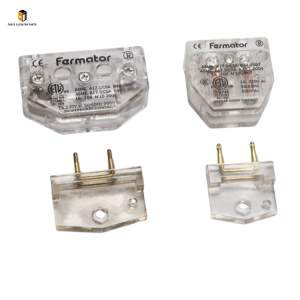
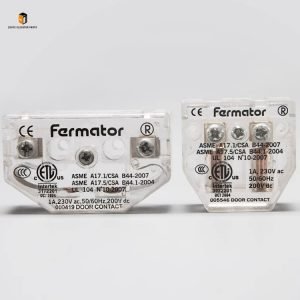
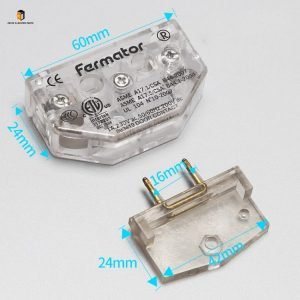
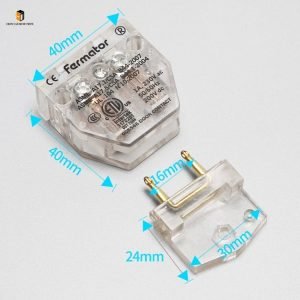
Elevator contact switch elevator door lock contacts ASME Brief Introduction
|
Product Name |
Elevator contact switch elevator door lock contacts |
| Model Number | ASME |
|
Quality
|
Original.Brand New
|
|
Payment
|
T/T. Paypal. Western Union
|
|
Delivery
|
3-5 Working Days
|
|
Packaging
|
Packed by carton
|
Elevator Contact Switch & Door Lock Contacts (ASME Standard): Safety Core from Nanjing Zhuye Elevatorparts
Elevator Contact Switch and Elevator Door Lock Contacts complying with ASME standards (ASME A17.1/CSA B44) are core electrical safety components for elevator door systems and control circuits. The contact switch acts as a “signal converter” for key elevator operations, while the door lock contacts serve as a “safety interlock”—they work together to ensure the elevator can only start when all doors are securely locked, and immediately stop if doors are opened abnormally during operation. Adhering to strict ASME safety requirements, these components feature high contact reliability, strong anti-interference capability, and excellent environmental adaptability, directly determining the operational safety and compliance of elevators. Exclusively supplied by Nanjing Zhuye Elevatorparts, a professional and trusted provider of high-quality elevator electrical components, the Elevator Contact Switch & Door Lock Contacts (ASME Standard) are fully certified to meet ASME A17.1/CSA B44 standards. With premium materials, precise manufacturing, and long service life, they are widely applied in commercial, residential, and public facility elevators across North America and global markets requiring ASME compliance.
Nanjing Zhuye Elevatorparts adheres to the core philosophy of “ASME Compliance, Safe Contact” and implements rigorous quality control throughout the production and inspection process of these ASME-standard components. Each unit undergoes a multi-stage pre-delivery inspection, including contact resistance testing, mechanical life trials, high-temperature and humidity resistance detection, and ASME standard compliance verification. The components adopt advanced materials and technology: contacts are made of silver-nickel alloy to ensure low contact resistance (≤ 50mΩ), strong arc ablation resistance, and stable electrical conductivity; the shell of the contact switch is made of flame-retardant engineering plastic (UL94 V0 grade) with IP54 protection rating, effectively resisting humidity, dust, and mechanical impact in elevator shafts; the internal spring structure is made of high-strength stainless steel, ensuring a mechanical life of ≥ 10 million operations; all dimensional and performance parameters strictly align with ASME A17.1/CSA B44 requirements, ensuring seamless compatibility with mainstream elevator control systems and door lock mechanisms.
Step-by-Step Usage Guide for Elevator Contact Switch & Door Lock Contacts (ASME Standard)
To maximize the safety performance, service life, and ASME compliance of the Elevator Contact Switch and Door Lock Contacts, strictly follow the professional guidelines provided by Nanjing Zhuye Elevatorparts for installation, debugging, and maintenance:
1. Professional Selection & Installation
Installation must be conducted by certified elevator technicians proficient in ASME standard requirements. Prior to installation, refer to the compatibility manual provided by Nanjing Zhuye Elevatorparts to confirm that the components match the elevator’s model, door lock type, and control system voltage (AC/DC 24V-220V), and verify their ASME compliance certification. The installation steps are as follows:
-
Safety Preparation: Cut off the elevator’s main power supply and lock the power switch. Place a “Maintenance in Progress” warning sign to prevent accidental power-on. For door lock contacts, fix the elevator car and hall doors in the fully closed position with mechanical supports to avoid interference with installation.
-
Component Installation: Install the door lock contacts into the elevator door lock mechanism, ensuring tight connection with the lock tongue—they should be triggered accurately when the door is fully locked. Fix the contact switch to the designated position (control cabinet, door frame, or car top) using mounting screws provided by Nanjing Zhuye Elevatorparts, ensuring the operating mechanism (lever, roller, or button) moves freely without obstruction.
-
Wiring & Insulation: In accordance with the elevator wiring diagram and ASME electrical safety requirements, connect the components’ wires to the corresponding terminals of the elevator controller. Use shielded cables for signal transmission to enhance anti-interference performance. Confirm correct wiring polarity, tight terminal connections, and ensure insulation resistance ≥ 10MΩ (tested with a megohmmeter) to avoid short circuits or leakage.
2. Debugging & ASME Compliance Test
Debugging and compliance testing are critical to ensuring the components meet ASME safety standards. Follow these steps with reference to Nanjing Zhuye Elevatorparts’ technical guidelines:
-
Contact Performance Test: Restore power and use a multimeter to detect the on-off status of the contact switch and door lock contacts. Confirm that door lock contacts are closed (circuit connected) only when doors are fully locked, and open (circuit disconnected) immediately when doors are unlocked. The contact switch should output stable signals without jitter or delay.
-
Safety Interlock Test: Test the elevator’s interlock function—confirm the elevator cannot start when any door is open, and stops immediately if doors are opened during operation. Repeat the test 20 times to verify stable performance, in line with ASME’s requirements for safety interlock reliability.
-
Environmental Adaptability Test: Simulate harsh shaft environments (high temperature 60℃, humidity 95%) to test component performance. Ensure contact resistance remains within the standard range (≤ 50mΩ) and no electrical faults occur, meeting ASME’s environmental resistance requirements.
3. Daily Operation & Routine Maintenance
Regular inspection and maintenance are essential to maintaining ASME compliance and early fault detection. Maintenance personnel should integrate the following checks into their daily patrol routines:
-
Daily Visual Inspection: Check the external condition of the components—ensure the shell is free of deformation, cracks, or corrosion; contacts are intact without oxidation or wear; wiring is intact without aging, fraying, or loose connections. Observe the elevator’s door operation and start-stop status for abnormalities.
-
Weekly Electrical Test: Use a multimeter to detect contact resistance and on-off status. If contact resistance exceeds 200mΩ or signals are unstable, clean the contacts with a professional contact cleaner immediately. Check the components’ triggering sensitivity and adjust the mounting position if necessary.
-
Monthly ASME Compliance Check: Cut off power to clean the components’ surfaces, terminals, and operating mechanisms with a soft, dry cloth. Inspect insulation performance and terminal tightness. Verify that all performance parameters still meet ASME A17.1/CSA B44 standards, and keep maintenance records for compliance audits.
Recommended Replacement Cycle for Elevator Contact Switch & Door Lock Contacts (ASME Standard)
As core safety components enduring frequent contact wear, mechanical fatigue, and environmental erosion (humidity, dust, vibration), these ASME-standard components have a specified service life. Timely replacement is critical to avoiding faults such as poor contact, delayed response, or contact failure—issues that may lead to elevator operation errors, non-compliance with ASME standards, or even serious safety accidents.
1. Standard Replacement Cycle
Under normal operating conditions (elevator daily operation time 12–24 hours, daily door opening/closing cycles ≥ 2000, environment temperature -10–60℃, humidity 10%–95%), the recommended replacement cycle for the ASME-standard contact switch and door lock contacts is 4–5 years. This cycle is determined based on Nanjing Zhuye Elevatorparts’ long-term field data, ASME standard requirements, and contact wear test results.
2. Adjustments for Special Scenarios
-
Harsh Environments & High-Traffic Scenarios: For elevators in high-humidity coastal areas, high-dust industrial sites, or ultra-high-traffic locations (e.g., airports, shopping malls) with daily door cycles ≥ 3500, the replacement cycle is shortened to 2–3 years. Harsh conditions accelerate contact wear and component aging, increasing the risk of non-compliance with ASME standards.
-
Low-Frequency Use Scenarios: For elevators with low usage frequency (e.g., small office buildings, villa elevators) and stable environments, the replacement cycle can be extended to 5–6 years—only if Nanjing Zhuye Elevatorparts’ professional technicians conduct an inspection and confirm that all performance parameters still meet ASME A17.1/CSA B44 standards.
3. Immediate Replacement Conditions
Replace the components immediately if any of the following issues occur, regardless of service life:
-
Contact resistance exceeds 200mΩ or contacts are severely oxidized/worn, leading to unstable signal transmission or elevator operation errors.
-
Components fail ASME compliance tests, such as incomplete interlock function or failure to meet environmental adaptability requirements.
-
Shells are severely corroded or damaged, or internal components are stuck, making repair impossible.
-
Professional testing confirms mechanical life is exhausted (triggering times exceed 10 million), and response time exceeds 50ms, failing to meet ASME safety requirements.
In conclusion, the ASME-standard Elevator Contact Switch and Door Lock Contacts supplied by Nanjing Zhuye Elevatorparts are high-quality, compliance-guaranteed safety components tailored for modern elevators. By adhering to the correct usage methods, maintenance schedules, and replacement cycles outlined above, elevator maintenance teams can effectively ensure elevator safety, maintain ASME compliance, and avoid potential legal and safety risks. Choosing Nanjing Zhuye Elevatorparts means you not only get 100% authentic ASME-compliant components but also access to professional technical support—including model matching, ASME compliance guidance, on-site installation advice, and prompt after-sales service. Trust Nanjing Zhuye Elevatorparts for your ASME-compliant elevator safety component needs.