

Description
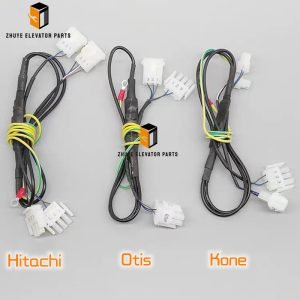
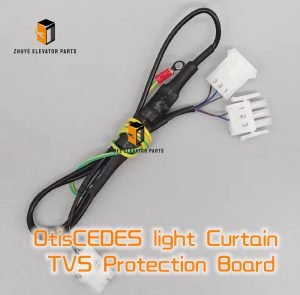
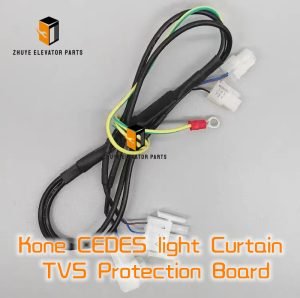
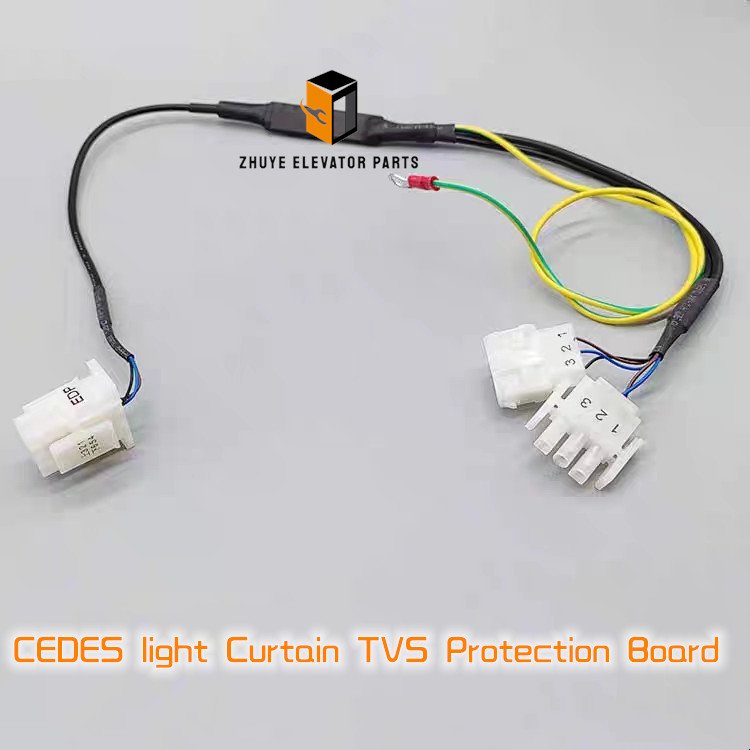
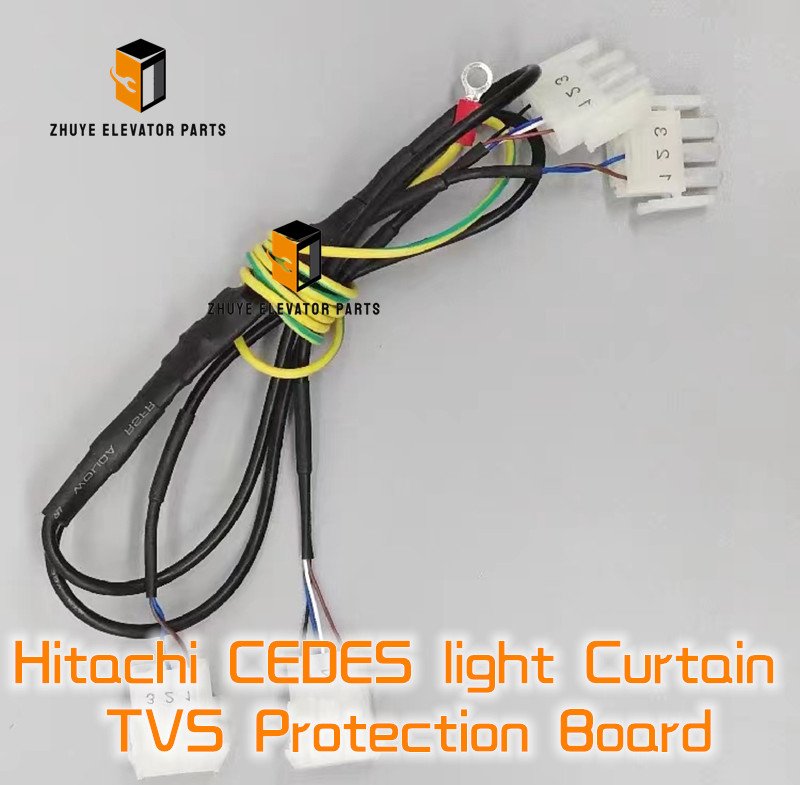
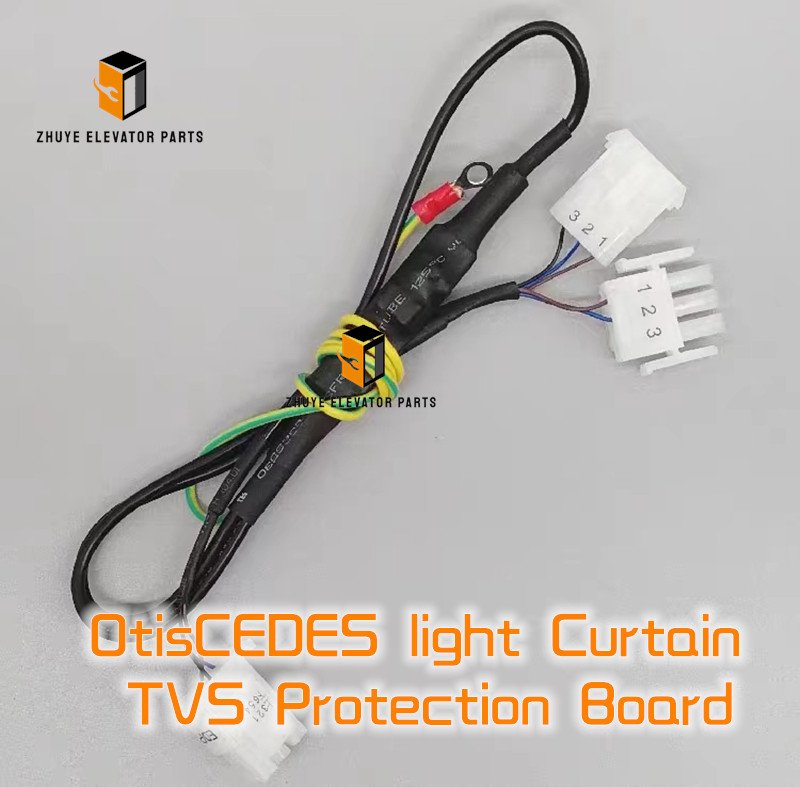
CEDES Light Curtain TVS Protection Board Brief Introduction
|
Product Name |
Light Curtain TVS Protection Board |
| Model Number | CEDES |
|
Quality
|
Original.Brand New
|
|
Payment
|
T/T. Paypal. Western Union
|
|
Delivery
|
3-5 Working Days
|
|
Packaging
|
Packed by carton
|
Nanjing Zhuye Elevator Parts – CEDES Light Curtain TVS Protection Board: Installation, Testing & Replacement Guide
Every elevator light curtain is a guardian that must never blink. Behind the infrared beams of CEDES LC-G or LC-S models lies a small but critical component—the TVS (Transient Voltage Suppression) protection board. This board absorbs lightning strikes, power surges and inductive spikes that would otherwise destroy the curtain’s delicate receiver diodes and logic ICs. Nanjing Zhuye Elevator Parts has imported, burned-in and stocked genuine CEDES TVS boards since 2013, supplying over 6 000 units to 38 countries. Below we explain how to select, wire and—crucially—when to replace this “silent bodyguard” before aged varistors or cracked traces turn a harmless thunderstorm into a dead curtain and a trapped passenger.
-
What the board does Part number CED-TVS-24 (24 VDC) and CED-TVS-110 (110 VAC) clamp surges to < 40 V in < 1 ns, protecting:
-
32 IR receiver diodes (typ. 5 V reverse)
-
5 V logic supply and UART lines
-
24 V/110 V power input to the curtain head Peak power: 1 500 W (8/20 µs pulse), 10 000 surges @ 500 V before –3 dB degradation Isolation: 2 kV between power and signal earth Temperature: –40 °C to +85 °C, IP20 when DIN-rail mounted
-
Safety first—lock-out & verify TVS boards sit on the same 24 VDC or 110 VAC rail that feeds the door operator. Lock the controller disconnect, hang a lock-out tag and wait 60 s for the rail to fall below 5 V. Keep the new Nanjing Zhuye TVS board in its anti-static bag until mounting—TVS diodes can be triggered by 50 V static.
-
Mechanical mounting—keep the leads short Snap the PCB onto 35 mm DIN rail inside the controller or the curtain head. Maintain 50 mm clearance above and below; every 10 °C rise halves varistor life. If the head is < 60 mm deep, mount vertically with terminals down—this allows convection and keeps surge currents away from the IR PCB. Nanjing Zhuye supplies a free DIN clip (NY-DIN-TVS) and a 0.5 m shielded pre-wired harness (NY-HAR-TVS) for plug-and-play replacement.
-
Wiring map (print and stick inside head) 24 V model: +24 V (red), 0 V (black), shield to PE at controller end only
110 V model: L (brown), N (blue), PE (green/yellow)
Signal side: UART-RX (yellow), UART-TX (green), 0 V logic (white), shield to curtain PCB earth pad
Torque: 0.5 N·m for 0.5 mm², 0.8 N·m for 1.5 mm² -
Power-up & clamp test Apply rated voltage; green “PWR” LED steady.
With a handheld surge generator (500 V, 1.2/50 µs) inject L-PE: oscilloscope at curtain 5 V rail must show < 40 V peak and < 100 ns rise.
Residual voltage > 45 V indicates degraded TVS—replace board immediately.
A USD 120 tester pays for itself the first prevented curtain failure. -
In-service monitoring (24 V model only) On-board comparator drives a red “FLT” LED if clamp voltage exceeds 39 V for > 1 µs.
LED latches until power-cycle; connect N/O contact to BMS for remote “surge counter”.
50 recorded surges schedules replacement even if LED is still off—metal-oxide grains are beginning to fracture.
-
Temperature & lifetime model Metal-oxide varistor (MOV) degradation follows cumulative energy.
CEDES field data: Light site (office park, <10 surges/year @ 500 V) – 0.05 J per strike, life ≈ 25 years. Medium site (high-rise, 50 strikes/year) – 0.2 J per strike, life ≈ 10 years. Heavy site (tropical rooftop, 200 strikes/year) – 0.5 J per strike, life ≈ 4 years. Capacitor C1 (4.7 µF, 50 V) is 105 °C, 2 000 h rated; at 55 °C Arrhenius predicts 32 kh—longer than MOV, so MOV sets the replacement interval. -
Preventive inspection checklist Monthly: visual LED, wipe varistor face with dry cloth. Quarterly: clamp test with 500 V generator; residual > 45 V schedules replacement. Annually: megger L-PE > 100 MΩ; < 10 MΩ indicates carbon track. Bi-annually: torque test power terminals; vibration loosens them, causing arcing and fault “E-CURT”.
-
Rapid swap (downtime < 3 min) a) Power down, lock-out, wait 60 s. b) Photograph wire colours with phone. c) Remove DIN clip, slide old board out. d) Insert new Nanjing Zhuye CED-TVS, snap onto rail. e) Restore harness, torque 0.8 N·m. f) Power up, verify green LED, run 500 V clamp test. g) Log serial number and surge count; return old unit for recycling.
-
Recycling & sustainability Nanjing Zhuye offers prepaid DHL labels inside every carton.
Returned boards are stripped: zinc oxide varistors are refined for metal recovery, copper inductors remelted, plastic housing re-granulated.
One recycled TVS board saves 1.1 kg CO₂—enough to power the same curtain for a month.
By treating the CEDES TVS protection board as the lightning shield of the light curtain—not just another “terminal block”—you eliminate mysterious curtain failures, reduce surge-callouts and keep passengers safely protected.
Specify Nanjing Zhuye genuine stock, follow the strike-energy table above, and the only thing your light curtain will ever feel is clean, quiet, spike-free power—storm after storm, year after year.
Specify Nanjing Zhuye genuine stock, follow the strike-energy table above, and the only thing your light curtain will ever feel is clean, quiet, spike-free power—storm after storm, year after year.