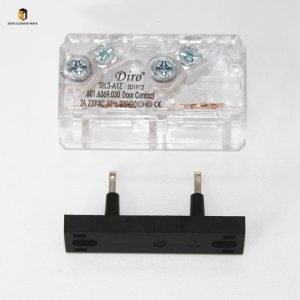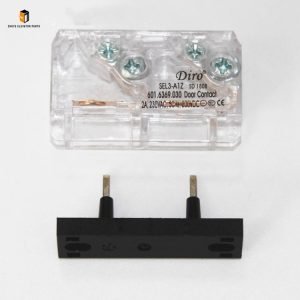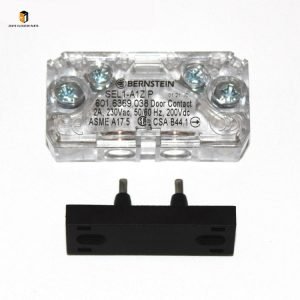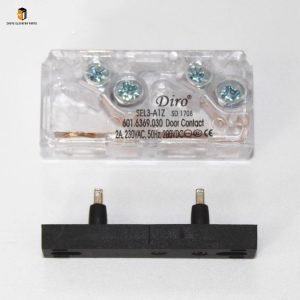

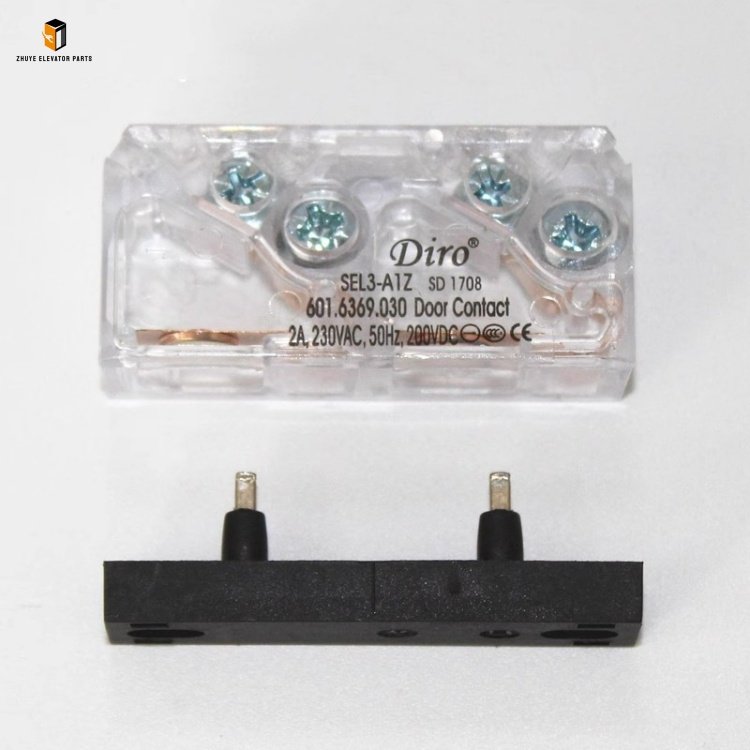


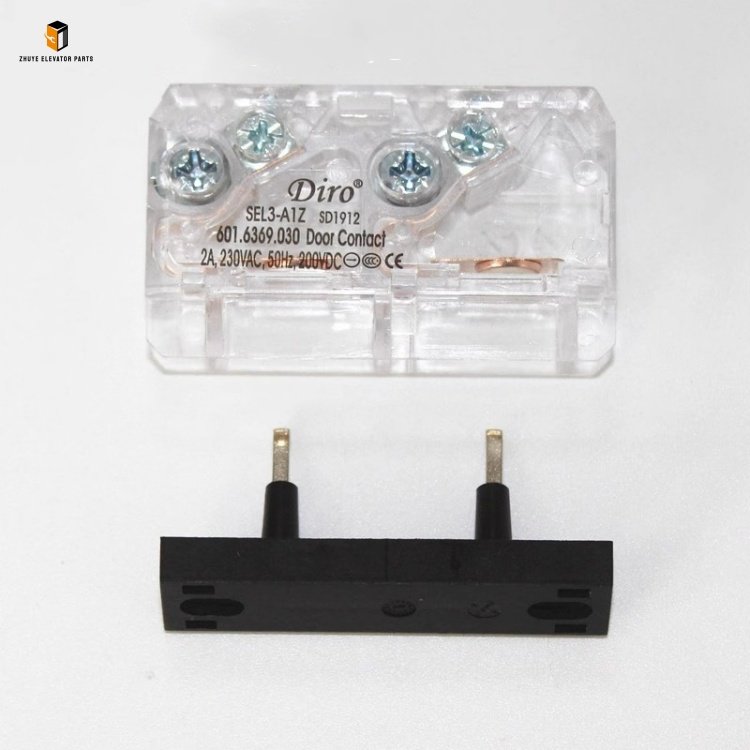
Description
BERNSTEIN elevator door contact SEL3-A1Z Brief Introduction
|
Product Name |
BERNSTEIN elevator door contact |
| Model Number | SEL3-A1Z
SEL1-A1Z |
|
Quality
|
Original.Brand New
|
|
Payment
|
T/T. Paypal. Western Union
|
|
Delivery
|
3-5 Working Days
|
|
Packaging
|
Packed by carton
|
BERNSTEIN Elevator Door Contact SEL3-A1Z: Critical Safety Component for Door Operation
Elevator door contacts are core safety components that directly control the interlock between elevator doors and car operation, ensuring the elevator can only start when doors are fully closed and stop immediately if doors are abnormally opened. The BERNSTEIN Elevator Door Contact SEL3-A1Z, exclusively supplied by Nanjing Zhuye Elevatorparts—a professional and trusted distributor of high-quality elevator components—is meticulously engineered to comply with BERNSTEIN’s original technical standards and international elevator safety norms (EN 81-20, GB 7588). With high-precision contact performance, strong wear resistance, and excellent environmental adaptability, this door contact is perfectly compatible with designated BERNSTEIN elevator door systems, providing reliable safety protection for elevators in residential buildings, commercial complexes, office towers, and public facilities worldwide.
Nanjing Zhuye Elevatorparts has established long-term cooperative relations with BERNSTEIN, adhering to the core principle of “safety first, quality-oriented”. Each unit of the SEL3-A1Z undergoes rigorous pre-delivery inspections, including contact resistance testing, on-off response speed verification, high-temperature and humidity resistance trials, and mechanical durability assessments. The door contact adopts high-quality silver alloy contacts and flame-retardant engineering plastic shells: the silver alloy contacts ensure low contact resistance, stable current transmission, and strong anti-oxidation performance, even under frequent on-off operations (up to 100,000 times); the flame-retardant engineering plastic shell effectively resists high temperatures, dust, and corrosion, adapting to the harsh operating environment of elevator door shafts. Its compact structural design is perfectly tailored to the installation dimensions of BERNSTEIN elevator door systems, ensuring seamless integration with existing door control mechanisms.
Proper Usage Methods of BERNSTEIN Elevator Door Contact SEL3-A1Z
Correct installation, commissioning, and regular maintenance are crucial to maximizing the safety performance, operational stability, and service life of the SEL3-A1Z. Follow these key guidelines for optimal integration with BERNSTEIN elevator systems:
1. Installation & Commissioning
Prior to installation, confirm the compatibility of the SEL3-A1Z with the specific BERNSTEIN elevator door model by referring to Nanjing Zhuye Elevatorparts’ detailed compatibility manual. Professional technicians are required for the installation process, which includes the following steps:
-
First, cut off the elevator power supply and lock the door system to ensure safety. Thoroughly clean the installation position (designated area on the elevator door leaf or door frame) to remove dust, oil stains, and debris, providing a stable mounting base for the door contact.
-
Accurately fix the SEL3-A1Z to the installation position using matching screws. Ensure the contact is aligned with the door interlock striker—when the door is fully closed, the striker should fully press the contact button to ensure reliable contact; when the door is opened, the contact button should rebound immediately to cut off the circuit. The tightening torque must comply with BERNSTEIN’s technical requirements (typically 1.5–2.5 N·m) to avoid loose installation or damage to the contact shell.
-
Correct wiring connection: In accordance with the wiring diagram provided by Nanjing Zhuye Elevatorparts and BERNSTEIN, connect the door contact’s power wires and signal wires to the corresponding terminals of the elevator door control board. Ensure all connections are tight and reliable, and the wire insulation layer is intact to prevent short circuits or poor contact. Pay special attention to the positive and negative poles of the power supply (if applicable) and the correctness of signal lines to avoid malfunctions in the door interlock system.
-
Post-installation commissioning: Restore the elevator power supply and conduct comprehensive functional tests. Manually open and close the elevator doors to check if the contact’s on-off state is synchronized with the door status—when doors are fully closed, the contact should be closed (circuit connected), and the elevator can start normally; when doors are opened, the contact should be open (circuit disconnected), and the elevator should be locked and unable to start. Simulate door obstruction scenarios to test if the contact can accurately trigger the door reversal and elevator stop functions. If abnormalities such as delayed contact response or poor contact occur, recheck the installation position and wiring and adjust promptly.
2. Daily Operation & Routine Inspection
Regular daily inspections are essential to early fault detection and ensuring the reliable operation of the SEL3-A1Z. Maintenance personnel should perform the following checks:
-
During daily patrols, observe the external status of the door contact. Check for cracks, deformation, or damage to the shell, and ensure the installation screws are tight. Abnormal phenomena such as loose contacts, damaged wires, or abnormal sounds during door opening/closing indicate potential faults.
-
Test the contact’s on-off performance regularly: Operate the elevator in inspection mode, open and close the doors multiple times, and use a multimeter to detect the contact’s on-off state. The contact resistance in the closed state should be ≤ 0.1Ω, and the insulation resistance in the open state should be ≥ 100MΩ to ensure stable performance.
-
Conduct weekly cleaning and maintenance: Use a dry, lint-free cloth to gently wipe the contact surface and shell, removing dust and debris. Avoid using water, alcohol, or corrosive cleaners that may damage the contact or shell. Check the contact button for stuck or slow rebound issues—if present, apply a small amount of professional lubricant (recommended by Nanjing Zhuye Elevatorparts) to the button mechanism.
3. Regular Maintenance
In addition to daily inspections, systematic regular maintenance is necessary to extend the service life of the SEL3-A1Z:
-
Every 3 months, conduct a comprehensive inspection of the contact’s wiring connections and insulation performance. Use a multimeter to detect the insulation resistance between the contact terminals and the ground to ensure it meets the standard requirements (≥ 100MΩ). Retighten loose terminals and replace damaged wires in a timely manner.
-
Every 6 months, perform a full performance test: Verify the contact’s on-off response speed (should be ≤ 0.1 seconds) and mechanical durability. Check if the contact surface is oxidized or worn—if the contact is severely worn (thickness ≤ 0.5mm) or oxidized, clean it with a professional contact cleaner or replace the contact component (replacement parts provided by Nanjing Zhuye Elevatorparts are recommended to ensure compatibility).
-
Annually, arrange professional maintenance with Nanjing Zhuye Elevatorparts’ technical team. Disassemble the door contact to inspect internal components (including springs, contacts, and connectors), remove internal dust and debris, and replace aging components (such as springs or gaskets) if necessary. This ensures the long-term stable operation of the contact and maintains its performance at the factory standard.
Recommended Replacement Cycle of BERNSTEIN Elevator Door Contact SEL3-A1Z
As a critical safety component of elevator door systems, the SEL3-A1Z has a specified service life. Timely replacement is critical to avoiding door interlock failures, preventing elevator operation accidents, and ensuring passenger safety.
1. Standard Replacement Cycle
Under normal operating conditions (12–24 hours of daily operation, standard door shaft environment: temperature -10–60℃, humidity 10%–90%, no severe dust or corrosion), the recommended replacement cycle for the SEL3-A1Z is 3–5 years. This cycle is determined based on the product’s contact wear data, spring aging rules, and long-term field operation feedback from Nanjing Zhuye Elevatorparts and BERNSTEIN.
2. Scenario-Based Cycle Adjustment
-
Harsh Operating Environments: For elevators in high-humidity coastal regions, high-dust construction sites, high-temperature unventilated door shafts, or areas with strong electromagnetic interference, the replacement cycle should be shortened to 2–3 years. Harsh conditions accelerate the oxidation of contacts, corrosion of internal components, and wear of springs, significantly reducing the contact’s reliability and safety performance.
-
Low-Frequency Use Scenarios: For elevators with low usage frequency (e.g., villa elevators, small office buildings with less than 3,000 monthly rides) and stable door shaft environments, the replacement cycle can be appropriately extended to 5–6 years—provided a professional inspection by Nanjing Zhuye Elevatorparts confirms that the contact’s on-off performance, insulation resistance, and structural integrity are intact.
3. Immediate Replacement Conditions
Regardless of the service life, the SEL3-A1Z must be replaced immediately if any of the following issues are detected during inspection:
-
The contact fails to close or open normally, leading to elevator startup failure, inability to lock the door, or unexpected door opening during operation.
-
The contact surface is severely oxidized, worn, or burned, resulting in excessive contact resistance (>0.1Ω) or poor contact, which may cause the door interlock system to malfunction.
-
The contact shell is cracked, deformed, or damaged, and the internal components are exposed, posing potential safety hazards such as short circuits or electric shocks.
-
The contact fails the annual performance test, and key indicators (response speed, contact resistance, insulation resistance) cannot be restored to the standard range even after maintenance.
In conclusion, the BERNSTEIN Elevator Door Contact SEL3-A1Z supplied by Nanjing Zhuye Elevatorparts is a high-quality, safety-focused component tailored for BERNSTEIN elevator systems. By following the correct usage methods, conducting regular maintenance, and adhering to the recommended replacement cycle, elevator maintenance teams can effectively enhance the safety and stability of the elevator door system, minimize accident risks, and ensure the safe travel of passengers. Choosing Nanjing Zhuye Elevatorparts and the SEL3-A1Z means selecting authenticity, reliability, and professional technical support.