


Description
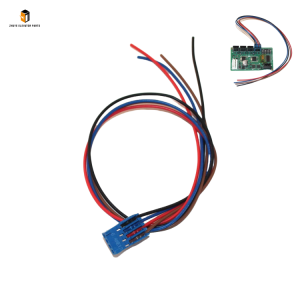
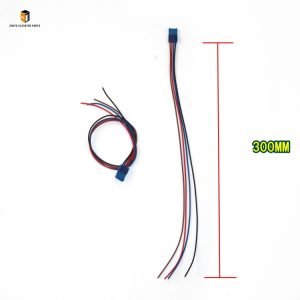
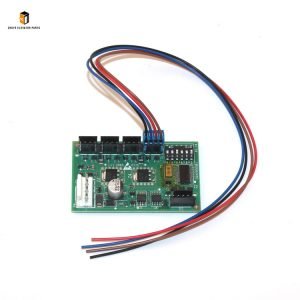
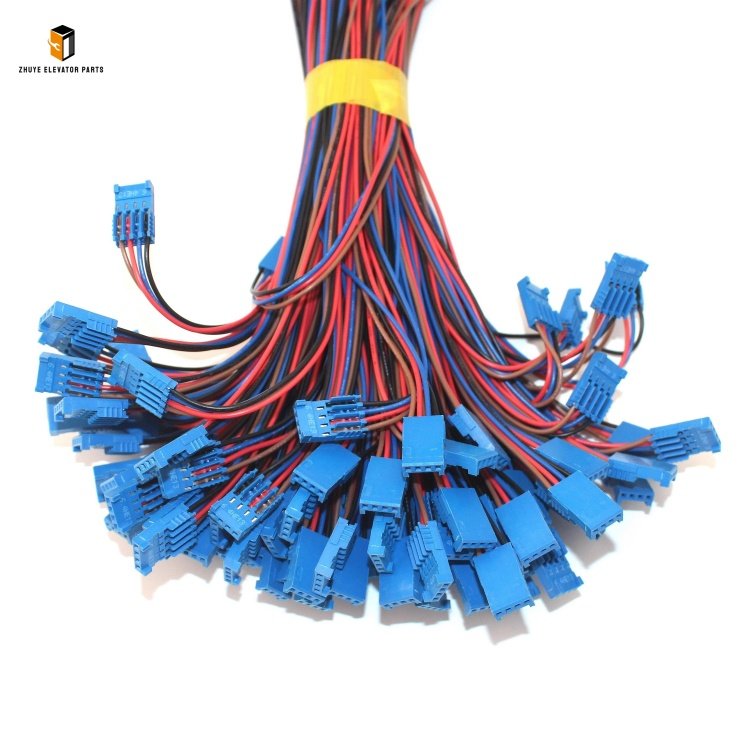
Otis elevator RS14 board connection lines 4-pin Brief Introduction
|
Product Name |
Otis elevator RS14 board connection lines 4-pin |
| Model Number | GCA25005B1
GDA25005B1 A311 |
|
Quality
|
Original.Brand New
|
|
Payment
|
T/T. Paypal. Western Union
|
|
Delivery
|
3-5 Working Days
|
|
Packaging
|
Packed by carton
|
Otis Elevator RS14 Board 4-Pin Connection Cable: Stable Signal Link from Nanjing Zhuye Elevatorparts
The 4-pin connection cable for the Otis Elevator RS14 board is a critical signal transmission component, specifically designed to connect the RS14 board (a key control module for Otis elevators) to other peripheral devices such as sensors, actuators, or sub-control boards. Its stable and reliable signal transmission directly ensures the accurate communication between the RS14 board and related components, which is essential for the smooth operation of the elevator’s control system. The Otis Elevator RS14 Board 4-Pin Connection Cable, exclusively supplied by Nanjing Zhuye Elevatorparts (a professional and trusted distributor of genuine Otis elevator components), is fully compliant with Otis’ original technical specifications and international electrical safety standards (IEC 60228, EN 50214). With excellent signal integrity, high-quality conductive performance, and durable insulation, this 4-pin cable provides a stable connection guarantee for Otis elevators in residential buildings, commercial complexes, office towers, hospitals, and public facilities worldwide.
Nanjing Zhuye Elevatorparts has established long-term cooperative relations with Otis, adhering to the core philosophy of “authenticity first, quality assurance”. Each 4-pin connection cable for the RS14 board undergoes strict pre-delivery inspections, including conductor resistance testing, insulation performance verification, signal transmission stability testing, and plug-in durability trials. The cable adopts high-purity oxygen-free copper conductors, high-temperature resistant PVC insulation materials, and a precision-molded 4-pin connector: the oxygen-free copper conductors minimize signal attenuation and ensure fast and accurate signal transmission; the high-temperature resistant PVC insulation effectively prevents short circuits caused by insulation aging in the high-temperature environment of the elevator control cabinet; the precision-molded connector features a tight fit with the RS14 board’s interface, avoiding poor contact due to loose connections. Its length and pin definition are completely consistent with Otis’ original parts, enabling seamless replacement without modifying the elevator’s existing control system.
Step-by-Step Usage Guide for Otis RS14 Board 4-Pin Connection Cable
To ensure the stable operation of the Otis elevator control system and extend the service life of the RS14 board 4-pin connection cable, follow the professional guidelines provided by Nanjing Zhuye Elevatorparts for installation, operation, and maintenance:
1. Professional Installation & Commissioning
Installation must be performed by certified technicians familiar with Otis elevator control systems. Prior to installation, confirm the compatibility of the 4-pin cable with the target Otis elevator model and RS14 board version using the detailed compatibility manual provided by Nanjing Zhuye Elevatorparts. The steps are as follows:
-
Safety Preparation: Cut off the elevator’s main power supply and the power supply of the control cabinet where the RS14 board is located. Hang a “Maintenance in Progress—Do Not Power On” sign to ensure the work area is safe. Open the control cabinet door and locate the RS14 board, then find the 4-pin interface on the board (marked with clear identification to distinguish it from other interfaces).
-
Cable Routing & Fixing: Route the 4-pin connection cable along the existing cable trough inside the control cabinet, ensuring the cable is not twisted, kinked, or stretched. Keep the cable away from high-voltage components to avoid electromagnetic interference affecting signal transmission. Fix the cable at appropriate intervals using cable ties provided by Nanjing Zhuye Elevatorparts, ensuring the fixing force is moderate to avoid damaging the cable insulation or connector.
-
Plug-in Connection: Align the 4-pin connector of the cable with the 4-pin interface on the RS14 board—note the direction of the connector (usually with a positioning notch to prevent reverse insertion). Gently insert the connector into the interface until a “click” sound is heard, indicating that the connector is fully locked. Then connect the other end of the cable to the corresponding peripheral device according to the Otis elevator wiring diagram and the guidance of Nanjing Zhuye Elevatorparts.
-
Post-Installation Testing: Restore the power supply of the control cabinet and the elevator’s main power supply. Enter the elevator’s self-inspection mode to check if the RS14 board can normally communicate with the connected peripheral devices. Use a professional multimeter or signal tester to detect the cable’s signal transmission status, ensuring there is no signal loss or interference. If the elevator control system reports communication faults or the RS14 board fails to recognize peripheral devices, recheck the cable’s connection and routing immediately.
2. Daily Operation & Routine Inspection
Regular inspections are crucial to early fault detection and ensuring the reliable operation of the RS14 board 4-pin connection cable. Maintenance personnel should incorporate the following checks into their daily patrols:
-
Daily Visual Inspection: During the inspection of the elevator control cabinet, carefully check the 4-pin connection cable. Ensure the cable’s insulation layer is free of cracks, wear, or hardening; check the connector for looseness, oxidation, or damage; confirm that the cable ties are intact and the cable is firmly fixed without displacement.
-
Weekly Functional Check: Operate the elevator to run in various modes (normal operation, inspection mode, emergency mode) and observe if the elevator control system operates stably. If there are phenomena such as frequent communication errors, unresponsive peripheral devices, or abnormal operation of the RS14 board-controlled functions, it may be caused by poor contact or signal transmission failure of the 4-pin cable, and the cable needs to be inspected immediately.
-
Monthly Parameter Monitoring: Cut off the power supply of the control cabinet, use a multimeter to detect the conductor resistance of the 4-pin cable (the normal value should be ≤ 0.5Ω) and the insulation resistance between the conductor and the ground (the normal value should be ≥ 100MΩ). If the parameters are abnormal, it indicates potential faults in the cable, and corresponding maintenance or replacement measures should be taken.
3. Regular Maintenance Schedule
Systematic maintenance can effectively extend the service life of the RS14 board 4-pin connection cable. Follow Nanjing Zhuye Elevatorparts’ recommended maintenance plan:
-
Quarterly Maintenance: Clean the 4-pin cable and the connector with a dry, lint-free cloth to remove accumulated dust and debris. Check the connector pins for oxidation—if oxidation is found, clean them with a professional contact cleaner. Recheck the cable routing and fixing status, and replace loose or damaged cable ties in a timely manner.
-
Semi-Annual Performance Test: Conduct a comprehensive performance test on the cable, including signal transmission delay test and anti-interference performance test. Use a professional signal analyzer to detect the signal transmission quality of the cable, ensuring the delay is within the range specified by Otis (≤ 1ms). For elevators in harsh environments (such as high humidity or strong electromagnetic interference), increase the frequency of performance tests.
-
Annual Professional Overhaul: Arrange a professional inspection with Nanjing Zhuye Elevatorparts’ certified technical team. Conduct a full-range inspection of the 4-pin cable, check for internal conductor breakage or insulation damage using professional equipment, and replace aging or severely worn cables in advance. At the same time, inspect the matching interface on the RS14 board to ensure it is compatible with the cable.
Recommended Replacement Cycle for Otis RS14 Board 4-Pin Connection Cable
As a key signal transmission component in the Otis elevator control system, the RS14 board 4-pin connection cable has a specified service life. Timely replacement is critical to avoiding signal transmission failure, which may lead to malfunctions of the elevator control system, such as incorrect floor display, unresponsive buttons, or even emergency shutdowns.
1. Standard Replacement Cycle
Under normal operating conditions (elevator daily operation time 12–24 hours, control cabinet environment temperature -10–60℃, humidity 10%–85%, no severe dust or corrosion), the recommended replacement cycle for the Otis RS14 board 4-pin connection cable is 3–5 years. This cycle is determined based on Nanjing Zhuye Elevatorparts’ long-term field data, including conductor aging tests, insulation material service life analysis, and plug-in durability verification.
2. Adjustments for Special Scenarios
-
Harsh Environments: For elevators in high-humidity coastal areas, high-dust construction sites, control cabinets with poor ventilation (resulting in high temperature), or areas with strong electromagnetic interference (such as near industrial equipment), the replacement cycle should be shortened to 2–3 years. Harsh conditions accelerate the aging of insulation materials, oxidation of connectors, and damage to conductors, significantly reducing the cable’s reliability.
-
Low-Frequency Use Scenarios: For elevators with low usage frequency (e.g., villa elevators, small office buildings with monthly rides < 2,500) and well-ventilated, clean control cabinet environments, the replacement cycle can be appropriately extended to 5–6 years—only if Nanjing Zhuye’s professional inspection confirms that the cable’s signal transmission performance, insulation performance, and connector integrity are all intact.
3. Immediate Replacement Conditions
Replace the RS14 board 4-pin connection cable immediately if any of the following issues occur, regardless of service life:
-
The cable insulation layer is severely worn, cracked, or hardened, and the internal conductors are exposed, posing short-circuit risks.
-
The connector is damaged, deformed, or has loose pins, leading to frequent poor contact and communication faults between the RS14 board and peripheral devices.
-
The cable’s conductor resistance exceeds 2Ω or the insulation resistance is persistently lower than 10MΩ, indicating serious conductor aging or insulation damage.
-
After professional testing, the cable’s signal transmission delay exceeds 3ms, which affects the normal operation of the elevator control system, and the fault cannot be eliminated through maintenance.
In conclusion, the Otis Elevator RS14 Board 4-Pin Connection Cable supplied by Nanjing Zhuye Elevatorparts is a high-quality, perfectly compatible signal transmission component tailored for Otis elevator RS14 boards. By following the correct usage methods, maintenance schedules, and replacement cycles, elevator maintenance teams can effectively ensure the stable operation of the Otis elevator control system, improve the reliability of the elevator, and minimize failure risks. Choosing Nanjing Zhuye Elevatorparts means you get not only authentic RS14 board 4-pin connection cables but also professional technical support, including installation guidance, maintenance advice, and prompt after-sales service.