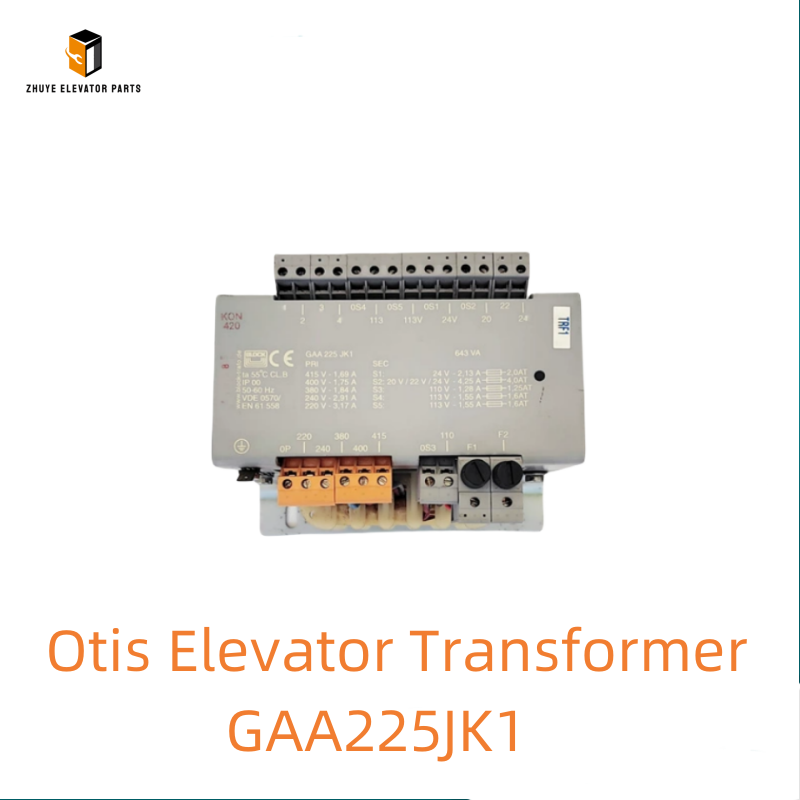
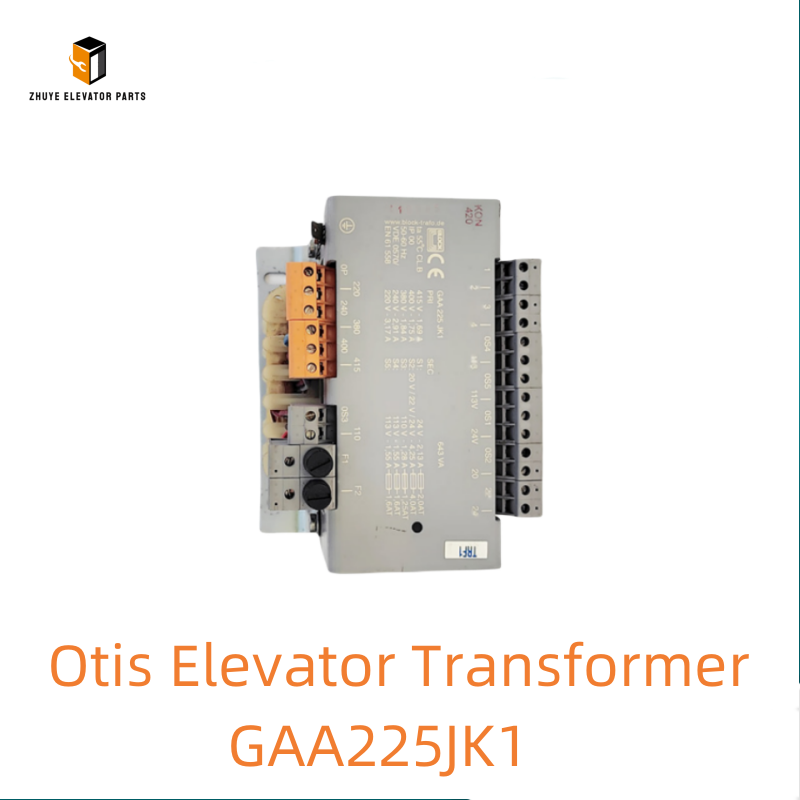

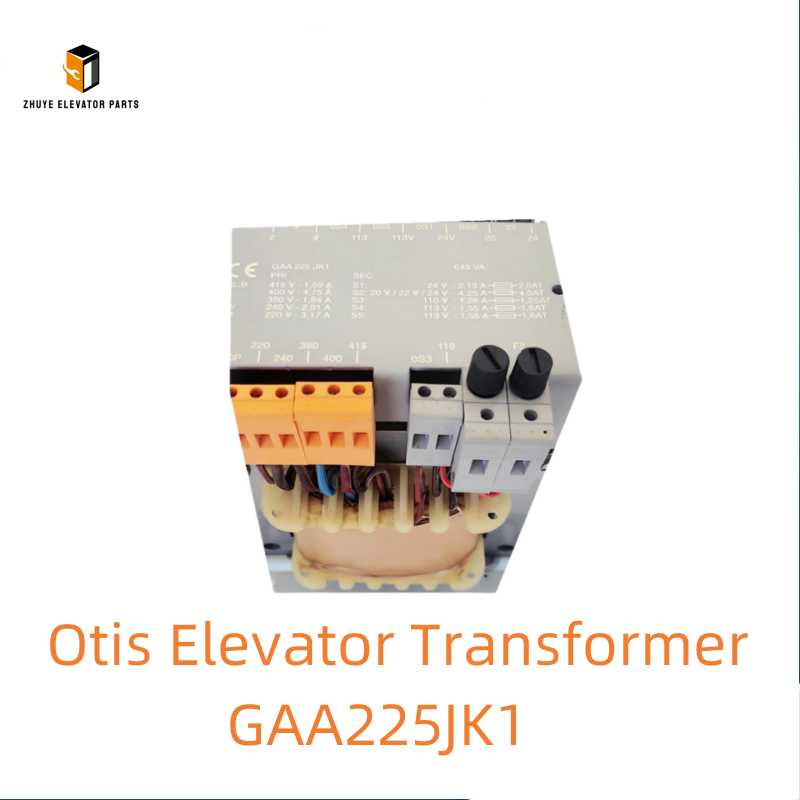

Description
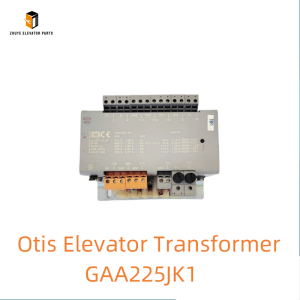
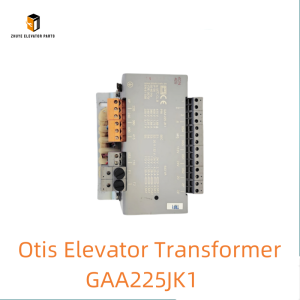
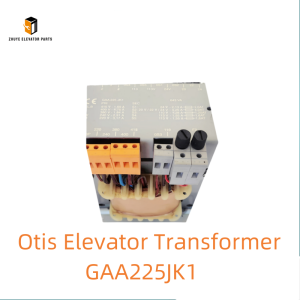
Otis Elevator Transformer GAA225JK1 Brief Introduction
|
Product Name |
Otis Elevator Transformer |
| Model Number | GAA225JK1 |
|
Quality
|
Original.Brand New
|
|
Payment
|
T/T. Paypal. Western Union
|
|
Delivery
|
3-5 Working Days
|
|
Packaging
|
Packed by carton
|
Otis Elevator Transformer GAA225JK1: Usage Guide, Replacement Cycle & Trusted Supply from Nanjing Zhuye
The Otis Elevator Transformer GAA225JK1 is a critical power conversion component exclusively engineered for Otis elevator systems—widely deployed in commercial high-rises, residential towers, and public transit facilities. As a key part of the elevator’s electrical system, this isolation transformer converts high-voltage input (typically 380V AC three-phase) to stable low-voltage output (24V DC/AC or 110V AC) to power core subsystems: control panels, door operators, safety interlocks, sensors, and communication modules. Compliant with global safety and electrical standards (EN 61558, ASME A17.1, IEC 60076, ISO 9001), it features a robust design: high-grade silicon steel core, copper windings with thermal insulation, overload protection, and flame-retardant housing to withstand continuous operation (24/7) and harsh machine room environments (temperature fluctuations, dust, electromagnetic interference). For maintenance teams, facility managers, and property operators, mastering the correct installation, testing, and replacement timelines of the GAA225JK1 is vital to prevent power supply failures, subsystem malfunctions, or safety hazards—ensuring reliable elevator operation. Nanjing Zhuye Elevator Parts, a trusted supplier of authentic Otis components, delivers the GAA225JK1 that meets Otis’s original manufacturing specifications, guaranteeing seamless compatibility, stable voltage output, and long-term durability.
Proper Usage Methods of Otis Elevator Transformer GAA225JK1
1. Pre-Installation Preparation
Before installing the GAA225JK1, prioritize safety by shutting off the elevator’s main power supply and securing the machine room electrical cabinet with a lockout tag. Inspect the transformer for physical damage—such as cracked housing, damaged terminal blocks, frayed wiring, or oil leaks (for oil-immersed variants)—defects that can cause short circuits, voltage instability, or fire risks. Nanjing Zhuye Elevator Parts conducts rigorous quality control checks, so each GAA225JK1 unit arrives in optimal condition: intact windings, secure terminal connections, proper insulation resistance (≥10MΩ at 500V DC), and pre-tested voltage regulation. Additionally, verify compatibility with your Otis elevator model by cross-referencing the technical manual or consulting Nanjing Zhuye’s technical support team—ensure the transformer’s input/output voltage ratings, power capacity (typically 2.5kVA), and mounting dimensions match your system’s electrical requirements.
2. Installation & Testing Steps
- Mounting the Transformer:
- Locate the designated installation position in the machine room electrical cabinet or dedicated transformer rack. The mounting surface must be flat, rigid, and well-ventilated to ensure heat dissipation—transformers generate moderate heat during operation. Maintain a minimum clearance of 15cm around the unit to avoid thermal buildup.
- Secure the GAA225JK1 with provided mounting bolts (torque to 8–10 Nm) to prevent vibration-induced loosening. Ensure the transformer is installed vertically (per Otis’s recommendations) to optimize heat dissipation and winding stability.
- Wiring Connection:
- Follow the wiring diagram provided by Otis or Nanjing Zhuye to connect the transformer to the main power supply and elevator subsystems:
- Connect high-voltage input wires (L1, L2, L3) to the primary terminals—use copper cables of specified gauge (typically 4–6mm²) and secure with terminal blocks. Ensure proper phase alignment and tight connections to prevent arcing.
- Attach low-voltage output wires to the secondary terminals, matching the required voltage (24V/110V) for each subsystem (e.g., 24V for control panels, 110V for door operators). Use color-coded wires or labels to avoid misconnection.
- Install a dedicated circuit breaker (matching the transformer’s rated current) in the input line to provide overload and short-circuit protection.
- Follow the wiring diagram provided by Otis or Nanjing Zhuye to connect the transformer to the main power supply and elevator subsystems:
- Functional Testing:
- Conduct comprehensive tests (by certified electricians/technicians only):
- Insulation Resistance Test: Use a megohmmeter to verify insulation resistance between windings and ground—ensure it meets or exceeds 10MΩ.
- Voltage Regulation Test: Power on the transformer and measure input/output voltages under no-load and full-load conditions. Confirm the output voltage remains stable (±3% of rated value) to avoid subsystem damage.
- Load Test: Operate the elevator through normal cycles and monitor the transformer’s output voltage during peak load (e.g., door opening/closing + control system operation). Ensure no voltage drops or fluctuations.
- Thermal Performance Test: Run the transformer continuously for 2 hours and check the housing temperature—ensure it remains within the safe range (≤85°C) to prevent thermal overload.
- Document test results in maintenance records to demonstrate compliance with electrical safety standards.
- Conduct comprehensive tests (by certified electricians/technicians only):
3. Routine Usage Maintenance
To preserve the GAA225JK1’s performance and extend its lifespan, implement these proactive maintenance practices:
- Weekly Visual Inspections: Check for loose mounting bolts, damaged housing, or debris accumulation around the transformer. Remove dust or oil with a dry, lint-free cloth—avoid water or cleaning agents that can damage insulation.
- Monthly Voltage Checks: Use a multimeter to measure input/output voltages and verify stability. Document any fluctuations (≥5% of rated value) for troubleshooting.
- Quarterly Terminal Inspections: Inspect input/output terminals for corrosion, wear, or loose connections. Tighten terminals as needed or replace damaged terminal blocks with genuine Otis parts from Nanjing Zhuye.
- Semi-Annual Insulation Resistance Test: Re-test insulation resistance to detect early signs of winding degradation. Address values below 10MΩ immediately to prevent short circuits.
- Annual Thermal & Load Checks: Verify the transformer’s thermal performance and load-carrying capacity. Clean ventilation grilles to ensure unobstructed heat dissipation.
Recommended Replacement Cycle
The service life of the Otis Elevator Transformer GAA225JK1 depends on operating conditions (voltage stability, load intensity, machine room environment), and maintenance quality. Based on industry standards and Nanjing Zhuye’s technical expertise:
1. Standard Replacement Cycle
Under normal operating conditions (stable input voltage, regular maintenance, dry machine room), the GAA225JK1 should be replaced every 8–10 years. This timeframe accounts for gradual winding insulation degradation, core loss increase, and terminal wear—ensuring the transformer maintains stable voltage output, overload protection, and compatibility with elevator system upgrades. Proactive replacement reduces the risk of unexpected power failures, which can lead to costly elevator downtime or safety hazards.
2. Signs That Require Immediate Replacement
Replace the transformer immediately if you encounter any of the following issues:
- Voltage Instability: Output voltage fluctuates beyond ±5% of rated value, or drops significantly under load—causing subsystem malfunctions (e.g., unresponsive door operators, control panel errors).
- Insulation Failure: Insulation resistance falls below 5MΩ, or short circuits occur between windings or to ground.
- Thermal Overload: The transformer housing becomes excessively hot (≥95°C) during normal use, or triggers frequent overload protection shutdowns.
- Physical Damage: Cracked housing, oil leaks (oil-immersed variants), burned terminals, or frayed wiring that cannot be repaired.
- Audible Anomalies: Persistent humming, buzzing, or cracking sounds—indicative of loose windings, core damage, or electrical arcing.
3. Maintenance to Extend Service Life
To maximize the GAA225JK1’s lifespan and minimize replacement costs:
- Stabilize Input Voltage: Install a surge protector or voltage regulator in the main power line to shield the transformer from voltage spikes or sags—common causes of winding damage.
- Ensure Proper Ventilation: Keep the machine room well-ventilated and maintain ambient temperature between 10–35°C. Avoid installing the transformer near heat sources (e.g., motors, heaters).
- Prevent Overloading: Avoid connecting additional non-Otis devices to the transformer’s output—overloading accelerates winding degradation and insulation failure.
- Use Genuine Parts Only: For repairs or replacements, rely exclusively on genuine Otis components from Nanjing Zhuye. Counterfeit transformers may have inferior copper windings, substandard insulation, or incorrect voltage ratings that compromise safety and performance.
Why Choose Nanjing Zhuye Elevator Parts?
When sourcing the Otis Elevator Transformer GAA225JK1, Nanjing Zhuye Elevator Parts offers unmatched advantages for safety-focused professionals:
- Authenticity & Compatibility: All GAA225JK1 transformers are manufactured to Otis’s original specifications, ensuring seamless integration with Otis electrical systems and compliance with global safety/electrical standards.
- Strict Quality Assurance: Each unit undergoes rigorous testing—including voltage regulation verification, insulation resistance, thermal performance, and overload protection—to guarantee stable power conversion in critical elevator systems.
- Expert Technical Support: Nanjing Zhuye’s certified engineers provide 24/7 assistance, from installation wiring and voltage calibration to troubleshooting transformer-specific issues (e.g., voltage fluctuations, thermal overload) in Otis elevators.
- Global Efficient Delivery: With a robust supply chain and logistics network, Nanjing Zhuye delivers electrical components promptly worldwide, minimizing elevator downtime during replacement.
- Competitive Pricing: By eliminating middlemen, Nanjing Zhuye offers cost-effective solutions without compromising quality—helping you balance maintenance budgets with the need for reliable, compliant elevator components.
Conclusion
The Otis Elevator Transformer GAA225JK1 is a foundational component that directly impacts elevator electrical system reliability, subsystem performance, and safety. By following proper installation, testing, and maintenance practices, adhering to recommended replacement cycles, and partnering with a trusted supplier like Nanjing Zhuye Elevator Parts, you can ensure your Otis elevators remain compliant, downtime-free, and efficient. Whether you need a replacement transformer, technical support for installation, or bulk orders for a building fleet, Nanjing Zhuye is committed to delivering premium Otis components and tailored professional services. Invest in electrical system stability—choose Nanjing Zhuye Elevator Parts for your Otis GAA225JK1 transformer requirements.