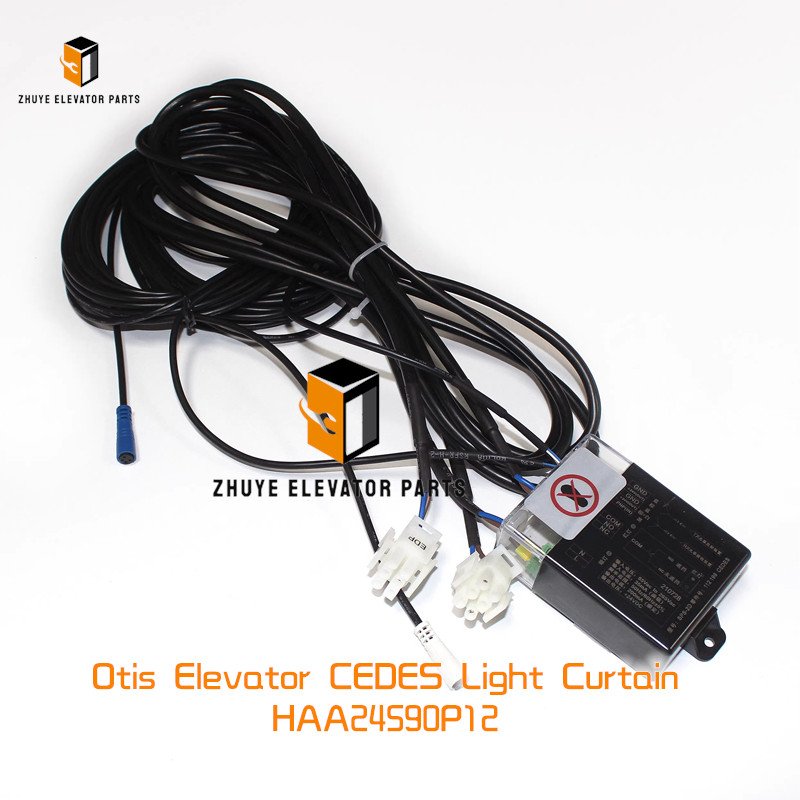
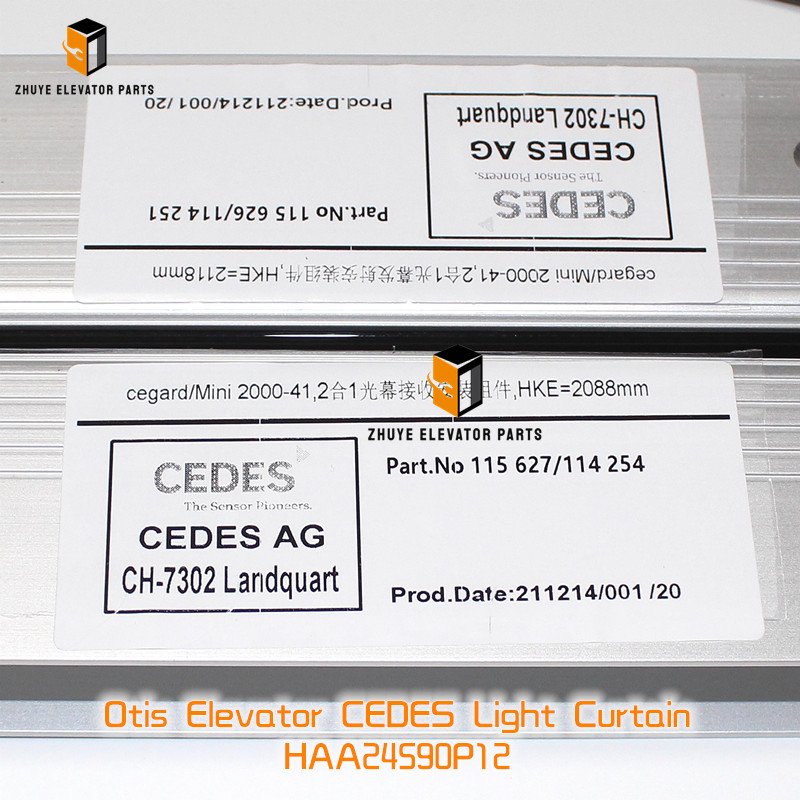
Description
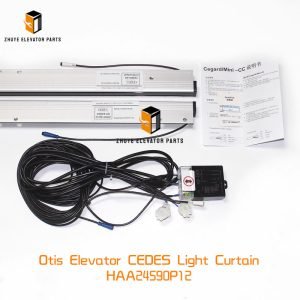
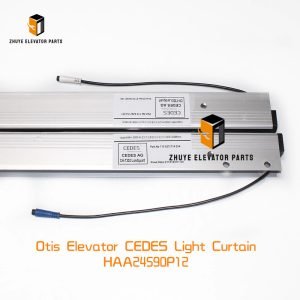
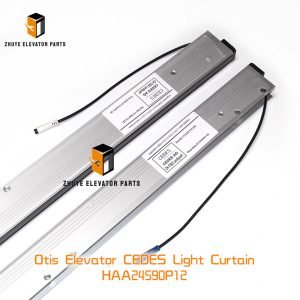
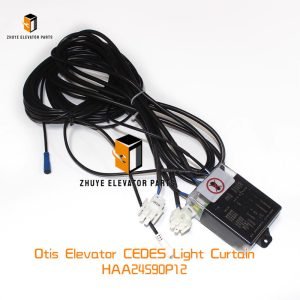
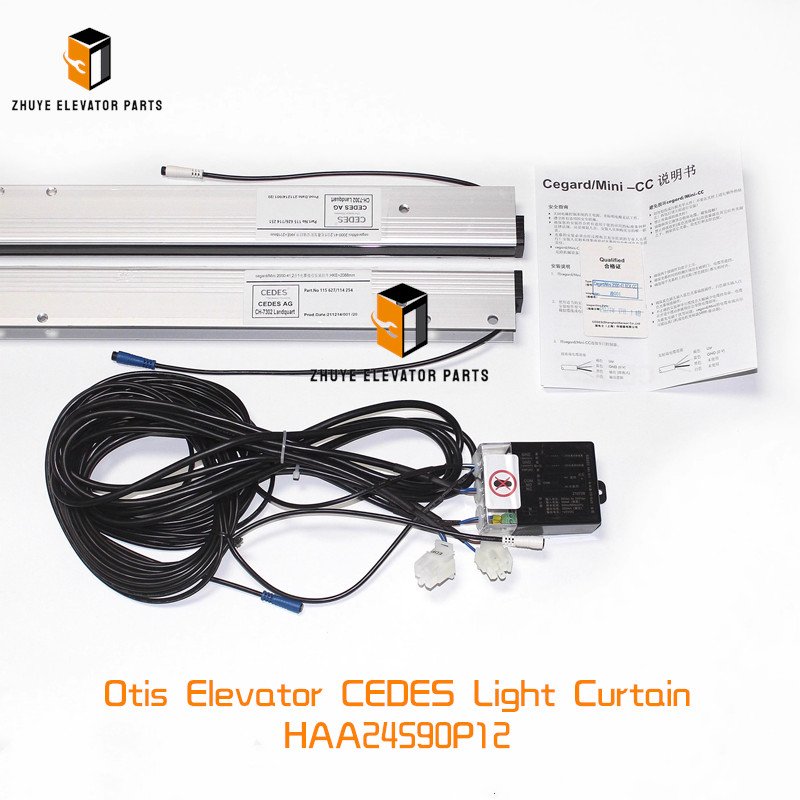
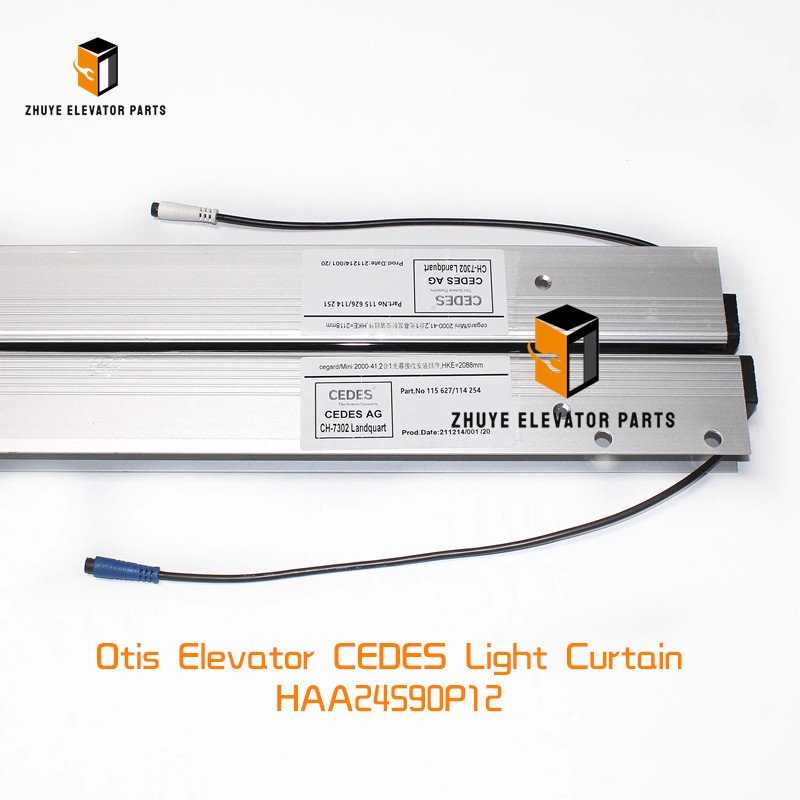
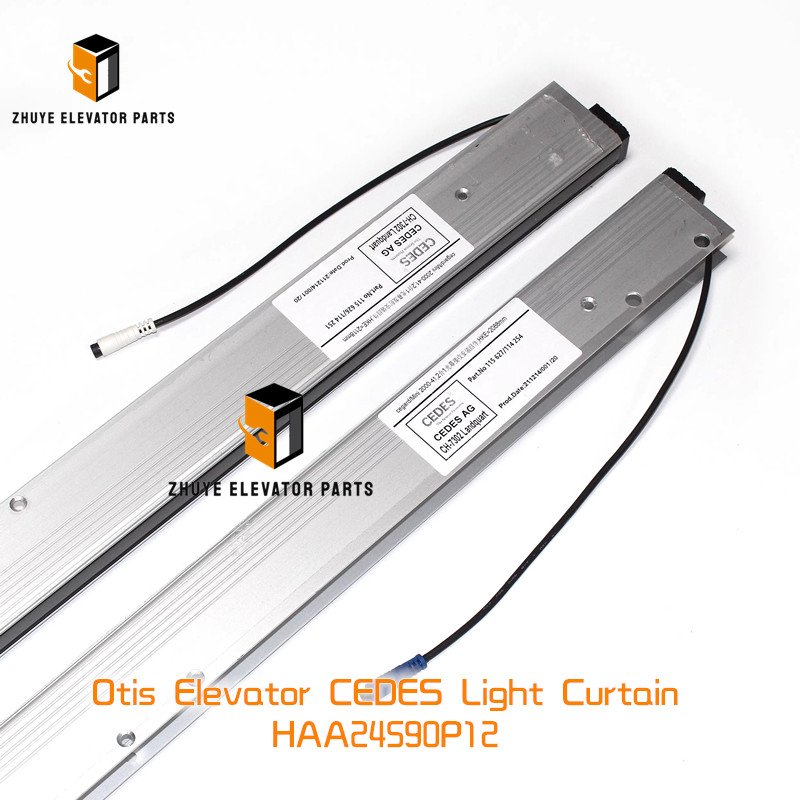
Otis Elevator CEDES Light Curtain HAA24590P12 Brief Introduction
|
Product Name |
Otis Elevator CEDES Light Curtain |
| Model Number | HAA24590P12
HAA24590AA3 |
|
Quality
|
Original.Brand New
|
|
Payment
|
T/T. Paypal. Western Union
|
|
Delivery
|
3-5 Working Days
|
|
Packaging
|
Packed by carton
|
Otis Elevator CEDES Light Curtain HAA24590P12: Usage Guide, Replacement Cycle & Trusted Supply from Nanjing Zhuye
The Otis Elevator CEDES Light Curtain HAA24590P12 is a cutting-edge safety component designed to prevent elevator door entrapment—one of the most common elevator-related safety hazards. Developed in collaboration with CEDES (a leader in optical safety systems), this light curtain creates an invisible infrared beam grid across the elevator door opening, detecting obstacles (e.g., passengers, objects) and triggering immediate door reversal to avoid pinching or crushing. Compliant with global safety standards (EN 81-70, ASME A17.1, ISO 13849), it offers high detection accuracy (≤5mm resolution) and reliable performance in high-traffic environments like commercial buildings, hospitals, and residential complexes. For elevator maintenance teams, property managers, and facility operators, mastering the correct usage, installation, and replacement timelines of the HAA24590P12 is non-negotiable to uphold safety compliance and protect passengers. Nanjing Zhuye Elevator Parts, a trusted supplier of authentic Otis safety components, delivers the HAA24590P12 light curtain that meets Otis and CEDES’s original manufacturing specifications, guaranteeing seamless compatibility, responsive detection, and long-term durability for Otis elevator systems.
Proper Usage Methods of Otis CEDES Light Curtain HAA24590P12
1. Pre-Installation Preparation
Before installing the HAA24590P12, prioritize safety by shutting off the elevator’s main power supply and securing the control panel with a lockout tag. Inspect the light curtain components—transmitter, receiver, mounting brackets, and wiring harness—for physical damage such as cracked casings, scratched lenses, bent pins, or frayed cables. Defects in these parts can reduce detection range or cause false triggers. Nanjing Zhuye Elevator Parts conducts rigorous quality control checks, so each HAA24590P12 unit arrives in optimal condition, with intact optical components and pre-tested signal transmission. Additionally, verify compatibility with your Otis elevator model by cross-referencing the technical manual or consulting Nanjing Zhuye’s technical support team—ensure the light curtain’s voltage rating (typically 24V DC), detection height (customized for elevator door openings), and communication protocol (e.g., dry contact, CAN bus) match your system’s requirements.
2. Installation & Operation Steps
- Mounting the Transmitter & Receiver:
- Locate the designated installation positions on the elevator door jambs—one side for the transmitter (emits infrared beams) and the opposite side for the receiver (detects beams). Mount the units vertically, aligning them perfectly (use a level tool) to ensure the beam grid is unobstructed.
- Secure the brackets with the provided screws (torque to 0.8–1.2 Nm) and attach the transmitter/receiver to the brackets. Maintain a minimum 5cm clearance from door edges and moving parts to prevent mechanical damage.
- Wiring Connection:
- Follow the wiring diagram provided by Otis, CEDES, or Nanjing Zhuye to connect the light curtain to the elevator’s door control system and power supply:
- Connect the power wires (positive/negative) to the designated terminals, ensuring correct polarity to avoid component burnout.
- Attach the signal wires to the door controller—these wires transmit obstacle detection signals to trigger door reversal.
- Use cable glands to secure wiring entries, preventing dust or moisture intrusion. Route cables away from high-voltage lines to minimize electromagnetic interference (EMI).
- Follow the wiring diagram provided by Otis, CEDES, or Nanjing Zhuye to connect the light curtain to the elevator’s door control system and power supply:
- Calibration & Functional Testing:
- Power on the elevator and initiate the light curtain’s self-calibration mode (refer to the user manual for specific steps). The system will automatically align beams and set detection sensitivity.
- Conduct a comprehensive detection test:
- Wave a hand or soft object across the entire door opening (top to bottom) to verify immediate door reversal at all points.
- Test with small objects (e.g., a pen) to confirm detection of narrow obstacles (critical for child safety).
- Check for false triggers by running the doors without obstacles—ensure the light curtain does not interfere with normal operation.
- Verify the LED status indicators: Steady green indicates normal operation; flashing red signals beam misalignment or faults (refer to the manual for troubleshooting).
3. Routine Usage Maintenance
To preserve the HAA24590P12’s performance, implement these routine practices:
- Conduct weekly visual inspections: Check for dirt, dust, or smudges on the transmitter/receiver lenses (clean with a soft, lint-free cloth if needed) and ensure mounting brackets are secure.
- Test the detection function monthly by simulating obstacle scenarios—document results in maintenance records to demonstrate compliance.
- Inspect wiring connections quarterly for looseness or corrosion; tighten or replace cables as needed.
- Keep the elevator door area free from excessive dust, moisture, or oil to prevent lens contamination and signal interference.
Recommended Replacement Cycle
The service life of the Otis CEDES Light Curtain HAA24590P12 depends on environmental conditions (dust, humidity, temperature), usage intensity, and maintenance quality. Based on industry standards and Nanjing Zhuye’s technical expertise, the following replacement guidelines are recommended:
1. Standard Replacement Cycle
Under normal operating conditions (12–18 hours of daily use, clean environment, regular maintenance), the HAA24590P12 should be replaced every 5–7 years. This timeframe accounts for gradual degradation of optical components (LEDs, photodiodes), lens yellowing, and electronic circuit wear—ensuring the light curtain maintains high detection accuracy and responsive performance. Proactive replacement reduces the risk of failure to detect obstacles, which can lead to safety incidents and liability claims.
2. Signs That Require Immediate Replacement
Replace the light curtain immediately if you encounter any of the following issues:
- Failed or inconsistent obstacle detection (e.g., doors do not reverse when obstacles are present) that persists after cleaning lenses and recalibrating.
- Frequent false triggers that disrupt normal door operation, even after troubleshooting wiring and alignment.
- Physical damage: Cracked casings, scratched lenses (beyond repair), or water intrusion into the transmitter/receiver.
- Dim or non-functional LED indicators, indicating internal component failure.
- Inability to integrate with elevator system upgrades—older models may lack compatibility with new door control modules.
3. Maintenance to Extend Service Life
To maximize the HAA24590P12’s lifespan:
- Maintain elevator cab humidity between 30–60% and temperature between 10–35°C to prevent lens fogging and electronic component corrosion.
- Apply a protective film (optional) to the lenses to reduce scratch risk from accidental contact.
- Avoid using harsh chemicals or abrasive cleaners on the lenses—use only water or mild detergent if necessary.
- Use only genuine replacement parts and accessories from Nanjing Zhuye for repairs, as counterfeit components can compromise detection accuracy and safety compliance.
Why Choose Nanjing Zhuye Elevator Parts?
When sourcing the Otis Elevator CEDES Light Curtain HAA24590P12, Nanjing Zhuye Elevator Parts offers unmatched advantages for safety-focused professionals:
- Authenticity & Compliance: All HAA24590P12 light curtains are manufactured to Otis and CEDES’s original specifications, ensuring seamless compatibility with Otis elevator systems and adherence to global safety standards (EN 81-70, ASME A17.1, ISO 13849).
- Strict Quality Assurance: Each unit undergoes rigorous testing—including detection range verification, obstacle sensitivity checks, and environmental durability simulations—to guarantee reliable performance in critical safety scenarios.
- Expert Technical Support: Nanjing Zhuye’s certified engineers provide 24/7 assistance, from installation alignment and calibration to troubleshooting false triggers or signal issues, ensuring the light curtain operates optimally.
- Global Efficient Delivery: With a robust supply chain and logistics network, Nanjing Zhuye delivers orders promptly worldwide, minimizing downtime during replacement and keeping your elevators compliant.
- Competitive Pricing: By eliminating middlemen, Nanjing Zhuye offers cost-effective solutions without compromising quality, helping you maintain safety standards while controlling maintenance costs.
Conclusion
The Otis Elevator CEDES Light Curtain HAA24590P12 is a life-saving safety component that provides critical protection against elevator door entrapment, especially for vulnerable groups like children and the elderly. By following proper installation and maintenance methods, adhering to recommended replacement cycles, and partnering with a trusted supplier like Nanjing Zhuye Elevator Parts, you can ensure your Otis elevators remain compliant, reliable, and safe for all passengers. Whether you need a replacement light curtain, technical support, or bulk orders for a building fleet, Nanjing Zhuye is committed to delivering premium safety components and professional services tailored to your needs. Invest in passenger safety—choose Nanjing Zhuye Elevator Parts for your Otis CEDES HAA24590P12 light curtain requirements.