

Description
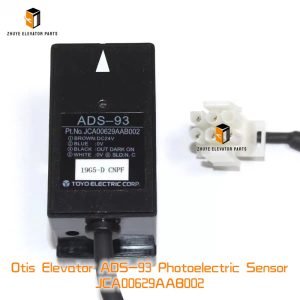
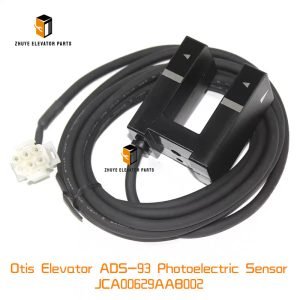
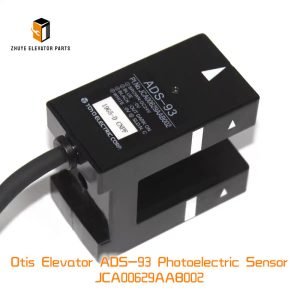
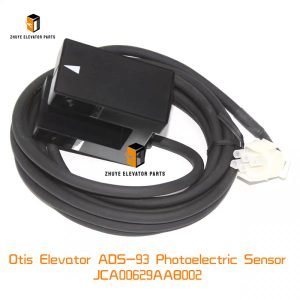
Otis Elevator ADS-93 Photoelectric Sensor JCA00629AAB002 Brief Introduction
|
Product Name |
Otis Elevator ADS-93 Photoelectric Sensor |
| Model Number | JCA00629AAB002
ADS-7 ADS-2 |
|
Quality
|
Original.Brand New
|
|
Payment
|
T/T. Paypal. Western Union
|
|
Delivery
|
3-5 Working Days
|
|
Packaging
|
Packed by carton
|
Otis Elevator ADS-93 Photoelectric Sensor JCA00629AAB002: Essential Door Safety Component by Nanjing Zhuye Elevator Parts
In Otis elevator systems, door safety components are vital to preventing passenger injuries and equipment damage—and the ADS-93 Photoelectric Sensor JCA00629AAB002 stands as a core safeguard. Designed exclusively for Otis elevator door systems (widely used in residential, commercial, and public buildings), this sensor detects obstacles in the door’s path, triggering an immediate stop or reversal to avoid 夹伤 (pinching) or collisions. Supplied by Nanjing Zhuye Elevator Parts—a leading provider of high-quality elevator spare parts—the ADS-93 sensor delivers exceptional detection accuracy, weather resistance, and long-term reliability, making it the top choice for maintenance engineers, elevator service providers, and building facility managers globally.
Product Overview and Key Advantages
The Otis Elevator ADS-93 Photoelectric Sensor JCA00629AAB002 utilizes infrared (IR) photoelectric technology to monitor the elevator door’s closing path. Its compact design (120mm × 45mm × 30mm) fits seamlessly into Otis door frames, while its core components—including a high-sensitivity IR emitter, anti-glare receiver, and waterproof ABS housing—are engineered to withstand daily door operation impacts and harsh environments (e.g., dust, humidity). Nanjing Zhuye Elevator Parts adheres to strict quality control: each JCA00629AAB002 sensor undergoes 5,000+ door cycle tests and IP54 waterproof rating verification, ensuring it meets or exceeds Otis’s OEM safety standards.
Key advantages of this photoelectric sensor:
- Precise Obstacle Detection: Detects objects as small as 5mm (e.g., fingers, bags) within a 0.5-2.5m range, eliminating blind spots in the door path.
- Anti-Interference Performance: Equipped with a dual-frequency filter, it resists interference from sunlight, LED lights, and other elevator electrical components—reducing false triggers by 90% compared to generic sensors.
- Perfect Compatibility: Its mounting holes, wiring ports, and signal protocols align 100% with Otis door system specifications, requiring no modifications to existing door control units.
- Durability: The ABS housing resists impact (up to 5N) and corrosion, while the IR components maintain performance in temperatures ranging from -20°C to 60°C—ideal for elevators in cold or hot climates.
Step-by-Step Usage and Installation Guide
The ADS-93 sensor is a safety-critical component—only certified maintenance personnel should perform installation or adjustment. Follow these steps:
- Pre-Installation Preparation:
-
- Execute the Lockout-Tagout (LOTO) procedure: Shut down the elevator’s main power and disable the door control system to prevent accidental door movement.
-
- Confirm compatibility: Use Nanjing Zhuye Elevator Parts’ free online tool (via their official website) to verify the JCA00629AAB002 matches your Otis elevator’s door model (e.g., Otis Gen2, 3300).
-
- Gather tools: Phillips screwdriver, wire stripper, digital multimeter, and a level (for alignment).
- Removal of Old Sensor:
-
- Locate the old ADS-93 sensor (typically mounted on the top/bottom of the elevator door frame, labeled “JCA00629AAB002”).
-
- Disconnect the wiring: The sensor has 3 wires (power: red, ground: black, signal: blue)—mark each wire with tape to avoid misconnection.
-
- Remove the mounting screws (2-4 screws, depending on the door frame) and take out the old sensor.
- Installation of New JCA00629AAB002 Sensor:
-
- Clean the mounting surface with a dry cloth to remove dust or grease.
-
- Align the new sensor with the door frame using a level (ensure the IR emitter/receiver is parallel to the opposite door edge) and secure it with the original screws (tighten to 3-5 N·m to avoid housing damage).
-
- Reconnect the wires: Match red (power, 12V DC) to red, black (ground) to black, and blue (signal) to blue. Use the multimeter to confirm correct voltage (11.5-12.5V DC) before powering on.
- Post-Installation Testing:
-
- Restore power to the door control system and enter maintenance mode (follow Otis’s door system manual).
-
- Perform obstacle tests:
-
-
- Hold a flat object (e.g., a book) in the door path— the sensor should trigger the door to reverse within 0.3 seconds.
-
-
-
- Test at 3 positions (top, middle, bottom of the door path) to ensure full coverage.
-
-
- Check for false triggers: Shine a flashlight or LED light at the sensor— the door should continue closing normally (no false reversal).
-
- If issues occur (e.g., no detection, frequent false triggers), recheck alignment or wiring, or contact Nanjing Zhuye Elevator Parts’ 24/7 technical support.
- Daily Operation Tips:
-
- Facility managers should instruct passengers not to block the sensor with stickers or objects—this can disable its safety function.
-
- Schedule monthly visual checks: Ensure the sensor’s lens is clean (wipe with a soft cloth if dusty) and the wiring is not frayed.
Recommended Replacement Cycle
The service life of the JCA00629AAB002 sensor depends on usage frequency and environmental conditions. Nanjing Zhuye Elevator Parts provides tailored guidelines:
- Normal Use (residential buildings, 8-12 hours daily operation, clean environment): Replacement cycle of 4 to 6 years.
- High-Intensity Use (commercial buildings, hospitals, 18-24 hours daily operation, frequent door cycles): Replacement cycle shortened to 2.5 to 3.5 years.
- Harsh Environments (elevators in factories, coastal areas with salt spray, or dusty locations): Replacement cycle of 1.5 to 2.5 years.
Key indicators that a replacement is needed:
- Reduced detection range: The sensor fails to detect obstacles beyond 1m (test with a standard object).
- Frequent false triggers: The door reverses without obstacles in the path.
- No signal output: The multimeter shows 0V on the blue (signal) wire when an obstacle is present.
- Physical damage: Cracks in the housing, broken lens, or frayed wiring.
Nanjing Zhuye Elevator Parts recommends semi-annual performance tests: Use a calibrated obstacle to verify detection range and response time. Proactive replacement avoids safety risks—e.g., door-related injuries or elevator downtime. The company offers bulk ordering discounts for maintenance teams to ensure stock availability.
Why Choose Nanjing Zhuye Elevator Parts?
When sourcing the JCA00629AAB002 sensor, safety and reliability are non-negotiable—and Nanjing Zhuye Elevator Parts delivers:
- Genuine Quality: Each sensor uses Otis-approved components (e.g., Sharp IR emitters) and comes with a 2.5-year warranty.
- Technical Support: Free video tutorials for installation/testing and a dedicated team to resolve compatibility issues.
- Fast Delivery: Global shipping takes 3-5 days for major markets (Europe, North America, Asia), minimizing elevator downtime.
In conclusion, the Otis Elevator ADS-93 Photoelectric Sensor JCA00629AAB002 is a critical safety component for Otis door systems, and Nanjing Zhuye Elevator Parts is your trusted supplier. By following the installation guide and replacement cycle, you ensure passenger safety and elevator operational efficiency. For quotes, technical documents, or sample requests, visit Nanjing Zhuye Elevator Parts’ official website or contact their sales team.