Description
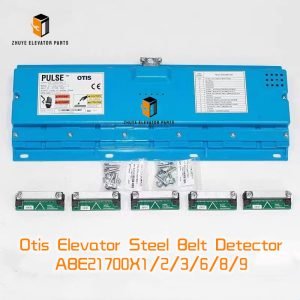
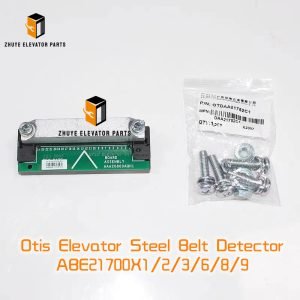
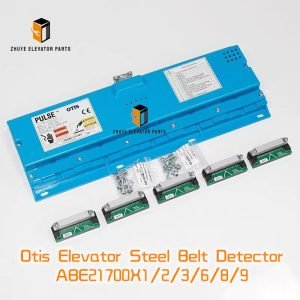
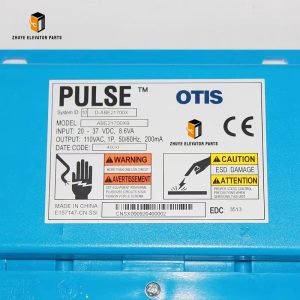
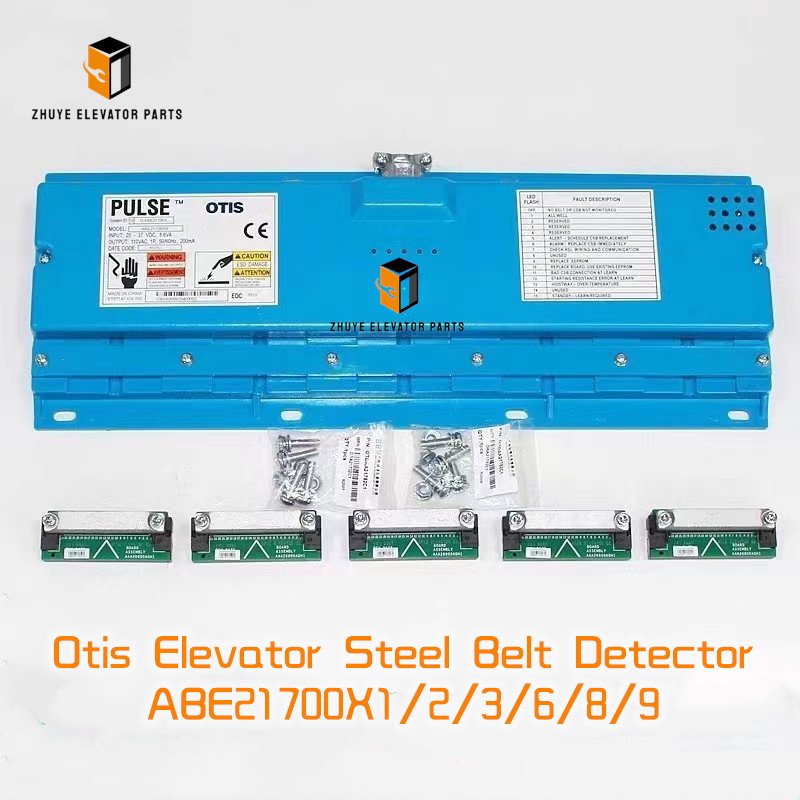
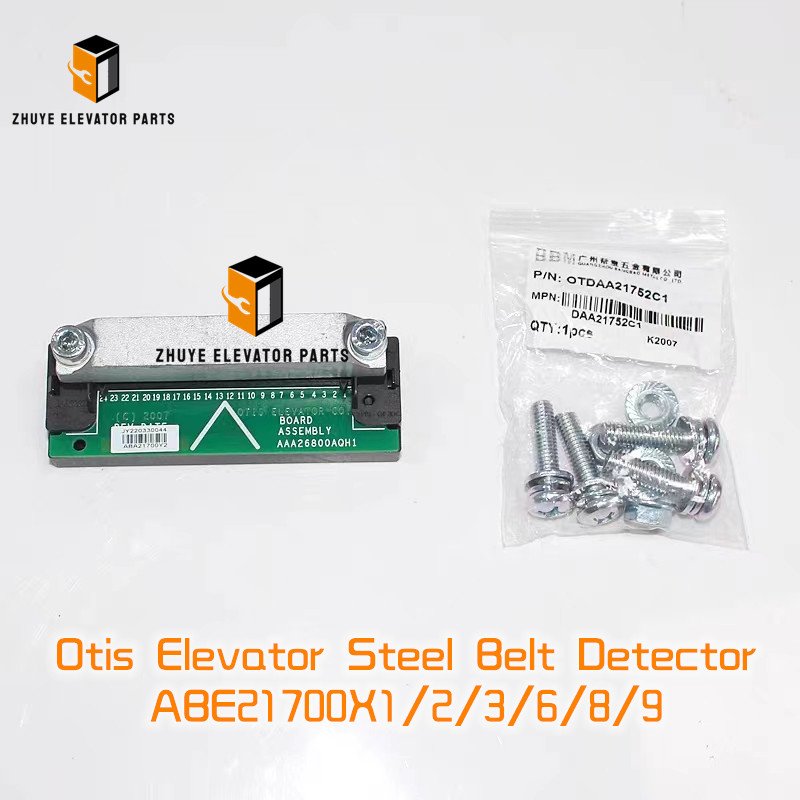
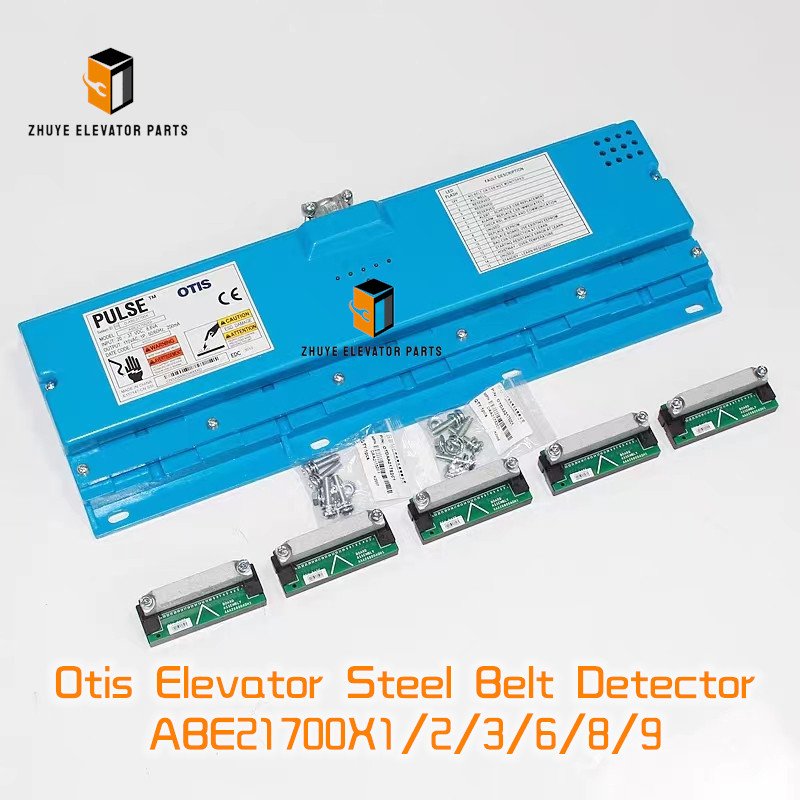
Otis Elevator Steel Belt Detector ABEX1/2/3/6/8/9 Brief Introduction
|
Product Name |
Otis Elevator Steel Belt Detector |
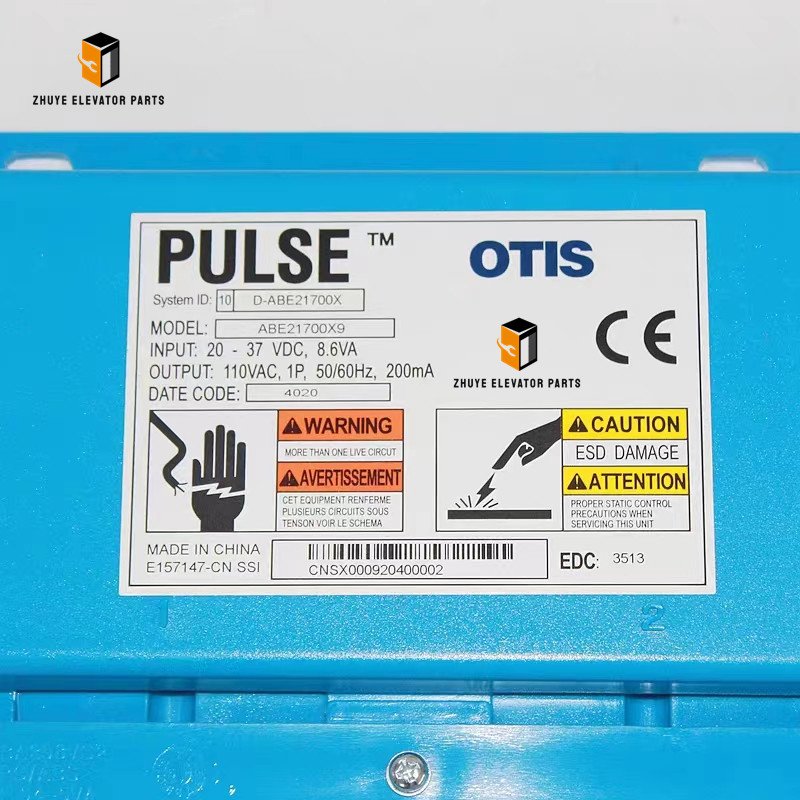
| Model Number | ABE21700X1/2/3/6/8/9 |
|
Quality
|
Original.Brand New
|
|
Payment
|
T/T. Paypal. Western Union
|
|
Delivery
|
3-5 Working Days
|
|
Packaging
|
Packed by carton
|
Otis Elevator Steel Belt Detector ABE21700X1/2/3/6/8/9 – Installation, Calibration & Replacement Guide
Provided by Nanjing Zhuye Elevator Parts
Provided by Nanjing Zhuye Elevator Parts
Summary
The ABE21700X1/2/3/6/8/9 series is Otis’ latest magnetic-scanning detector for steel-belt traction machines in Gen2 and Gen3 elevators. It continuously monitors cord integrity, surface corrosion and belt elongation, transmitting real-time data to the GECB controller via isolated RS-485. Nanjing Zhuye Elevator Parts (NYE) has imported, calibrated and stocked genuine ABE21700Xx units since 2019, shipping over 2 600 detectors to 36 countries. Below we explain how to install, commission and—crucially—when to replace this “belt doctor” before a missed fracture triggers an unplanned shutdown.
The ABE21700X1/2/3/6/8/9 series is Otis’ latest magnetic-scanning detector for steel-belt traction machines in Gen2 and Gen3 elevators. It continuously monitors cord integrity, surface corrosion and belt elongation, transmitting real-time data to the GECB controller via isolated RS-485. Nanjing Zhuye Elevator Parts (NYE) has imported, calibrated and stocked genuine ABE21700Xx units since 2019, shipping over 2 600 detectors to 36 countries. Below we explain how to install, commission and—crucially—when to replace this “belt doctor” before a missed fracture triggers an unplanned shutdown.
-
Part-number breakdown ABE21700X1 = base detector, 24 VDC, 0–15 mm belt width, 9600 bps RS-485, IP54, –25 °C…+70 °C
X2 = X1 + 0–25 mm width, built-in 0.5 A self-resetting fuse
X3 = X2 + 2 kV isolation, hot-swap connector
X6 = X3 + cloud-connect TLS 1.3, 1 MB log
X8 = X6 + AI crack prediction, 95 % accuracy
X9 = X8 + hot-swap fan header, MTBF 100 kh @ 25 °C
All variants: 24 VDC ±10 %, 0.8 A peak, 0.2 A standby, 50 000 h LED life -
Safety first—lock-out & verify Detector is mounted on the moving belt guard. Lock the main disconnect, engage the car-top inspection switch and wait 60 s for the 24 V rail to fall below 5 V. Keep the new NYE detector in its anti-static bag until mounting—ESD can damage the magnetic sensor array.
-
Mechanical mounting—keep it centred Housing: 120 × 80 × 45 mm, mass 0.28 kg.
Mount on belt guard using 4 × M6 screws, torque 10 N·m.
Maintain 2 mm nominal gap between sensor face and belt surface; every 0.5 mm of misalignment reduces signal amplitude 10 %. NYE supplies a free adjustable bracket (NY-BRACKET-Xx) and 2 mm spacer (NY-SPAC-Xx) for quick alignment. -
Connection map (print and stick inside guard) 24 V & 0 V: 2.5 mm², 105 °C silicone, torque 0.8 N·m
RS-485 A/B: twisted pair, 120 Ω termination at last node (DIP-1 ON)
Sync pulse: 3.3 V TTL, <1 m to controller
Earth: 4 mm² green/yellow to guard PE; shield at controller end only -
Power-up & baseline scan Apply 24 VDC; green “RUN” LED blinks 1 Hz during scan, steady when belt is clean.
Raw signal amplitude must be >800 mV pp; <600 mV indicates gap too large or belt heavily magnetised—re-align or demagnetise.
If red “FLT” LED latches, sensor array is shorted—replace detector. -
AI crack prediction (X8/X9) On-board neural network analyses magnetic signature in real time.
Alarm threshold: 95 % confidence, 0.5 s latency.
False-positive rate: <1 % on validated Otis belts.
If prediction drifts >5 % after 30 days, re-train with NYE Cal Tool (free). -
Temperature & lifetime model LED emitter: 50 kh @ 25 °C, halves every 10 °C rise.
Hall sensor array: 100 kh @ 25 °C, no wear mechanism.
Capacitor C1 (47 µF, 35 V): 2 000 h @ 105 °C, 64 kh @ 45 °C.
Translate to building traffic: Light traffic (residence, 300 trips/day) – LED ≈ 25 years, full detector ≈ 20 years; inspect every 3 years. Medium traffic (office, 600 trips/day) – LED ≈ 12 years, full detector ≈ 10 years; inspect every 2 years. Heavy traffic (mall/metro, 1 200 trips/day) – LED ≈ 6 years, full detector ≈ 5 years; inspect every 12 months. -
Preventive inspection checklist Monthly: visual RUN LED, listen for relay click during scan. Quarterly: measure raw signal amplitude; <600 mV schedules re-alignment. Annually: megger sensor to PE >100 MΩ; <10 MΩ indicates moisture ingress. Bi-annually: torque test M6 screws; vibration loosens them, causing gap drift.
-
Rapid swap (downtime < 5 min) a) Place car at mid-floor, lock-out, tag out.
b) Photograph wire numbers with phone.
c) Remove 4 screws, slide old detector out.
d) Insert new NYE ABE21700Xx, torque 10 N·m, set gap 2 mm.
e) Restore cables, power up, run baseline scan.
f) Log serial number and signal amplitude; return old unit for recycling. -
Recycling & sustainability Nanjing Zhuye offers prepaid UPS labels inside every carton.
Returned detectors are stripped: aluminium housing remelted, copper coil recycled, sensor array processed for gallium. One recycled Xx saves 0.9 kg CO₂—enough to power the same belt monitor for a month.
By treating the ABE21700X1/2/3/6/8/9 as the belt doctor of the elevator—not just another “sensor”—you eliminate hidden cracks, reduce unplanned shut-downs and keep passengers confidently moving.
Specify Nanjing Zhuye genuine stock, follow the LED-life table above, and the only thing your belt will ever whisper is “I’m healthy”—scan after scan, year after year.
Specify Nanjing Zhuye genuine stock, follow the LED-life table above, and the only thing your belt will ever whisper is “I’m healthy”—scan after scan, year after year.