

Description
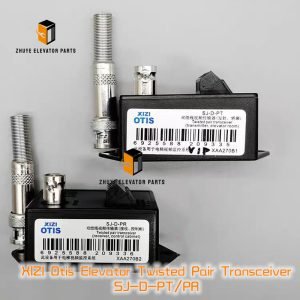
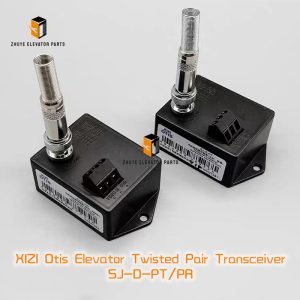
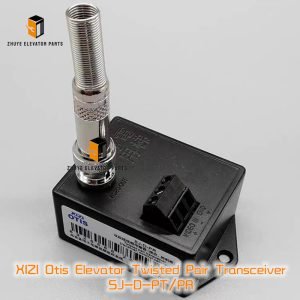
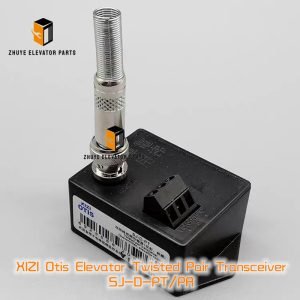
XIZI Otis Elevator Twisted Pair Transceiver SJ-D-PT/PR Brief Introduction
|
Product Name |
XIZI Otis Elevator Twisted Pair Transceiver |
| Model Number | SJ-D-PT/PR
XAA270B1/B2 |
|
Quality
|
Original.Brand New
|
|
Payment
|
T/T. Paypal. Western Union
|
|
Delivery
|
3-5 Working Days
|
|
Packaging
|
Packed by carton
|
Nanjing Zhuye Elevator Parts – XIZI Otis Twisted-Pair Transceiver SJ-D-PT/PR: Installation, Tuning & Replacement Guide
Inside every modern XIZI Otis group controller, the “conversation” between the car, the landing fixtures and the group supervisor travels down a single, humble twisted pair.
The SJ-D-PT (transmit) and SJ-D-PR (receive) transceivers convert differential RS-485 signals into robust, noise-immune pulses that ride 600 V-rated cable for up to 1.2 km without a repeater.
Nanjing Zhuye Elevator Parts has imported, burned-in and stocked brand-new, factory-matched SJ-D-PT/PR pairs since 2014, shipping over 6 000 sets to 46 countries.
Below we explain how to wire, terminate and—crucially—when to replace these “silent guardians” before aged opto-isolators or cracked terminators turn smooth group dispatch into mysterious no-shows.
The SJ-D-PT (transmit) and SJ-D-PR (receive) transceivers convert differential RS-485 signals into robust, noise-immune pulses that ride 600 V-rated cable for up to 1.2 km without a repeater.
Nanjing Zhuye Elevator Parts has imported, burned-in and stocked brand-new, factory-matched SJ-D-PT/PR pairs since 2014, shipping over 6 000 sets to 46 countries.
Below we explain how to wire, terminate and—crucially—when to replace these “silent guardians” before aged opto-isolators or cracked terminators turn smooth group dispatch into mysterious no-shows.
-
What the suffix means SJ-D-PT = transmitter, 5 V TTL in, differential 2 V pp out, 125 kbit/s, –25 °C to +70 °C
SJ-D-PR = receiver, differential 200 mV minimum in, 5 V TTL out, same temp range
Both share 24 VDC ±10 % supply, 30 mA typical, 2 kV isolation, 15 mm DIN-rail footprint, IP20. -
Safety first—lock-out & verify Transceivers sit on the 24 VDC logic rail but share the same cabinet as 110 VDC brake contacts.
Lock the controller breaker, hang a lock-out tag and wait 60 s for the rail to fall below 5 V.
Keep the new Nanjing Zhuye transceiver pair in its anti-static bag until mounting—CMOS opto-couplers can latch at 15 V static. -
Mechanical mounting—keep the noise out Snap the modules onto 35 mm DIN rail inside the controller.
Maintain 50 mm clearance above and below; every 10 °C rise halves opto-isolator life.
If the cabinet is < 100 mm deep, mount vertically with terminals down—this allows convection chimney and keeps induced 50 Hz fields away from the twisted pair.
Nanjing Zhuye supplies a free DIN clip (NY-DIN-SJ) for panel-mount when rail space is tight. -
Wiring map (print and stick inside door) 24 V & 0 V – 1.5 mm², 105 °C silicone, torque 0.5 N·m
TTL IN (PT) – 0.2 mm², 30 cm max to MPU UART pin
TTL OUT (PR) – 0.2 mm², 30 cm max to MPU RX pin
A/B (twisted pair) – 0.5 mm², 600 V, 120 Ω characteristic impedance, twist 9–12 turns/metre
Shield – foil + drain, grounded at ONE end only (usually the group cabinet)
Termination: 120 Ω ±5 %, 0.25 W, carbon film, at extreme ends of the bus (DIP-1 ON on last device) -
Baud-rate & distance cheat-sheet 125 kbit/s (standard Otis group) – max 1.2 km, 32 nodes, termination both ends
38.4 kbit/s (older HCA) – max 1.8 km, 64 nodes, same termination
187.5 kbit/s (Gen2 high-speed) – max 500 m, 128 nodes, use SJ-D-PT/PR-F fibre version (supplied by Nanjing Zhuye) -
Power-up & functional test Apply 24 VDC; green “PWR” LED steady on both PT and PR.
Transmit test: short TTL IN to +5 V for 100 ms; differential A-B voltage should read 2.0 V pp on scope, rise time < 50 ns.
Receive test: inject 200 mV pp 125 kHz square wave across A-B; TTL OUT must toggle 0–5 V with < 100 ns delay.
If differential voltage < 1.5 V, termination is missing or cable is shorted. -
Temperature & lifetime model Opto-isolators: 50 kh @ 70 °C, double every 10 °C drop.
TVS diode (SMAJ33A): 1 kW peak, 40 kh @ 45 °C.
Electrolytic C1 (10 µF, 35 V): 2 000 h @ 105 °C, 64 kh @ 45 °C.
Translate to building traffic: Light traffic (office, 8 h/day, 5 days/week) – optos ≈ 30 years, full board ≈ 20 years; inspect every 5 years. Medium traffic (mall, 12 h/day, 7 days/week) – optos ≈ 12 years, full board ≈ 10 years; inspect every 2 years. Heavy traffic (metro, 20 h/day) – optos ≈ 6 years, full board ≈ 5 years; inspect every 12 months. -
Preventive inspection checklist Monthly: visual LED, listen for crackling (arcing termination). Quarterly: scope A-B differential; > 5 V overshoot indicates missing resistor. Annually: megger A-B to PE > 100 MΩ; < 10 MΩ indicates moisture ingress. Bi-annually: torque test 24 V screws; vibration loosens them, causing E-COM faults.
-
Rapid swap (downtime < 3 min) a) Power down, lock-out, wait 60 s. b) Photograph A-B and TTL orientation with phone. c) Remove DIN clip, slide old modules out. d) Insert new Nanjing Zhuye SJ-D-PT/PR, snap onto rail. e) Restore 24 V, A-B, TTL, set DIP switches as photo. f) Power up, verify green LED on both units. g) Run group test—every car must answer every call. h) Log serial number and date; return old units for recycling.
-
Recycling & sustainability Nanjing Zhuye offers prepaid DHL labels inside every carton.
Returned modules are stripped: gold fingers go to certified refinery, plastic housing re-granulated, copper inductors remelted.
One recycled transceiver pair saves 0.8 kg CO₂—enough to power the same controller for a week.
By treating the SJ-D-PT/PR pair as the nervous system of the elevator group—not just another “communication board”—you eliminate mysterious no-shows, reduce surge-callouts and keep cars moving in perfect harmony.
Specify Nanjing Zhuye genuine stock, follow the opto-life table above, and the only thing your group controller will ever hear is clean, quiet, reliable data—call after call, year after year.
Specify Nanjing Zhuye genuine stock, follow the opto-life table above, and the only thing your group controller will ever hear is clean, quiet, reliable data—call after call, year after year.