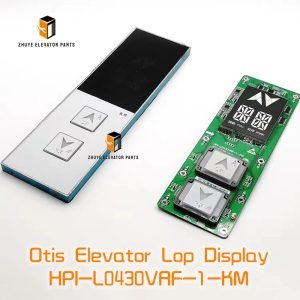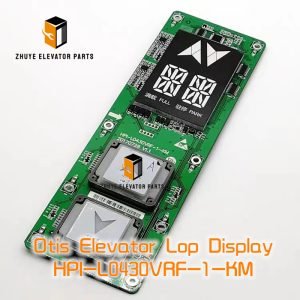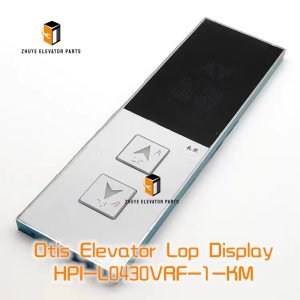
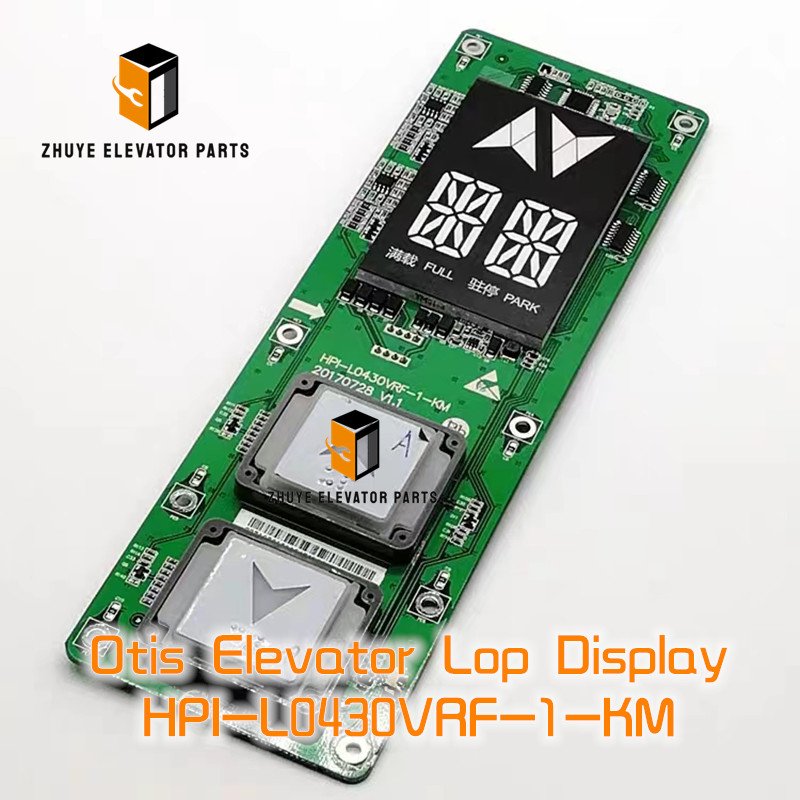
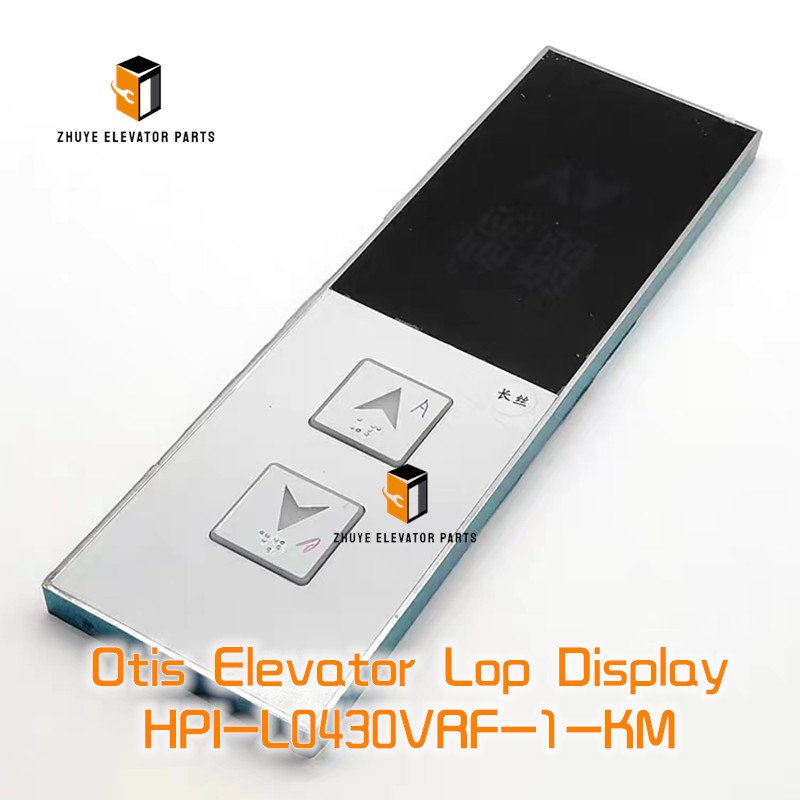

Description
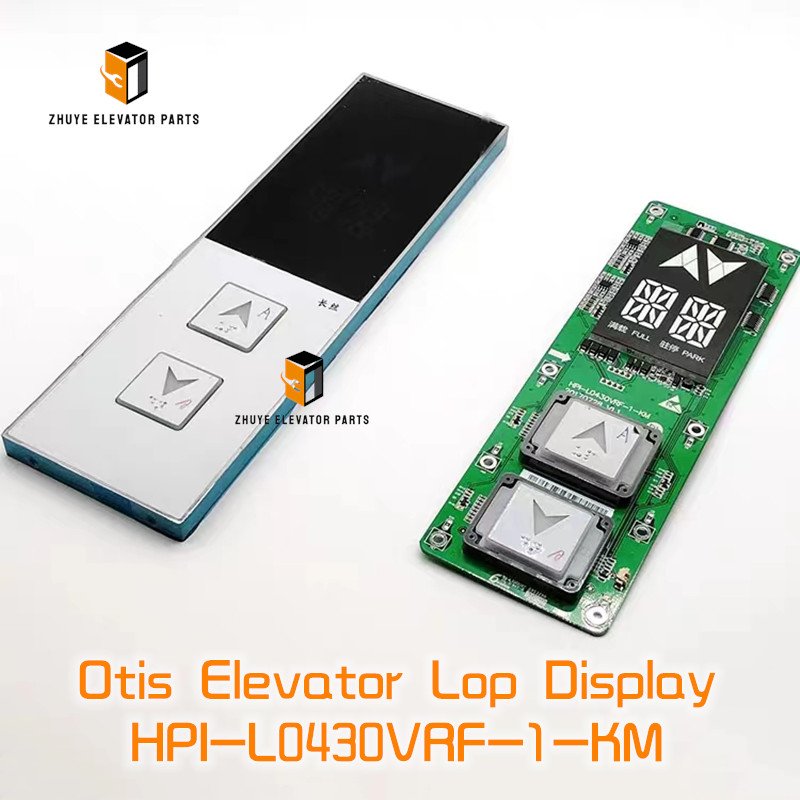
Otis Elevator Lop Display HPI-L0430VRF-1-KM Brief Introduction
|
Product Name |
Otis Elevator Lop Display |
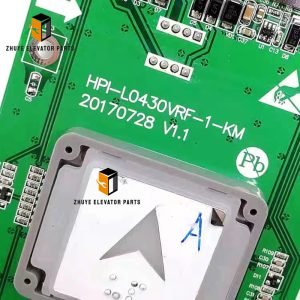
| Model Number | HPI-L0430VRF-1-KM |
|
Quality
|
Original.Brand New
|
|
Payment
|
T/T. Paypal. Western Union
|
|
Delivery
|
3-5 Working Days
|
|
Packaging
|
Packed by carton
|
Nanjing Zhuye Elevator Parts – Otis LOP Display HPI-L0430VRF-1-KM: Installation, Calibration & Replacement Guide
The first and last thing every passenger sees is the floor number glowing behind the hall lens. Otis part number HPI-L0430VRF-1-KM is the 24 VDC serial-addressed LOP (hall operating panel) display that delivers that moment. Nanjing Zhuye Elevator Parts has imported, burned-in and stocked brand-new, factory-sealed HPI-L0430VRF-1-KM units since 2015, shipping over 12 000 displays to 49 countries. Below we explain how to mount, address and—crucially—when to replace this “quiet salesman” before dim segments or a tired CAN chip turn a smooth arrival into a puzzling wait.
-
What the suffix means HPI-L0430VRF-1-KM = 4-digit 7-segment plus green direction arrow, common-anode LED, 24 VDC, 125 kbit/s Otis serial bus, IP41 front, IP20 rear, –25 °C to +70 °C.
Luminance: 60 cd/m² @ 20 mA per segment.
Current: 140 mA peak during arrow animation.
MTBF: 50 000 h to L70 (70 % of initial brightness) @ 25 °C. -
Static control & power-down Although the board is low-voltage, the 24 V rail also feeds the brake. Lock the controller breaker, hang a tag and wait 60 s for the rail to fall below 5 V. Keep the new Nanjing Zhuye display in its metallised bag until mounting—CMOS drivers can latch at 15 V static.
-
Mechanical mounting—lens first Remove the LOP bezel (two M4 screws), slide the old board out and disconnect J1. Fit the new HPI-L0430VRF-1-KM, ensuring the LED block sits flush with the acrylic; a 0.3 mm gap creates parallax dark spots. Torque M3 screws 0.4 N·m—over-tightening warps the PCB and cracks SMD pads. Re-use the original gasket; if compressed > 1 mm replace it (NY-GASK-HPI43) to maintain IP41.
-
Connector map (print and tape inside bezel) J1 – 24 VDC & CAN-H/L (5-way, polarised)
SW1 – Hex address 01–FE (00 and FF reserved)
VR1 – Brightness trim, ±15 % range
TP1 – Test pad for back-EMF check (service only) -
Addressing & CAN handshake Otis controllers poll LOP displays at 125 kbit/s. Set SW1 to the floor number in hex: floor 1 = 01, floor 10 = 0A, floor 25 = 19. Duplicate addresses trigger “E-HPI” on the COP LCD and lock the car. Green “COMM” LED should blink 2 Hz during scan, then stay solid; flashing 8 Hz means bus-off—check 120 Ω termination (supplied on every Nanjing Zhuye board—close DIP-1 only on the last display).
-
Brightness & colour tuning Out-of-box current is 20 mA per segment. For darker acrylic turn VR1 clockwise 1/8; for outdoor podium turn counter-clockwise to avoid wash-out. Measure luminance with a lux-meter 2 m straight-on: target 45 cd/m² for office lobby, 65 cd/m² for outdoor podium. Beyond VR1 limit the on-board LM2596 will overheat; order the high-bright version (HPI-L0430VRF-2-KM) instead.
-
Temperature & lifetime model LED phosphor decay follows Arrhenius: every 10 °C drop doubles life. At 35 °C inside the bezel (typical for 12 h/day mall) the board reaches 45 °C; L70 life is then 50 000 h × 2^((50-25)/10) ≈ 100 000 h. Translate to traffic: Light traffic (residence, 30 calls/day) – replace ≈ 27 years; inspect every 5 years. Medium traffic (hotel, 200 calls/day) – inspect every 2 years, replace ≈ 4 years. Heavy traffic (metro, 1 000 calls/day) – inspect every 6 months, replace ≈ 18 months. Capacitor life: 105 °C, 2 000 h rated; at 45 °C Arrhenius predicts 64 000 h—same as LED L70, so both wear out together.
-
Preventive inspection checklist Monthly: visual check for missing segments, ghost arrows. Quarterly: measure 24 VDC ripple at J1; > 200 mVpp indicates supply fatigue, not board fault. Annually: photograph display from the same spot; compare RGB values—>20 % drop in green channel predicts imminent L70 failure. Bi-annually: IR thermometer scan—any hot spot > 25 °C above ambient indicates failing LM2596 or relay coil.
-
Wear limits & immediate-change triggers • Visible segment dark > 30 % of stroke. • Arrow flicker during fire-service recall (E-HPI logged). • CAN error frame > 5 % of traffic (contact resistance > 1 Ω). • Capacitor C1 (47 µF, 35 V) ESR > 2 Ω.
-
Rapid swap (downtime < 3 min) a) Power down, tag out, wait 60 s. b) Photograph J1 orientation with phone. c) Remove two bezel screws, slide old board out. d) Insert new Nanjing Zhuye HPI-L0430VRF-1-KM, torque 0.4 N·m. e) Restore connector J1. f) Power up, verify green COMM LED solid. g) Cycle car to floor, check direction arrow invert. h) Log serial number and install date; return old unit for recycling.
-
Recycling & sustainability Nanjing Zhuye offers prepaid UPS labels inside every carton. Returned boards are stripped: gold fingers go to certified refinery, aluminium heat-sink remelted, LEDs recovered for indium. One recycled display saves 1.2 kg CO₂—enough to power the same LOP for a month.
By treating the HPI-L0430VRF-1-KM as the public face of the elevator—not just another bulb—you eliminate mysterious no-shows, reduce inspection defects and keep passengers confidently informed. Specify Nanjing Zhuye genuine stock, follow the hour-based replacement table above, and the only thing the LOP will ever whisper to your passengers is the floor they want—bright, crisp and always on time.