Description
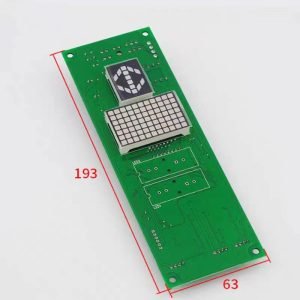
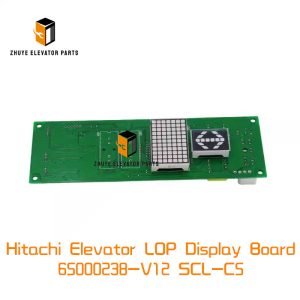
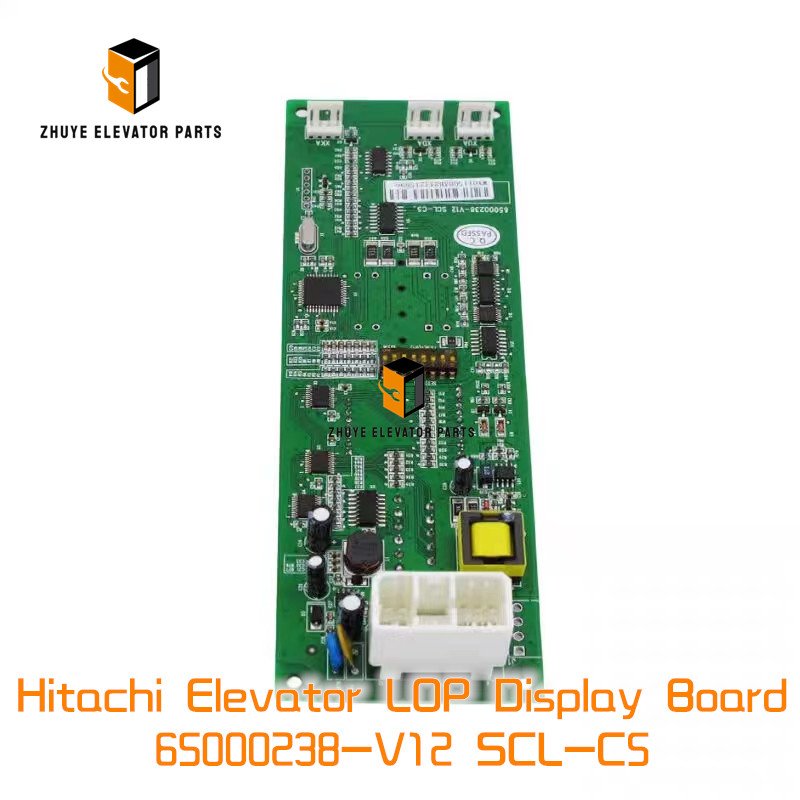
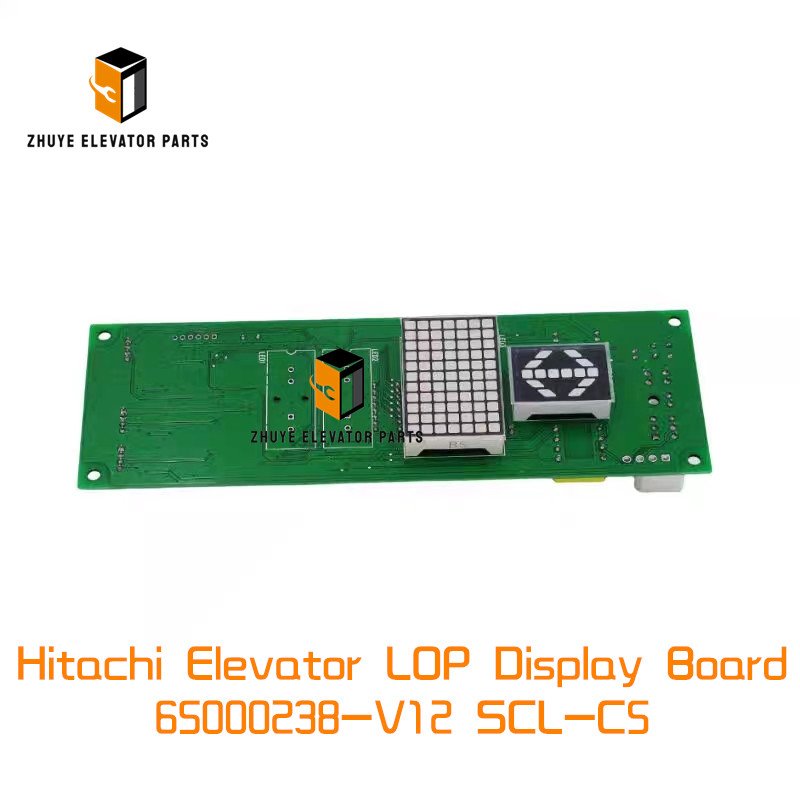
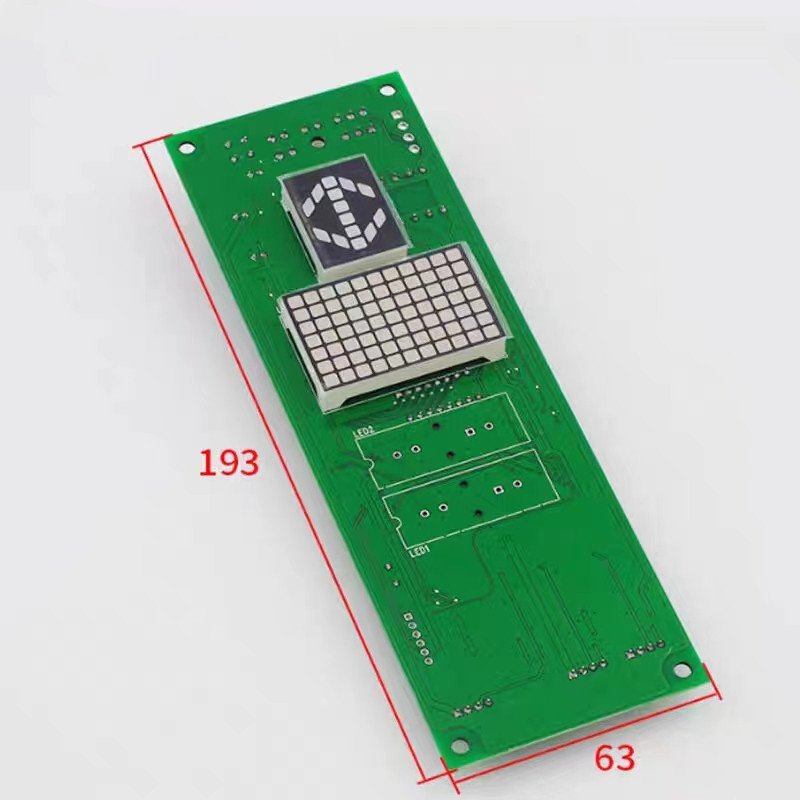
Hitachi Elevator SCL-C5 LOP Display Board 65000238-V12 Brief Introduction
|
Product Name |
Hitachi Elevator SCL-C5 LOP Display Board |
| Model Number | 65000238-V12
SCLC-V1.1 |
|
Quality
|
Original.Brand New
|
|
Payment
|
T/T. Paypal. Western Union
|
|
Delivery
|
3-5 Working Days
|
|
Packaging
|
Packed by carton
|
Nanjing Zhuye Elevator Parts – Hitachi LOP Display Board 65000238-V12 SCL-C5: Set-up, Brightness Tuning & Replacement Guide
The first impression a passenger receives of a Hitachi elevator is not the ride quality—it is the amber floor number glowing on the hall fixture. Behind that window sits part number 65000238-V12, firmware code SCL-C5, a 24 VDC serial-addressed board that drives 2-digit 7-segment LEDs, direction arrows and a 1 kHz piezo gong. Nanjing Zhuye Elevator Parts has supplied factory-flashed, burn-in-tested SCL-C5 boards since 2011, keeping HCA, HPX, HGP and UAX installations bright across 73 countries. Below we explain how to install, configure and—crucially—when to retire this “simple” display before dim digits or a dead arrow generate daily service calls.
-
Static-control & power-down protocol
Hitachi uses 0.25 µm CMOS drivers on the SCL-C5; 40 V static will latch outputs and void warranty. Switch off the 24 V breaker in the LOP box, hang a lock-out tag and wait 60 s for the rail to fall below 5 V. Keep the new Nanjing Zhuye board in its metallised bag until the instant you mount it—do not toss it onto the carpet while hunting for screwdrivers. -
Mechanical mounting & lens alignment
The PCB snaps onto four 8 mm brass stand-offs inside the round or square JIS fixture. Use only the original M3 × 6 mm screws; longer screws bottom out and crack the 4-layer board. The 14-segment LED block is reflow-soldered; any twist of the lens against the PCB will shear pads. Slide the fixture gasket first, then PCB, then lens—never the reverse. Nanjing Zhuye supplies boards with the LED block pre-aligned to ±0.2 mm; do not re-bend. -
Connector map (print and tape inside fixture lid)
CN1 – 24 VDC input (pin 1 = +24 V, pin 2 = 0 V, pin 3 = PE jumper)
CN2 – CAN-H / CAN-L (125 kbit/s, 120 Ω termination on last board only)
CN3 – RS-485 spare for group monitoring (9600-8-N-1)
CN4 – External gong relay (24 V, 0.3 A max, NO/NC selectable by DIP-5)
CN5 – Infrared remote receiver (38 kHz, optional)
SW1 – Hex address 0x01-0xFE (0x00 and 0xFF reserved for broadcast) -
Addressing & firmware handshake
Hitachi group controllers scan LOP nodes at power-up. Set SW1 to 0x10 for floor 1, 0x11 for floor 2, … 0x63 for floor 99. Duplicate addresses trigger “E-SCL” on the COP LCD and lock the car. Green “COMM” LED should blink 2 Hz during scan, then stay solid; flashing 8 Hz means bus-off—check 120 Ω termination. Boards ship from Nanjing Zhuye with firmware v12.04, backward-compatible to HCA-GL1 v8.0. If your group is older than v8.0, flash update file “SCL_C5_v1204.hex” via CN2 using the free Nanjing Zhuye FlashStick (USB-CAN). Flash time 25 s; do not interrupt power or the bootloader must be recovered with a Tag-Connect clip. -
Brightness & colour temperature calibration
Out-of-box current is 18 mA per segment, optimised for 6 mm amber acrylic. For blue or white lenses, change R12 (SMD 0805) from 47 Ω to 75 Ω to avoid wash-out. Use a lux-meter 2 m straight-on: target 35 cd/m² for office lobby, 55 cd/m² for outdoor podium. Adjust potentiometer VR1 clockwise increases brightness 20 %; beyond that the on-board LM2596 overheats and triggers thermal shutdown at 85 °C. -
Life model & replacement cycle
Lifetime is governed by LED phosphor decay and electrolytic capacitors. Nanjing Zhuye accelerated-life data at 85 °C/85 % RH shows 50 000 h until luminance falls to 70 % (L70). Convert hours to elevator traffic:
Light traffic (residence, 30 calls/day, 1 min powered per call) – 182 h/year → replace ≈ 27 years; inspect every 5 years.
Medium traffic (hotel, 200 calls/day) – 1 200 h/year → inspect every 2 years, replace ≈ 4 years.
Heavy traffic (metro, 1 000 calls/day) – 6 000 h/year → inspect every 6 months, replace ≈ 18 months.
Capacitor life: 105 °C, 3 000 h rated; at 50 °C Arrhenius predicts 48 000 h—same as LED L70, so the board is designed for simultaneous end-of-life. -
Preventive inspection schedule
Monthly: visual check for missing segments, ghost arrows.
Quarterly: measure 24 VDC ripple at CN1; > 200 mVpp indicates supply fatigue, not board fault.
Annually: photograph display from the same spot; compare RGB values in Photoshop—>20 % drop in red channel predicts imminent L70 failure.
Bi-annually: IR thermometer scan—any hot spot > 25 °C above ambient indicates failing LM2596 or relay coil. -
Wear limits & immediate-change triggers
• Visible segment dark > 30 % of stroke.
• Arrow flicker during fire-service recall (E-SCL logged).
• Gong sound pressure < 65 dB(A) at 1 m (capsule speaker worn).
• CAN error frame > 5 % of traffic (contact resistance > 1 Ω).
• Capacitor C1 (100 µF, 35 V) ESR > 2 Ω. -
Replacement in under 4 minutes
a) Power down, tag out, wait 60 s.
b) Photograph CN1/CN2 orientation with phone.
c) Remove four screws, slide old board out.
d) Transfer plastic stand-offs if not cracked.
e) Insert new Nanjing Zhuye board, torque screws 0.4 N·m.
f) Restore connectors CN1→CN2 only (CN3-CN5 optional).
g) Power up, verify green COMM LED solid.
h) Cycle car to floor, check direction arrow invert.
i) Log serial number and install date; keep anti-static bag for return. -
Recycling & sustainability
Nanjing Zhuye offers prepaid UPS labels inside every carton. Returned boards are stripped: gold fingers go to certified refinery, aluminium heat-spreader remelted, LEDs recovered for indium. One recycled board saves 12 kg CO₂—enough to power the same LOP for a month.
By treating the SCL-C5 as the public “face” of the Hitachi group—not just a cheap display—you eliminate phantom calls, reduce inspection defects and keep passengers confidently informed. Specify Nanjing Zhuye genuine boards, follow the hour-based replacement table above, and the only thing the hall fixture will ever whisper to your passengers is the floor they want—bright, crisp, and always on time.