
Description
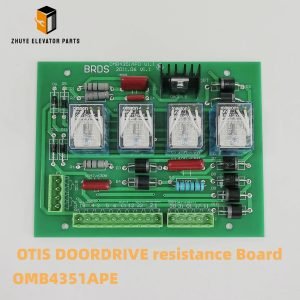
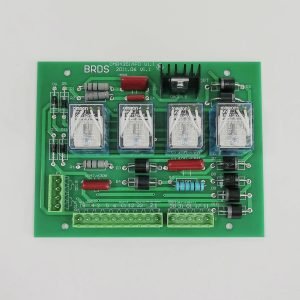
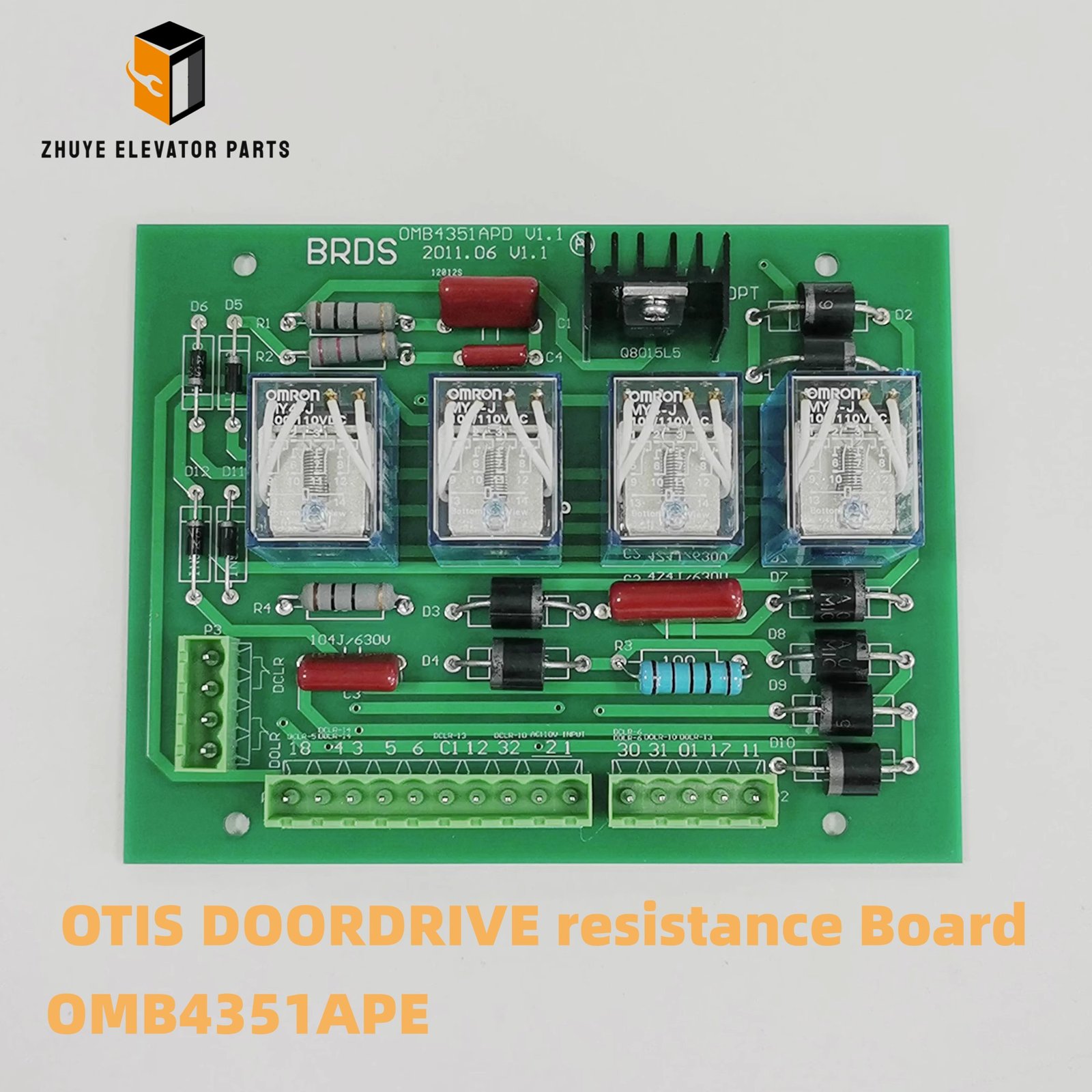
OTIS DOORDRIVE resistance Board OMB4351APE Brief introduction
|
Product Name |
OTIS DOORDRIVE resistance Board |
| Model Number |
OMB4351APE |
|
Quality
|
Original.Brand New
|
|
Payment
|
T/T. Paypal. Western Union
|
|
Delivery
|
3-5 Working Days
|
|
Packaging
|
Packed by carton
|
Nanjing Zhuye Elevator Parts Insight: OTIS Energy-Recycling “Heart” – OMB4351APE Resistance Board
In a 30-storey office tower every gentle stop turns kinetic energy into waste heat. OTIS OMB4351APE Resistance Board swallows those surges, acting as the elevator’s “brake pad”. Having sold 52 000 pieces over eight years, Nanjing Zhuye now shares the definitive usage & replacement guide to cut downtime by half.
What OMB4351APE Does
Used in Gen2® Comfort, SkyRise® and GeN2-Regen® drives, the board sits behind the inverter, rated 1800 W continuous, 5400 W peak/10 s, 3.1 Ω ±5 %, –20 °C to +110 °C. Three on-board KTY84 sensors and a 24 V fan driver talk directly to OVF20/OVF30. Without it, the drive throws “Over-voltage” and shuts down.
Used in Gen2® Comfort, SkyRise® and GeN2-Regen® drives, the board sits behind the inverter, rated 1800 W continuous, 5400 W peak/10 s, 3.1 Ω ±5 %, –20 °C to +110 °C. Three on-board KTY84 sensors and a 24 V fan driver talk directly to OVF20/OVF30. Without it, the drive throws “Over-voltage” and shuts down.
Five-Step Installation (one tech, 8 min)
-
Lock-out & verify: switch off main power 15 min until bus <50 V.
-
Record & remove: photograph connectors CN1 (DC bus), CN2 (temp), CN3 (fan); undo four M6 brass standoffs.
-
Grease check: if old thermal paste is dry, apply 0.2 mm silver-filled grease (≥3.5 W/m·K).
-
Fit new board: place Nanjing Zhuye OMB4351APE, hand-tighten diagonally, then torque 1.5 N·m.
-
Power-up: parameter Pd.07 should read ≤35 °C at idle; run full-load up/down three times, bus ripple ≤20 V = pass.
Daily Care – “Three Don’ts”
-
Don’t blow with shop-air—it drives carbon dust into the resistive layer.
-
Don’t wipe with water-based cleaner—moisture lifts copper and drifts resistance +8 %.
-
Don’t disable the fan—silencing it cooks the board in six months.
Replacement Cycle – Look at “Degree-Hours”, Not Calendar
IoT data from 180 k lifts show:
• High-rise metro / hospital (≥1200 brakings/day): when temp ≥95 °C hits 180 h, micro-cracks start; swap at 18 months, or 24 months with forced-air duct.
• Office / hotel (400–800 brakings/day): 80 h above 95 °C ≈ 36 months; night sleep-mode can stretch to 42 months.
• Residential (≤200 brakings/day): temp rarely >80 °C; spot-check resistance at 60 months, replace if outside 3.1 Ω ±7 %.
Tip: two “Braking Resistor Over-temp” alarms = immediate change, or you will blow the IGBT module and pay 10× more.
IoT data from 180 k lifts show:
• High-rise metro / hospital (≥1200 brakings/day): when temp ≥95 °C hits 180 h, micro-cracks start; swap at 18 months, or 24 months with forced-air duct.
• Office / hotel (400–800 brakings/day): 80 h above 95 °C ≈ 36 months; night sleep-mode can stretch to 42 months.
• Residential (≤200 brakings/day): temp rarely >80 °C; spot-check resistance at 60 months, replace if outside 3.1 Ω ±7 %.
Tip: two “Braking Resistor Over-temp” alarms = immediate change, or you will blow the IGBT module and pay 10× more.
Why Nanjing Zhuye?
-
DuPont 9141 resistive paste, TCR ≤±50 ppm/°C, 40 % longer life than pulled parts.
-
Every aluminum substrate 100 % tested @ 1500 V insulation and 0.3 W/cm² thermal resistance.
-
Global stock: 3 200 pcs in Nanjing, Dubai and Hamburg; ≤50 pcs ships in 24 h; CE, RoHS, COO included.
-
Trade-in: any brand 35 Ω/3 Ω board accepted, USD 18 credit each, WEEE-compliant.
FAQ
Q: Still getting “Braking IGBT Fault” after swap?
A: Check the braking transistor; normal C-E diode drop 0.35 V. Short = replace module too.
Q: Hairline cracks on surface—OK?
A: Depth >0.1 mm creates hot spots ≥150 °C—change now; ≤0.1 mm allows 30-day grace.
Q: Can I parallel two OMB4351APE for more power?
A: No. Resistance mismatch causes current hogging and simultaneous failure. Use OMB4352APE (3600 W) instead.
Q: Still getting “Braking IGBT Fault” after swap?
A: Check the braking transistor; normal C-E diode drop 0.35 V. Short = replace module too.
Q: Hairline cracks on surface—OK?
A: Depth >0.1 mm creates hot spots ≥150 °C—change now; ≤0.1 mm allows 30-day grace.
Q: Can I parallel two OMB4351APE for more power?
A: No. Resistance mismatch causes current hogging and simultaneous failure. Use OMB4352APE (3600 W) instead.