The global elevator market is experiencing unprecedented growth, driven by urbanization, aging infrastructure, and rapid technological advancement. According to industry forecasts, the market is expected to reach USD 116.14 billion by 2030, growing at a compound annual growth rate (CAGR) of 6.7% [1]. As the industry expands, the demand for reliable elevator maintenance and high-quality replacement components has never been higher.
For building owners, facility managers, and maintenance technicians, selecting the right elevator spare parts is a critical decision that directly impacts passenger safety, system longevity, and operational efficiency. This comprehensive guide explores the essential factors to consider when purchasing elevator components, the ongoing debate between OEM and aftermarket parts, and how industry leader Otis is revolutionizing elevator maintenance with autonomous robot dogs and next-generation smart elevator systems.
Why Choosing the Right Elevator Spare Parts Matters
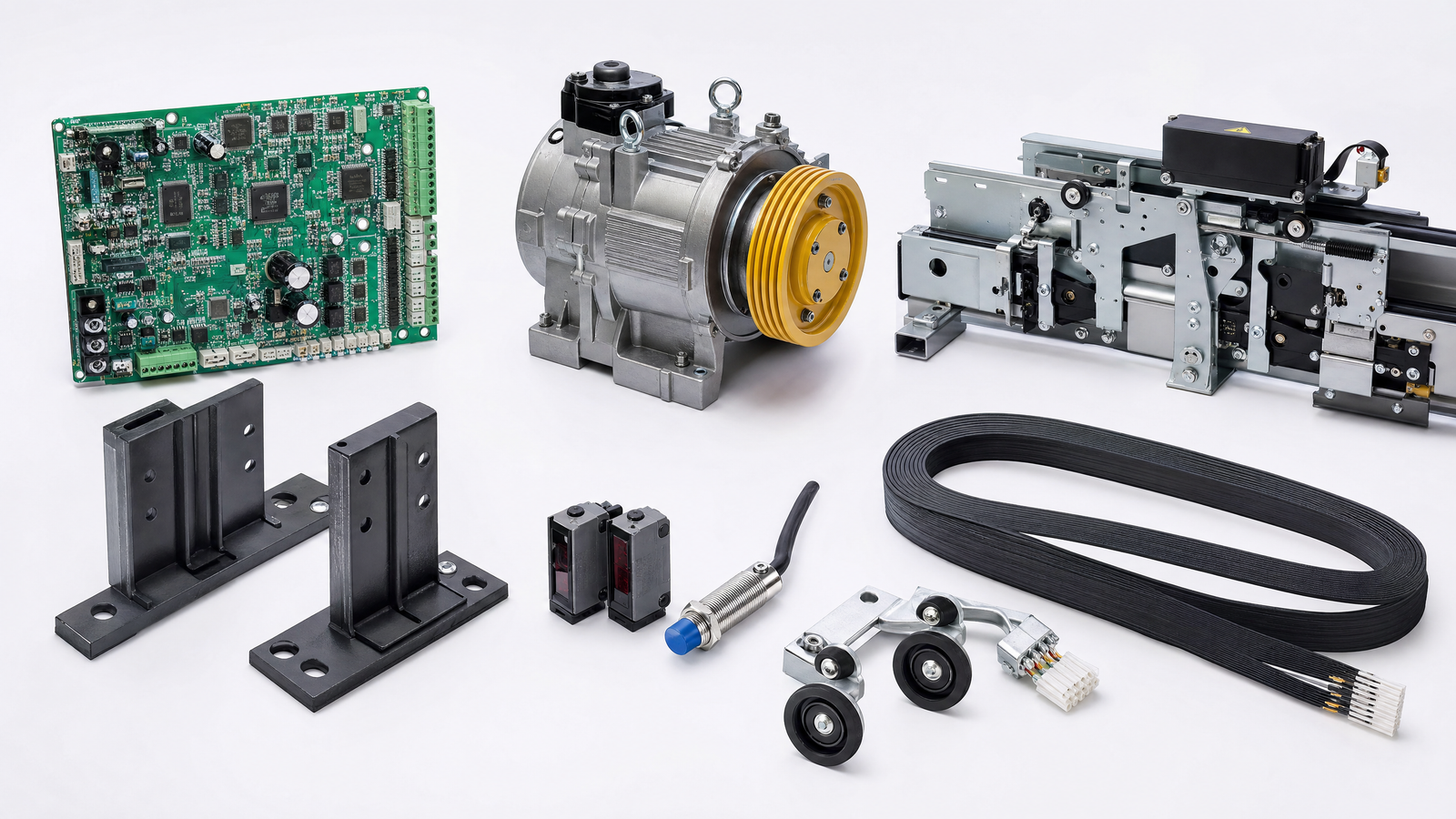
An elevator is a complex ecosystem of interconnected mechanical and electrical components. If a single part — such as a printed circuit board (PCB), a door sensor, or a traction machine roller — fails or is incompatible with the system, it can compromise the entire unit’s performance and safety.
Using incorrect or low-quality lift maintenance components often leads to frequent breakdowns, unstable ride performance, and delayed door operations. More critically, substandard safety components pose severe risks to passengers. While cheaper parts may appear cost-effective initially, they frequently result in higher long-term maintenance costs due to repeated replacements and emergency service calls [2].
To ensure optimal performance, buyers must verify compatibility with specific elevator brands such as Otis, KONE, Schindler, Mitsubishi, or Hyundai. It is equally crucial to match exact technical specifications — including voltage ratings, current capacity, communication protocols, and mounting dimensions — before making any purchase.
OEM vs. Aftermarket: Making the Right Choice
One of the most common dilemmas in elevator maintenance is choosing between Original Equipment Manufacturer (OEM) parts and aftermarket alternatives. Understanding the distinction is fundamental to making an informed procurement decision.
OEM parts are manufactured or officially approved by the original elevator brand. They guarantee a precise fit, superior reliability, and full compliance with stringent international safety standards such as ASME A17.1 (the North American safety code for elevators and escalators) [3] and EN 81 (the European standard for lift safety) [4]. For high-traffic environments such as commercial office buildings, hospitals, and high-rise residential complexes, OEM parts are generally the safest and most dependable choice.
Aftermarket parts, produced by third-party manufacturers, can offer significant cost savings and faster availability, particularly for older or discontinued models. However, their quality can vary considerably. When opting for compatible aftermarket parts, it is vital to source them from reputable suppliers who adhere to internationally recognized quality certifications such as ISO 9001 and CE marking. A supplier that cannot clearly verify a part’s compatibility and technical specification is a warning sign that should not be ignored.
| Feature | OEM Parts | Aftermarket / Compatible Parts |
|---|---|---|
| Cost | Higher initial investment | Generally more affordable |
| Compatibility | Guaranteed exact fit | Requires careful verification |
| Quality & Safety | Meets strict manufacturer standards | Depends on the third-party supplier |
| Availability | May be limited for older models | Often wider availability |
| Best Use Case | High-traffic, safety-critical systems | Budget-conscious or legacy repairs |
The Future of Maintenance: Otis and Autonomous Robot Dogs
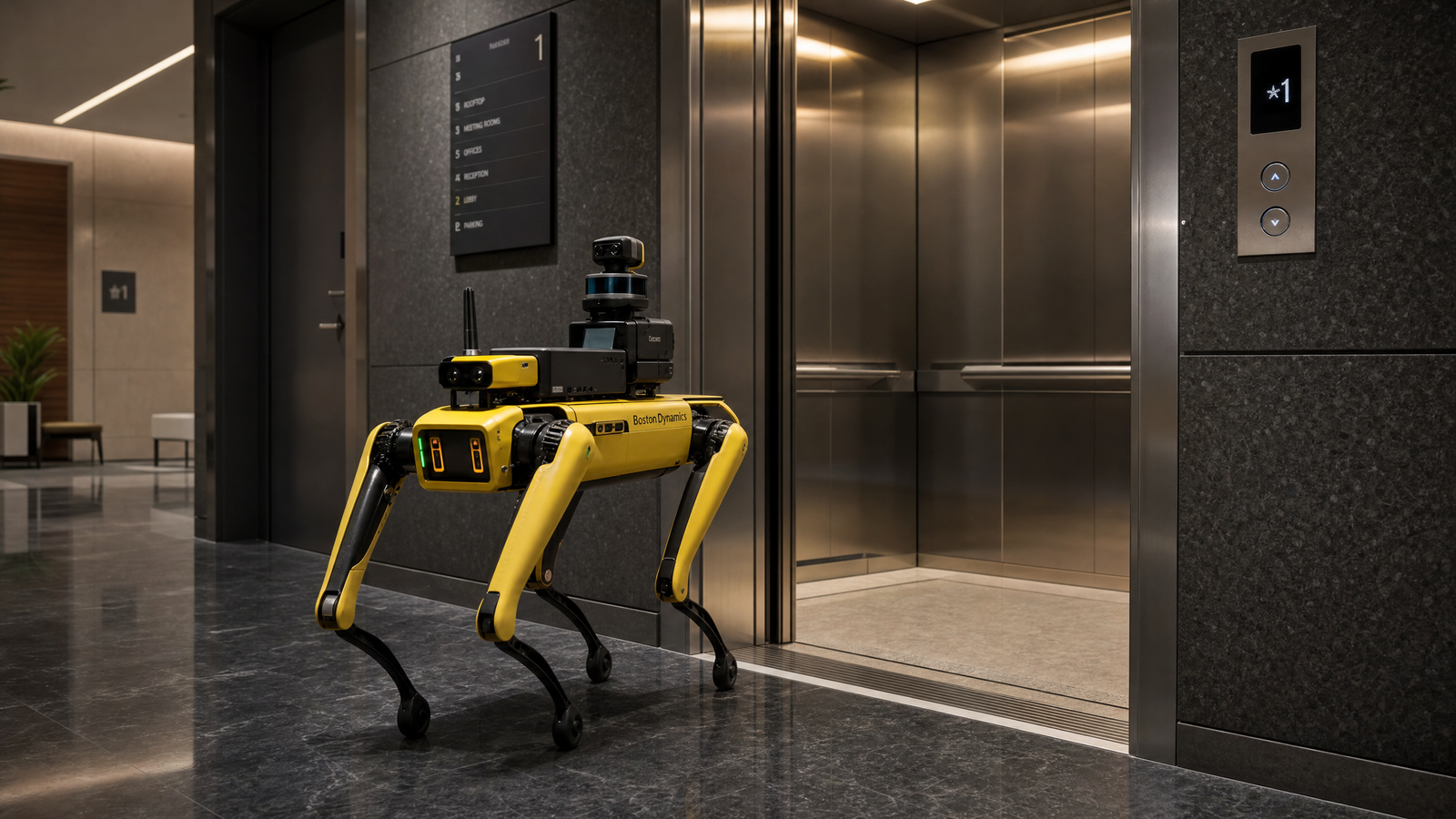
The landscape of elevator maintenance is rapidly evolving, shifting from reactive repairs toward predictive, data-driven strategies powered by artificial intelligence and robotics. Otis Worldwide Corporation is at the forefront of this transformation, having developed the Otis Integrated Dispatch™ (OID) — a cloud-based API that enables autonomous service robots to seamlessly interact with elevator systems [5].
This technology allows autonomous robots, including advanced quadruped “robot dogs” similar to Boston Dynamics’ Spot, to independently call elevators, select their destination floor, enter and exit the car, and navigate multi-story buildings without any human intervention. Otis has already engaged with over 60 different robot companies through its developer portal, making the OID system one of the most widely adopted robot-elevator integration platforms in the world [6].
The practical applications are transformative. In the hospitality sector, service robots at hotels use OID-enabled elevators to handle room delivery requests around the clock, supplementing staff during off-peak hours. In industrial and commercial settings, robot dogs equipped with cameras and sensors can conduct routine and hazardous inspections of elevator shafts, mechanical rooms, and building infrastructure — identifying potential component failures before they cause costly system downtime.
“It is now possible to integrate a robot with an elevator that was installed some 30 years ago. This proves that Otis is constantly innovating our design such that our products can serve new purposes, even after three decades.”
— Natsuki Takahashi, Manager, National Accounts, Nippon Otis
Next-Generation Smart Elevators: The Expanded Otis Gen3 Core™
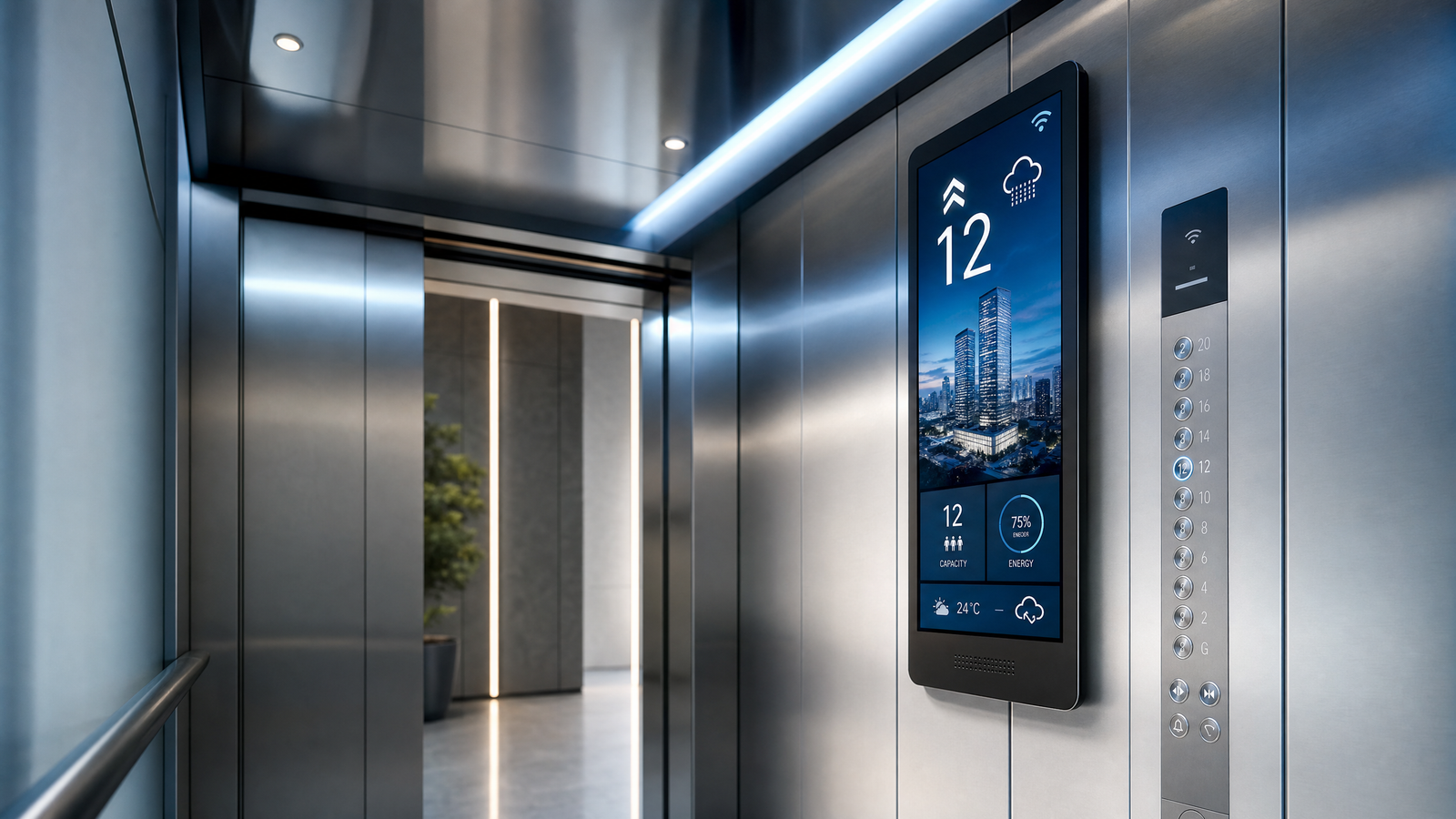
Beyond maintenance robotics, Otis continues to push the boundaries of elevator design with its core product lineup. In November 2025, Otis launched the expanded Gen3 Core™ elevator, specifically engineered for the growing segment of two-to-eight-story buildings across North America — a market that encompasses approximately 80% of all buildings in the United States [7].
The upgraded Gen3 Core™ addresses the evolving demands of modern low-rise construction, offering load capacities up to 5,000 lbs, door openings up to 8 feet, and a compact machine room-less (MRL) design that reduces building space requirements. Its patented coated steel belts require no lubrication and last three times longer than conventional wire ropes, monitored continuously by the Otis Pulse™ system.
A defining feature of the Gen3 Core™ is its native integration with the Otis ONE™ IoT digital platform, which connects the elevator to the cloud to enable real-time performance monitoring and predictive maintenance [8]. Facility managers can access elevator health data via the Otis Customer Portal, while the eView™ in-car display provides passengers with customizable infotainment and a secure voice or video connection to an OTISLINE® customer care representative during emergencies. The Gen3 Core™ is also robot-ready, capable of integrating with autonomous service robots via the Otis Integrated Dispatch™ API — making it a future-proof investment for building owners planning to adopt robotic services.
Otis Viva™: Elevators Designed for an Aging World
Complementing the Gen3 Core™, Otis unveiled its Viva™ solutions in March 2026 — a purpose-built suite of elevator features designed to support aging populations and promote inclusive mobility [9]. Available as standard on new Gen3™ and Gen360™ installations, and as an upgrade package for existing buildings, Viva™ includes improved interior lighting, intuitive high-contrast car operating panels, enhanced handrails, and clear visual and auditory signals. These solutions will be available for rollout beginning in May 2026 across 11 countries, including the United States, United Kingdom, Japan, South Korea, France, and Germany.
Key Elevator Spare Parts Categories and Their Roles
Understanding the function of major elevator components helps maintenance teams make more informed purchasing decisions. The table below summarizes the most critical spare part categories and their impact on system performance.
| Component Category | Key Parts | Impact on Performance |
|---|---|---|
| Control & PCB Boards | Main control board, relay board, power board | Governs all elevator logic and safety circuits |
| Door System | Door operator, door sensor, door rollers, COP/LOP display | Ensures safe, smooth door operation |
| Traction & Drive | Traction machine, brake board, inverter/drive | Controls vertical movement and speed regulation |
| Signaling & Display | Car display (CIP), hall display (LOP), overload display | Provides floor indication and passenger information |
| Cables & Wiring | Traveling cable, flat cable, optical fiber cable | Transmits power and data between car and shaft |
| Safety Components | Overspeed governor, safety gear, buffer | Provides emergency protection against free-fall |
Conclusion: Partnering with a Trusted Elevator Parts Supplier
As elevator technology advances from basic mechanical systems to IoT-connected, robot-integrated platforms, the importance of sourcing high-quality spare parts remains a constant priority. Whether maintaining a legacy Otis or KONE system or upgrading to a smart elevator with Gen3 Core™ capabilities, partnering with a knowledgeable and reliable supplier is essential.
Zhuye Elevator Parts (Nanjing Zhuye Elevator Parts Co., Ltd.), established in 2012 and based in Nanjing, China, provides genuine and high-quality compatible components for all major elevator brands, including Otis, KONE, Schindler, Sigma, Hyundai, Fermator, and leading Chinese brands such as Canny, BLT, and IFE. With a team of over 200 trained workers, 7/24 technical support, and comprehensive logistics services including FOB, CIF, and door-to-door delivery, Zhuye ensures that maintenance teams worldwide have access to the right parts at the right time.
By prioritizing quality, compatibility, and technological readiness, building owners and maintenance professionals can ensure their elevator systems operate safely, efficiently, and reliably for years to come. Browse our full range of elevator spare parts or contact us today for expert technical support.