
Elevator Limit Switch LSE133-QFU1: Usage, Replacement Cycle & Maintenance Guide
By Nanjing Zhuye Elevatorparts
Introduction
The LSE133-QFU1 precision limit switch is a critical safety component designed to prevent elevator over-travel and ensure accurate terminal stopping. Manufactured by Nanjing Zhuye Elevatorparts, a globally recognized supplier of high-quality elevator components, this switch meets EN 81-20/50, ASME A17.1 and UL standards, offering 1 million+ mechanical cycles with zero false tripping. Below is an 800-word guide covering correct installation, daily operation, and the recommended replacement cycle to keep every elevator within safe travel limits.
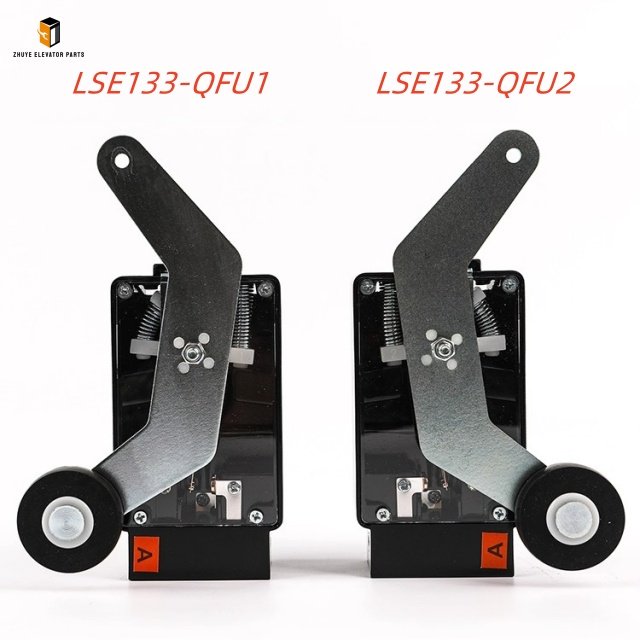
Key Features of LSE133-QFU1
- 1 NO + 1 NC snap-action contacts, 10 A @ 250 V AC
- IP65 ABS enclosure resists dust, oil and high humidity
- Pre-wired 3 m PUR cable with M12 connector – tool-free hook-up
- Roller lever 17 mm stroke for positive-break actuation
- Operating temperature –20 °C to +70 °C
- Compact footprint: 50 × 28 × 16 mm – fits all hoistway brackets

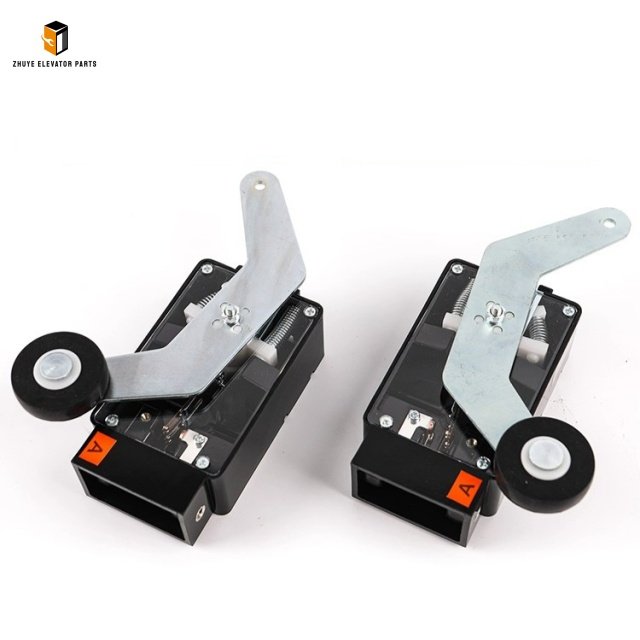
Usage Guidelines
1. Installation
Step 1 – Preparation
- De-energise the lift; lock-out/tag-out main breaker and verify zero energy.
- Record switch serial number and mounting position in the maintenance log.
Step 2 – Mounting
- Position the switch on the hoistway bracket 5 mm before the final limit of car travel (per EN 81-20).
- Use supplied M5 × 30 mm stainless screws; torque to 8 N·m.
- Ensure roller lever is perpendicular to the cam plate (±2°).
Step 3 – Wiring
- Route 3-core 1.5 mm² shielded cable through the PG7 gland.
- Connect brown (NO), blue (common), green/yellow (earth) to the safety-chain terminals.
- Secure strain relief to prevent cable fatigue.
Step 4 – Commissioning
- Restore power and cycle the car to the limit position; switch must open within 1 mm.
- LED on controller must change state; record trip distance and technician signature.
2. Operation
- Limit Function: Snap-action contacts open instantly when cam contacts roller, halting the drive.
- Position Feedback: NC contact signals “limit reached” to the controller; NO contact can trigger emergency brake.
- Self-Test: Monthly slow-speed run to terminal floors verifies trip point repeatability.
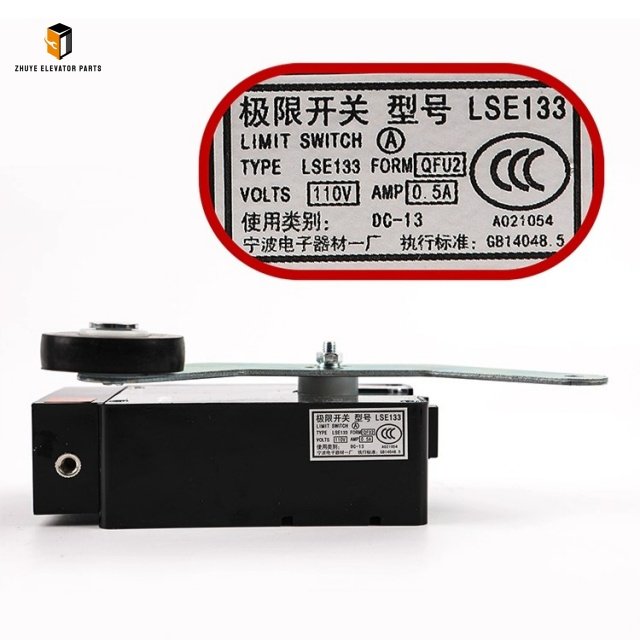
Replacement Cycle & Maintenance
| Duty Cycle | Replace Every | Warning Signs |
|---|---|---|
| Standard residential | 5–7 years | Roller wear >1 mm, lever play >3° |
| Commercial / hospital | 3–4 years | Contact welding, resistance >1 Ω |
| Freight / high-speed | 2–3 years | Cracks, corrosion, IP65 seal failure |
Replace immediately if:
- Contact resistance >1 Ω or insulation <5 MΩ
- Roller cracks or lever deformation
- Frequent “limit fault” alarms without cam contact
- Cable sheath damaged or gland loose
Maintain one spare LSE133-QFU1 per 15 elevators for <2-hour service turnaround.
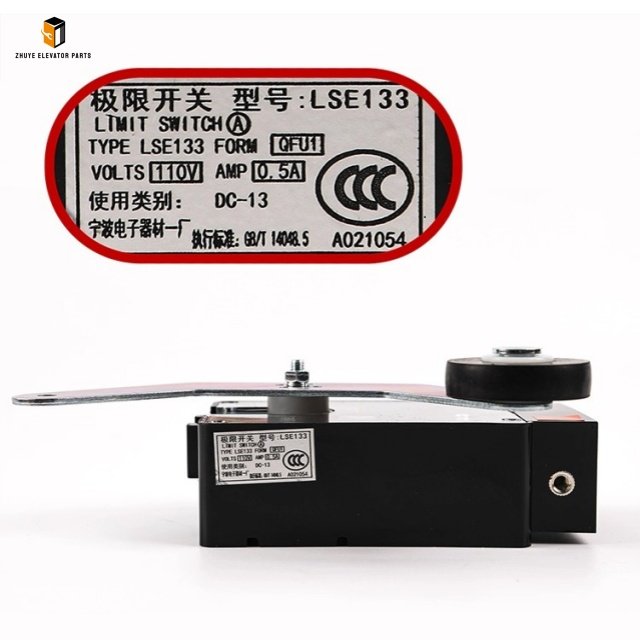
Why Choose Nanjing Zhuye Elevatorparts?
- Full traceability—laser-etched serial and QR code on every switch.
- Same-day dispatch to 60+ countries via DHL/FedEx Express.
- 24/7 multilingual hotline and on-site training.
- Competitive tiered pricing and custom cable lengths for OEM projects.
Conclusion
The LSE133-QFU1 limit switch is small but mission-critical. By following the installation, testing, and replacement guidelines—and sourcing only from Nanjing Zhuye Elevatorparts—facility managers and service teams can guarantee code compliance, reduce downtime, and protect every passenger who rides the lift.