

Description
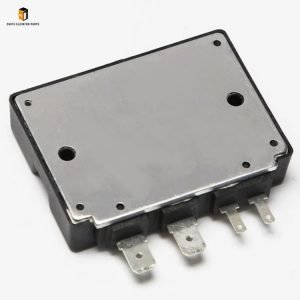
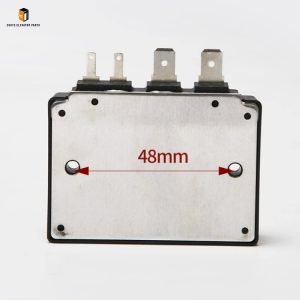
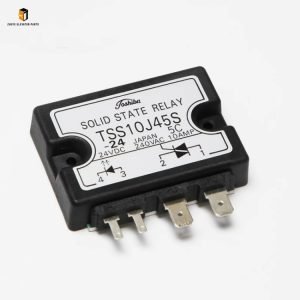
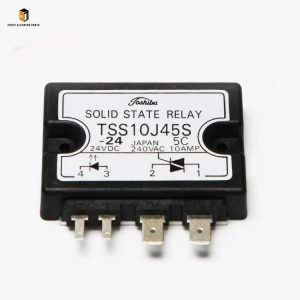
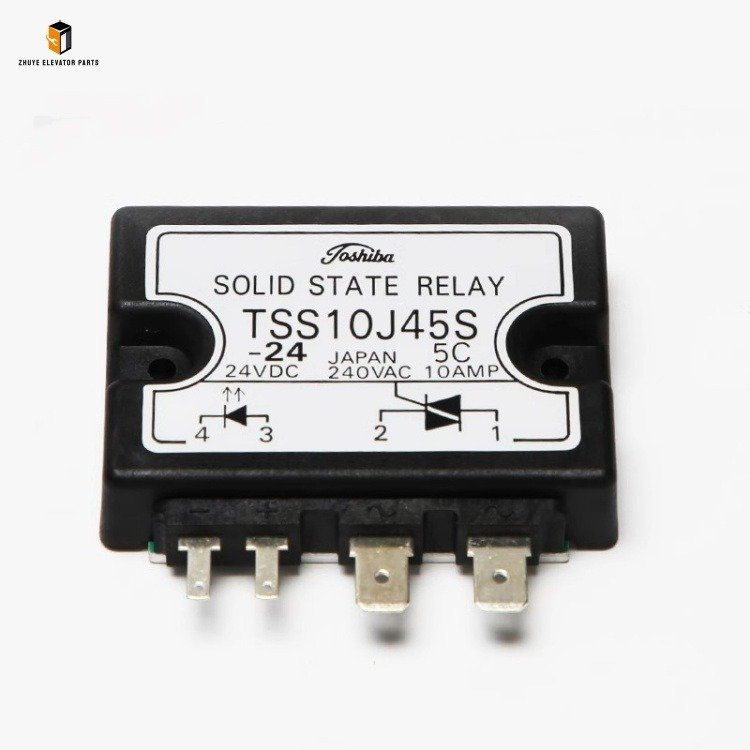
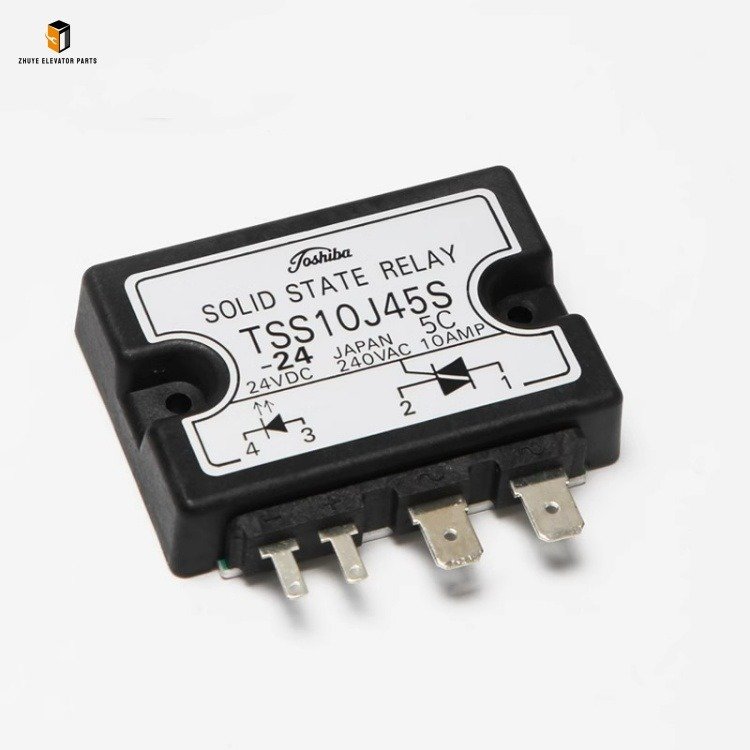
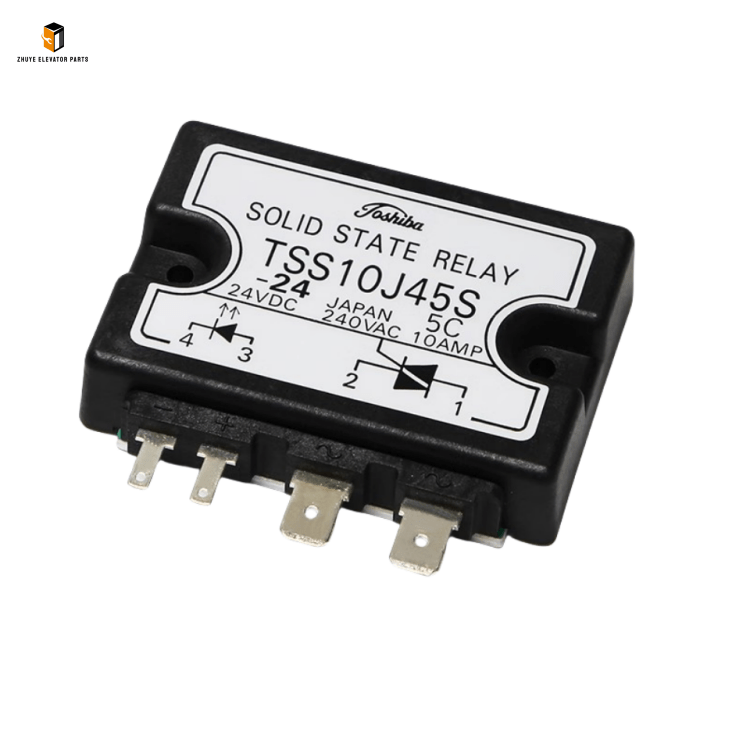
Elevator inverter relay TSS10J45S Brief Introduction
|
Product Name |
Elevator inverter relay |
| Model Number | TSS10J45S |
|
Quality
|
Original.Brand New
|
|
Payment
|
T/T. Paypal. Western Union
|
|
Delivery
|
3-5 Working Days
|
|
Packaging
|
Packed by carton
|
Elevator Inverter Relay TSS10J45S: Core Protection Component from Nanjing Zhuye Elevatorparts
In modern elevator control systems, the inverter serves as the “power regulation core,” ensuring smooth starting, acceleration, deceleration, and stopping of elevators. The elevator inverter relay acts as a critical protective and switching component within the inverter system, responsible for signal transmission, circuit protection, and emergency response triggering. The Elevator Inverter Relay TSS10J45S, exclusively supplied by Nanjing Zhuye Elevatorparts, is engineered to meet the rigorous operational demands of high-performance elevator inverters. Compliant with international standards such as IEC/EN 60947 and UL 60947-4-1, this relay features a 45A rated current and stable DC coil design, making it compatible with mainstream inverter brands including Yaskawa, Siemens, and ABB. It plays a vital role in protecting inverter circuits from overcurrent, overvoltage, and short-circuit damages, ensuring the safe and reliable operation of the entire elevator drive system.
Nanjing Zhuye Elevatorparts adheres to a stringent quality control system, and the TSS10J45S elevator inverter relay is a testament to this commitment. Each unit undergoes comprehensive testing, including contact resistance measurement, insulation performance assessment, arc resistance trials, and high-temperature durability tests. The relay is equipped with silver-nickel alloy contacts that exhibit excellent anti-ablation and anti-oxidation properties, ensuring stable current transmission even under frequent switching conditions (up to 10 million mechanical operations). Its flame-retardant V0-grade insulating shell meets EN 50274 protection standards, effectively preventing fire hazards caused by circuit faults. With an operating temperature range of -25℃ to 70℃ and strong anti-electromagnetic interference capability, it maintains reliable performance in the complex electromagnetic environment of elevator machine rooms. The optimized coil design ensures low power consumption and stable suction, even in unstable power supply scenarios common in some industrial areas.
Usage Guide for Elevator Inverter Relay TSS10J45S
cruccrucinging1000C-XHI11-SI auxiliaryTSS10J45S elevator inverter relayor inverter specialists inverter damage or elevator safety hazardsininllationllationrelay’s rated voltage (45A)inverrauxiliary contact’s model, contact configuration (1NO+1NC), and rated parameters match the main contactor. R. R on compatibility with specific inverter models and wiring details on compatibility with specific contactor modelsProper installation, parameter setting, and operation are crucial to maximizing the protective performance of the DTA04DM24 temperature protection relay. Nanjing Zhuye Elevatorparts strongly recommends that only certified elevator maintenance technicians perform these procedures to avoid safety hazards or equipment damage. Before installation, verify that the relay’s rated voltage (24V DC), temperature range, and interface match the elevator system’s specifications. Refer to the product manual provided by Nanjing Zhuye Elevatorparts or consult our technical team for clarification on parameter setting based on specific elevator models.
1. Pre-Installation Preparation
cutting off cutting off cutting off cutting offthe inverter’s dedicad supply insulated, and a brush, and a thermometeroside(typically near the traction motor orinvertermain contactor)poor poor and signal failure. Inspect the DILM1000C-XHI11-SI auxiliaryLC1D25FDC and short circuits. Inspect the TSS10J45S relaycan affect temperature sensing accuracy. Inspect the DTA04DM24 relaydamaged senscontact mechanismrobedefectivdefectivdefectivs. Confirm the inverter’s control circuit voltage matches the relay’s rated voltage to avoid coil burnouts. Confirm the auxiliary contact is compatible with the main contactor model (e.g., DILM1000 series) to ensure a perfect fits. Confirm the control circuit voltage matches the relay’s rated 24V DC Confirm the coil voltage matches the control circuit requirements to avoid burnout.Begin by cutting off the elevator’s main power supply and control system power, then lock the power switch and place a “Maintenance in Progress” warning sign at the machine room and each elevator entrance to prevent accidental activation. Prepare essential tools: a torque wrench, screwdriver, multimeter, wire stripper, anti-static gloves, and a brush. Clean the installation area in the electrical control cabinet to remove dust, debris, and oil stains—contaminants can cause short circuits or poor contact. Inspect the relay boards for external damage, cracked substrates, loose components, or damaged interfaces; do not use defective products. Verify the control system’s voltage (usually 24V DC/110V AC) matches the boards’ rated voltage.
2. Installation & Wiring
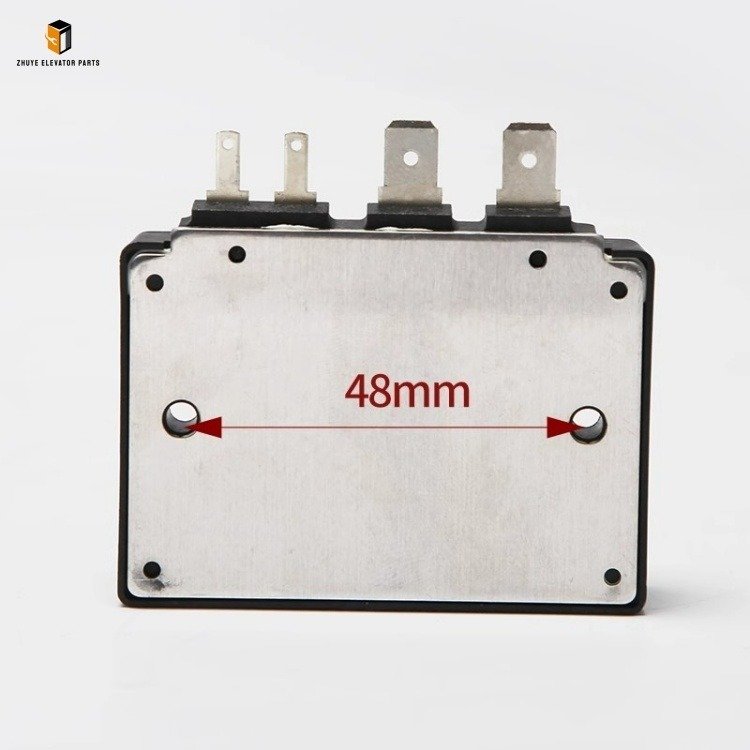
Mount the TSS10J45S relay on the dedicated mounting bracket inside the inverter cabinet, ensuring a secure fit with no looseness. Avoid installing it near the inverter’s heat sink or high-power components to prevent overheating—maintain a minimum ventilation gap of 30mm. Follow the wiring diagram from Nanjing Zhuye Elevatorparts (integrated with the inverter’s official guidelines) strictly: connect the power wires to the relay’s coil terminals (A1/A2) and the signal or protection circuit wires to the main contacts. Use copper core wires of appropriate cross-section (recommended 2.5mm² for power wires) to ensure stable current transmission. The recommended tightening torque for terminal screws is 2.0-3.0 Nm, and the wire stripping length should be 8-10mm to avoid short circuits from exposed wire cores. After wiring, use a multimeter to check circuit continuity and insulation resistance between terminals to confirm no wiring errors exist.
3. Debugging & Daily Operation
After completing installation and wiring, conduct a comprehensive debugging test. Restore the inverter’s power supply and enter the debug mode to check if the TSS10J45S relay responds accurately to control signals—verify that the contacts switch smoothly without delay when the inverter operates under different working conditions (e.g., start, stop, speed adjustment). Simulate fault scenarios (e.g., overcurrent, overvoltage) to confirm the relay triggers the protection mechanism promptly, cutting off the faulty circuit to protect the inverter. During daily operation, monitor the relay’s operating status regularly as part of the inverter’s maintenance plan. Check for abnormal heating (surface temperature should not exceed 60℃), loose connections, or contact ablation. Avoid overloading the relay beyond its 45A rated current, as this can cause premature failure and damage the inverter.
Replacement Cycle of Elevator Inverter Relay TSS10J45S
The replacement cycle of the TSS10J45S elevator inverter relay depends on the inverter’s operating frequency, working environment, and load conditions. Under normal operating parameters—elevator runs 12-24 hours daily, inverter operates stably with no frequent fault alarms, and the machine room is dry, ventilated, and maintained at 0℃-40℃—Nanjing Zhuye Elevatorparts recommends a replacement cycle of 3-5 years. This timeline is based on long-term field data and the relay’s mechanical lifespan, accounting for contact wear, coil aging, and insulation performance degradation caused by prolonged exposure to the inverter’s operating environment.
main inverter operates at high load rates for long periods-2load operationcontactelectromagnetic interference4-6. However,. However,signal transmission accuracysignal response speed, and insulation performanceFor elevators in high-temperature environments (e.g., unconditioned machine rooms in tropical regions) or high-traffic areas (shopping malls, airports) with frequent temperature fluctuations, the replacement cycle should be shortened to 1.5-3 years. Harsh conditions accelerate probe aging and insulation damage, increasing the risk of protection failure. For low-usage elevators (villa elevators, small office buildings with daily operation <8 hours) in stable, temperature-controlled environments, the cycle can be extended to 5-7 years. However, annual professional calibration by Nanjing Zhuye’s technicians is mandatory to confirm temperature sensing accuracy (error ≤±1℃) and protection response performance meet safety standards.
Immediately replace the TSS10J45S elevator inverter relay if any of the following issues occur, regardless of service life: severe contact ablation, welding, or jamming leading to failure to switch or delayed response; coil burnout, discoloration, or insulation damage causing the relay to fail to engage or trip frequently; abnormal heating, sparks, or odors during operation; the relay fails to trigger protection mechanisms when the inverter malfunctions, leading to inverter errors; or the relay fails annual safety testing. Timely replacement with genuine parts from Nanjing Zhuye Elevatorparts is critical to avoiding inverter damage and ensuring the safe operation of the elevator.
The Elevator Inverter Relay TSS10J45S from Nanjing Zhuye Elevatorparts integrates reliable performance, excellent durability, and wide compatibility, providing a critical protection solution for elevator inverter systems. Its strict quality control and professional design ensure it can withstand the harsh operating conditions of elevator inverters. By following the recommended usage guidelines and replacement cycles, you can significantly reduce inverter failure rates and extend the service life of the entire elevator drive system. Nanjing Zhuye Elevatorparts provides 100% authentic TSS10J45S relays, along with professional support including model matching, on-site installation guidance, and timely after-sales service. Choose Nanjing Zhuye Elevatorparts for comprehensive and reliable elevator component solutions.