

Description
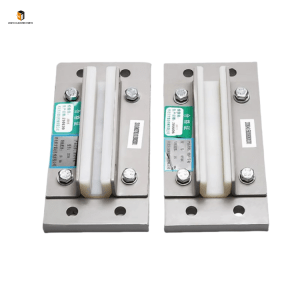
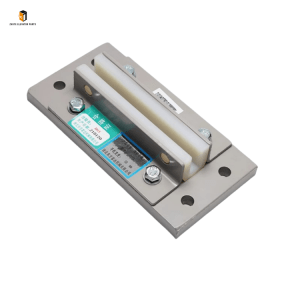
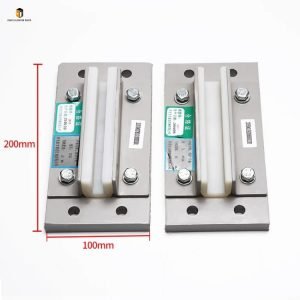
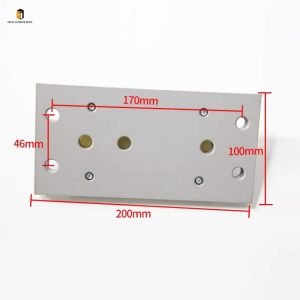
Elevator guide shoe counterweight guide shoe DX4A Brief Introduction
|
Product Name |
Elevator guide shoe counterweight guide shoe |
| Model Number | DX4A |
|
Quality
|
Original.Brand New
|
|
Payment
|
T/T. Paypal. Western Union
|
|
Delivery
|
3-5 Working Days
|
|
Packaging
|
Packed by carton
|
Elevator Counterweight Guide Shoe DX4A: Stable Guidance Core from Nanjing Zhuye Elevatorparts
Elevator Counterweight Guide Shoe DX4A is a critical guiding and buffering component for elevator counterweight systems, specifically engineered to ensure the stable and smooth operation of the counterweight during elevator lifting. Installed on the counterweight frame, it tightly clamps the elevator guide rail and slides along the rail with the counterweight’s movement, effectively limiting horizontal deviation of the counterweight and preventing collisions with the shaft wall. Equipped with a high-performance buffer pad, it efficiently absorbs vibration and reduces operational noise, while its wear-resistant structure guarantees long-term reliable guidance. Widely compatible with small and medium-load elevators (load capacity 500–1600kg) such as residential buildings, small commercial complexes, and office buildings, the DX4A counterweight guide shoe is an essential component for maintaining elevator system balance and operational safety. Exclusively supplied by Nanjing Zhuye Elevatorparts, a professional provider of high-quality elevator mechanical components, the Elevator Counterweight Guide Shoe DX4A fully complies with international elevator safety standards (EN 81-20, GB 7588) and mechanical component technical specifications. Manufactured with premium materials and precision machining technology, it boasts excellent wear resistance, strong load-bearing capacity, and stable performance in harsh shaft environments, earning recognition from global elevator maintenance teams and manufacturers.
Nanjing Zhuye Elevatorparts adheres to the core philosophy of “Precise Guidance, Durable Operation” and implements strict quality control for the DX4A elevator counterweight guide shoe. Each unit undergoes multi-stage pre-delivery inspections, including dimensional accuracy testing, wear resistance verification, load-bearing capacity detection, and vibration absorption performance evaluation. The DX4A guide shoe adopts advanced materials and technologies: the base is made of high-strength cast iron (HT200) with precision machining, ensuring structural stability and a maximum load-bearing capacity of 35kN; the buffer pad is crafted from high-quality polyurethane (PU) with a Shore hardness of 80–85A, achieving optimal wear resistance and vibration absorption; the adjusting bolt is made of carbon steel with quenching treatment, enabling precise adjustment of the clamping force between the guide shoe and the rail; the buffer pad’s sliding surface features a concave arc design that perfectly fits guide rails (compatible with T75, T89 guide rail models), ensuring uniform force distribution. The standardized DX4A structure enables seamless matching with mainstream counterweight frames, simplifying installation and replacement processes.
Step-by-Step Usage Guide for Elevator Counterweight Guide Shoe DX4A
To maximize the service life, guidance accuracy, and operational stability of the Elevator Counterweight Guide Shoe DX4A, strictly follow the professional guidelines provided by Nanjing Zhuye Elevatorparts for selection, installation, and maintenance:
1. Professional Selection & Pre-Installation Preparation
Installation must be performed by certified elevator technicians. Prior to selection, refer to the elevator’s maintenance manual or consult Nanjing Zhuye Elevatorparts’ technical team to confirm that the DX4A guide shoe matches the elevator’s counterweight frame model, guide rail specification, and load capacity. Preparation steps: Cut off the elevator’s main power supply and lock the power switch; use a hoisting device to stabilize the counterweight at a safe position and secure it with mechanical supports; place a “Maintenance in Progress” warning sign at the elevator entrance and shaft access door; clean the counterweight frame’s guide shoe mounting position, guide rail surface, and surrounding area to remove dust, oil stains, and rust.
2. Correct Installation & Precision Adjustment
-
Guide Shoe Fixing: Take the DX4A counterweight guide shoe from Nanjing Zhuye Elevatorparts, align it with the mounting holes on the counterweight frame, and fix it with high-strength bolts (torque: 35–45N·m). Ensure the guide shoe is installed vertically without tilting, and the buffer pad faces the guide rail.
-
Clamping Force Adjustment: Use a wrench to adjust the adjusting bolt on the DX4A guide shoe, making the buffer pad tightly clamp the guide rail. The standard clamping gap between the buffer pad and the guide rail is 0.5–1mm (measured with a feeler gauge). Ensure uniform clamping force on both sides of the guide rail to avoid uneven buffer pad wear or excessive friction that may affect elevator operation efficiency.
-
Installation Inspection: Manually push the counterweight up and down along the guide rail to check for smooth movement without jamming or abnormal noise. Observe the contact between the buffer pad and the guide rail to ensure the entire sliding surface is in uniform contact, with no partial contact or gaps.
3. Post-Installation Testing & Daily Maintenance
-
Function Testing: Restore the elevator’s power supply and switch to inspection mode. Operate the elevator to run up and down at low speed, observing the counterweight’s operation through the shaft inspection window. Ensure no abnormal vibration, noise, or horizontal deviation of the counterweight; use a vibration tester to confirm the vibration amplitude is ≤ 0.2mm.
-
Daily Inspection: Maintenance personnel should check the DX4A guide shoe during daily shaft patrols: Observe the buffer pad for wear, cracks, or deformation; check if the guide shoe’s fixing bolts are loose; inspect the guide rail surface for scratches caused by the guide shoe; listen for abnormal noise during elevator operation, which may indicate guide shoe failure.
-
Regular Maintenance: Every 3 months, clean the guide shoe’s buffer pad, adjusting bolt, and guide rail surface with a soft brush to remove dust and debris; apply a thin layer of special lubricant (recommended by Nanjing Zhuye Elevatorparts) to the guide rail surface to reduce friction. Every 6 months, measure the buffer pad’s wear thickness—adjust the clamping gap in a timely manner if wear exceeds 3mm; prepare for replacement if wear exceeds 5mm. For elevators in high-traffic or harsh environments, shorten the maintenance interval to 1 month.
Recommended Replacement Cycle for Elevator Counterweight Guide Shoe DX4A
As a core mechanical component subjected to long-term friction with the guide rail, counterweight load-bearing, mechanical vibration, and environmental erosion (humidity, dust, temperature changes), the DX4A elevator counterweight guide shoe has a specified service life. Timely replacement is crucial to avoiding faults such as excessive buffer pad wear, guide shoe base deformation, or loss of clamping force—issues that may lead to unstable counterweight operation, collisions with the shaft wall, or even damage to the elevator traction system, posing serious safety risks.
1. Standard Replacement Cycle
Under normal operating conditions (elevator daily operation time 12–24 hours, daily running times ≥ 800, shaft environment temperature -20℃ to 80℃, humidity 10%–95%), the recommended replacement cycle for the DX4A elevator counterweight guide shoe is 2–3 years. This cycle is determined based on Nanjing Zhuye Elevatorparts’ long-term field operation data, wear tests, and global user feedback on elevator guiding components.
2. Adjustments for Special Scenarios
-
High-Load & High-Traffic Environments: For elevators with long-term full-load operation (load ≥ 1200kg) or in high-traffic locations (e.g., medium-sized shopping malls, office buildings with daily operation time ≥ 18 hours), the replacement cycle is shortened to 1–1.5 years. High load and frequent operation accelerate buffer pad wear and guide shoe structure aging.
-
Low-Frequency Use & Stable Environments: For elevators with low usage frequency (e.g., villa elevators, small office buildings with daily operation time < 8 hours) and stable shaft environments (constant temperature and humidity), the replacement cycle can be extended to 3–4 years—only after Nanjing Zhuye Elevatorparts’ technicians inspect and confirm that the buffer pad wear, guide shoe base integrity, and clamping force meet factory standards.
3. Immediate Replacement Conditions
Replace the DX4A elevator counterweight guide shoe immediately if any of the following issues occur, regardless of its service life:
-
The buffer pad is severely worn (wear thickness > 5mm) or has obvious cracks, leading to reduced vibration absorption performance or inability to reliably clamp the guide rail.
-
The guide shoe base is deformed, cracked, or the fixing bolts are loose and cannot be tightened, affecting guiding accuracy.
-
The adjusting bolt fails, making it impossible to adjust the clamping force, resulting in an excessive gap (> 2mm) between the guide shoe and the guide rail or excessive friction.
-
Professional testing confirms that the guide shoe’s vibration absorption performance is reduced by more than 40%, causing obvious counterweight vibration and noise during operation.
In conclusion, the Elevator Counterweight Guide Shoe DX4A from Nanjing Zhuye Elevatorparts is a high-quality, highly compatible guiding component tailored for small and medium-load elevator systems. By following the correct selection, installation, maintenance, and replacement guidelines, elevator maintenance teams can effectively ensure the stable operation of the counterweight system, reduce mechanical failures, and extend the elevator’s service life. Choosing Nanjing Zhuye Elevatorparts means you get 100% authentic DX4A counterweight guide shoes, plus professional support—including model matching, on-site installation guidance, and prompt after-sales service. Trust Nanjing Zhuye Elevatorparts for the stable guidance of your elevator counterweight system.